Blog

  • Stronger Roots, Healthier Growth: Why Scalp Care Is the Secret to Beautiful Hair

    Beautiful hair doesn’t start with the strand — it starts with the root.
    At Vivafollica, we believe that the foundation of every healthy, shiny, resilient strand begins below the surface, where the hair follicle lives and grows. When the scalp is balanced, nourished, and supported, the hair that emerges naturally becomes stronger, smoother, and more vibrant.

    Let’s explore why focusing on your scalp is one of the most transformative steps you can take for long-term hair health and growth.

    The Scalp: Your Hair’s Ecosystem

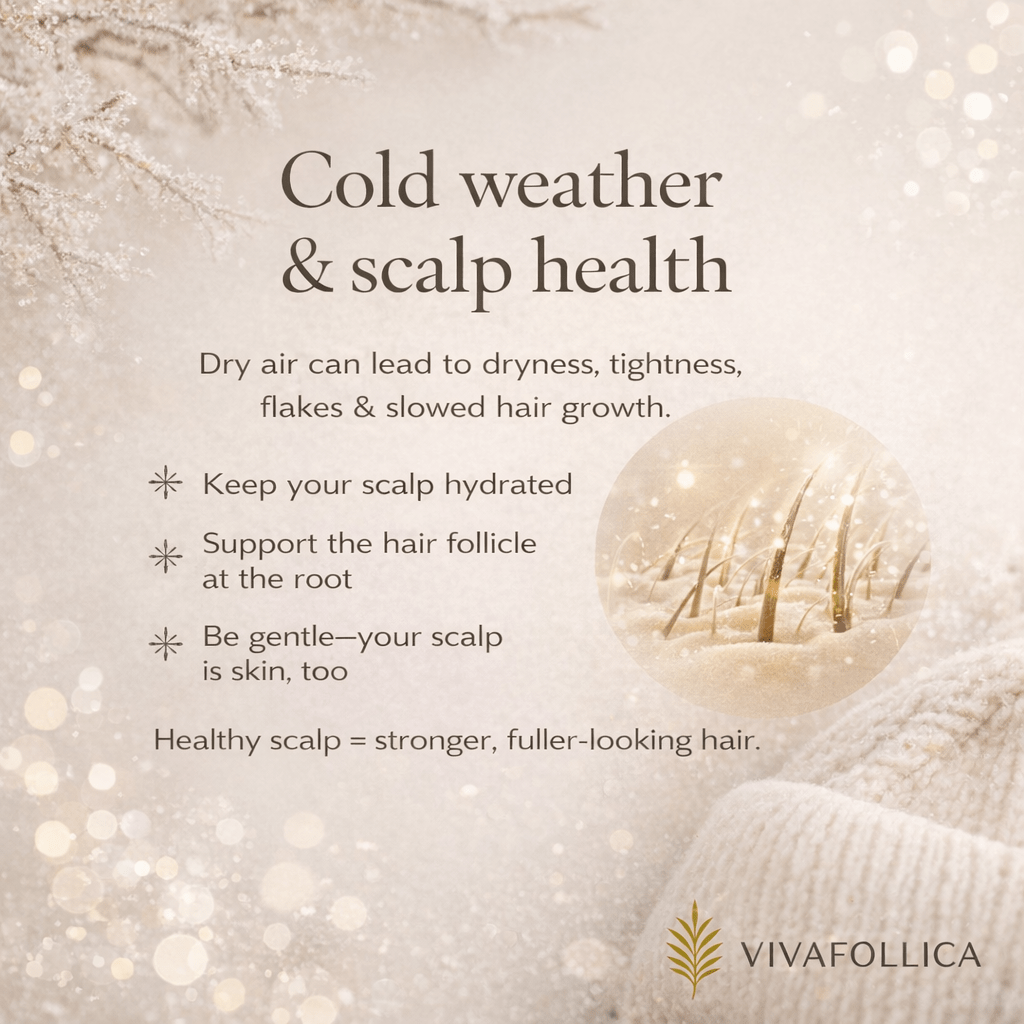
    Your scalp is a living environment — a delicate ecosystem of follicles, oils, nutrients, and microbiome activity. When this environment is in balance, follicles stay active and healthy. But when it’s stressed by inflammation, buildup, hormones, dryness, or environmental triggers, hair growth can slow or weaken.

    Supporting the scalp means supporting the root — and everything that grows from it.

    Hydration = Supple, Resilient Strands

    Dry scalp leads to dry strands.
    Hydrated scalp leads to soft, flexible hair that resists breakage.

    Vivafollica’s formula uses nutrient-rich botanicals and MUFA-packed oils (like jojoba, argan, and avocado) to help reinforce the scalp barrier, reduce moisture loss, and replenish essential lipids. This creates the perfect environment for new, healthy growth.

    Follicle Activation Through Nutrients

    Healthy follicles need fuel — and the right nutrients can help “wake up” sluggish or stressed follicles. Ingredients like:

    • Redensyl
    • Capixyl
    • Fo-Ti root extract
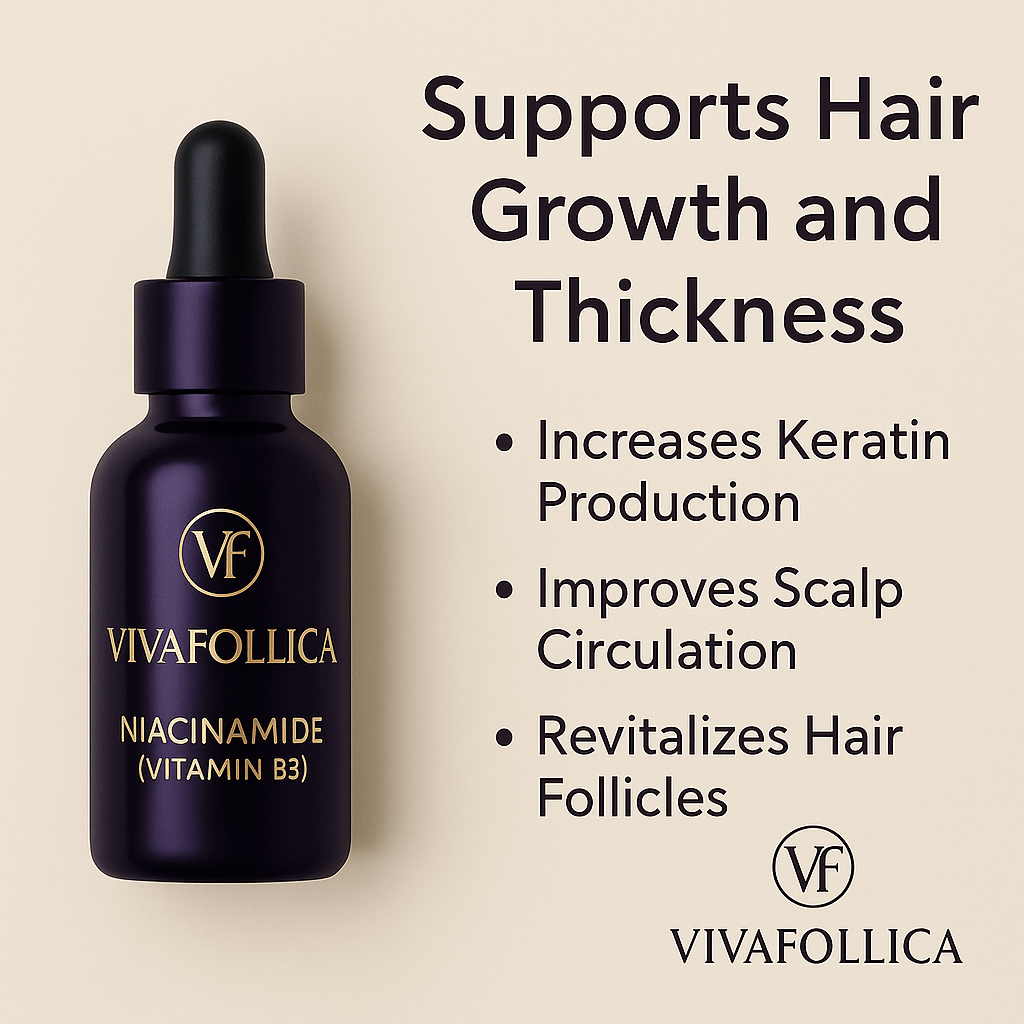
    • Niacinamide
    • Rosemary oil
    • Monounsaturated fatty acids (MUFAs)

    work synergistically to energize follicles, support micro-circulation, and strengthen the root before the hair ever reaches the surface. This is how true, long-lasting growth begins.

    Why Scalp Care Is the New Hair Care

    For years, hair care focused entirely on what happens after the hair leaves the scalp — glosses, masks, oils, smoothing treatments. But results are temporary if the root is struggling.

    When you nourish the root:
    ✨ growth improves
    ✨ shedding decreases
    ✨ shine increases
    ✨ strands grow in stronger
    ✨ hair becomes naturally smoother and fuller

    This is growth from the inside out — the Vivafollica way.

    Vivafollica: Strengthening the Foundation

    Our serum is designed to do more than coat the hair.
    It feeds the scalp.
    It energizes the follicle.
    It strengthens the root.
    It balances the ecosystem.
    And as a result — your growth becomes healthier, stronger, and more radiant.

    Stronger roots truly do lead to healthier growth.

    Hair transformation begins where most routines overlook — at the scalp. When you nourish the root and support the foundation, your hair begins to thrive naturally. Consistency, science-driven ingredients, and holistic scalp care are the keys to achieving the hair you deserve.

    Vivafollica is here to help you start that journey — one root at a time.

  • How Monounsaturated Fatty Acids Activate Hair Follicles & Support Healthy Growth

    The Science Behind MUFAs — and Why Vivafollica Uses Them

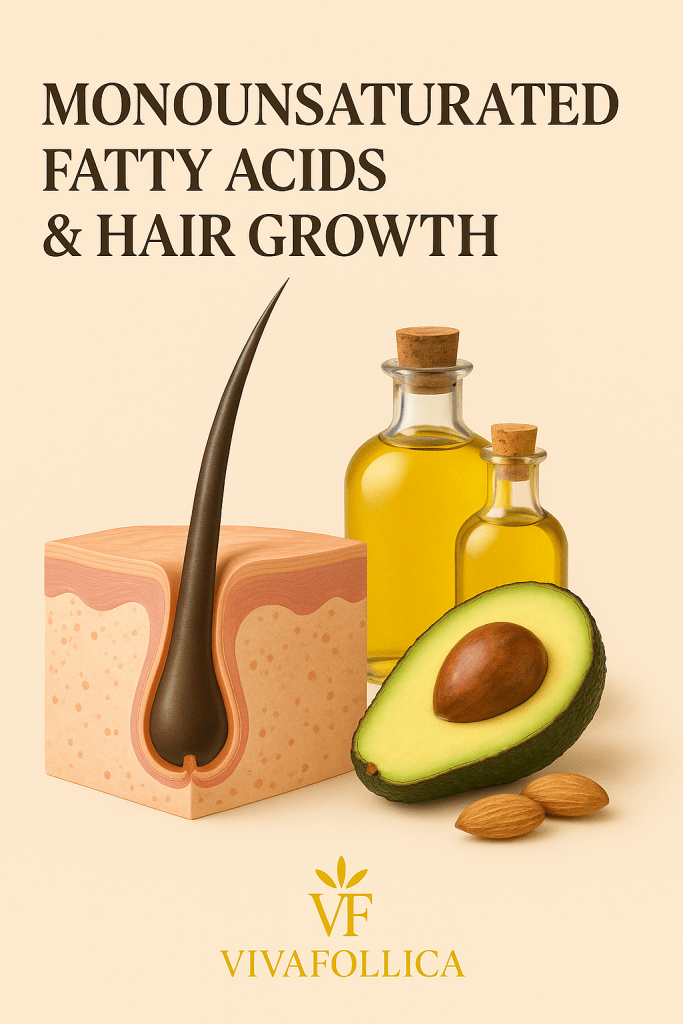
    In recent years, monounsaturated fatty acids (MUFAs) have emerged as powerful allies in the world of scalp health and hair restoration. While most people associate MUFAs with heart-healthy foods like olive oil and avocados, research shows that these fatty acids also play a critical role in activating hair follicles, restoring barrier function, and supporting thicker, healthier hair growth.

    Vivafollica’s serum was intentionally crafted with a high concentration of MUFA-rich botanicals — part of our commitment to using science-driven, nutrient-dense formulations. With ~60% active and nutritional ingredients and 15–20% restorative carrier oils, our formula delivers MUFAs directly to the follicles where they make the biggest impact.

    Let’s break down the science behind why MUFAs matter.

    What Are Monounsaturated Fatty Acids?

    MUFAs are healthy fats found in plant oils like olive, avocado, jojoba, and argan oil. Unlike saturated fats, MUFAs remain fluid at body temperature, which allows them to penetrate the scalp more easily and nourish follicles directly.

    Some of the most hair-beneficial MUFAs include:

    • Oleic Acid
    • Palmitoleic Acid
    • Gadoleic Acid
    • Eicosenoic Acid

    These fats are not just moisturizing — they are biologically active nutrients that help revive dormant follicles.

    How MUFAs Activate Hair Follicles

    The hair follicle is a highly active mini-organ that relies on lipids (fats) for structure, energy, and signaling. MUFAs support follicle activation through several key mechanisms:

    1. They Strengthen the Scalp’s Lipid Barrier

    A healthy scalp barrier keeps moisture in, irritants out, and creates the ideal environment for hair growth. MUFAs repair and replenish the scalp barrier, which calms inflammation and reduces follicular stress.

    A healthier environment = higher follicle activity.

    2. They Improve Micro-Circulation Around the Follicle

    MUFAs help support better blood flow, bringing oxygen and nutrients directly to the root. Improved circulation allows follicles to stay in the anagen (growth) phase longer.

    3. They Activate Stem Cells in the Bulge Region

    The bulge region of the follicle contains stem cells responsible for producing new hair.
    Research suggests that MUFAs enhance the lipid environment that these stem cells rely on, encouraging new growth and regeneration.

    4. They Reduce Inflammation That Blocks Growth

    Chronic inflammation is one of the biggest causes of thinning and shedding. MUFAs have natural anti-inflammatory properties that help soothe the scalp and reduce the inflammatory load around follicles.

    5. They Keep the Hair Shaft Smooth & Flexible

    Healthy sebum naturally contains MUFAs — when this balance is restored through topical application, hair becomes smoother, shinier, and less prone to breakage.

    MUFAs in Vivafollica: Thoughtfully Selected & Clinically Aligned

    Because MUFAs are critical to follicle health, Vivafollica’s serum includes several MUFA-rich botanical oils as part of its 15–20% carrier oil system — each chosen to deliver maximum nourishment without greasiness.

    Examples of MUFA-rich oils in our formula include:

    • Jojoba Oil (rich in eicosenoic & oleic acids, biomimics natural sebum)
    • Argan Oil (high in oleic & linoleic acids — strengthens follicles)
    • Olive-derived Squalane (ultra-light MUFA support for barrier repair)
    • Avocado Oil (oleic acid for deep nourishment & softness)

    These oils do more than moisturize — they deliver targeted lipid nutrition to the follicles.

    Why Vivafollica’s MUFA System Works So Well

    Unlike traditional hair serums that rely on heavy silicones or coated shine, Vivafollica uses nutrient-dense oils that are biologically active, meaning they interact with the follicle instead of sitting on top of the hair.

    Combined with our 60% blend of clinical actives — including Redensyl, Capixyl, Niacinamide, Fo-Ti Root, and Rosemary Extract — MUFAs amplify:

    • Scalp healing
    • Follicle responsiveness
    • Hair strength
    • Shine
    • Smoothness
    • Elasticity

    In other words, MUFAs don’t just make hair look healthier — they support the biology that makes hair grow healthier.

    The Bottom Line: MUFAs Are a Game-Changer for Hair Growth

    A scalp rich in monounsaturated fatty acids is a scalp that can support stronger, denser, shinier hair. By nurturing the follicle environment, calming inflammation, and restoring lipid balance, MUFAs help awaken your follicles and keep them active.

    With Vivafollica’s uniquely concentrated formulation, you’re giving your scalp the nutrients it needs to thrive — naturally.

    Vivafollica: Where Science Meets Clean Beauty

    Healthy shine. Stronger strands. A balanced, nourished scalp.
    It all begins with what you feed your follicles.

  • How to Maintain Shiny, Healthy Hair

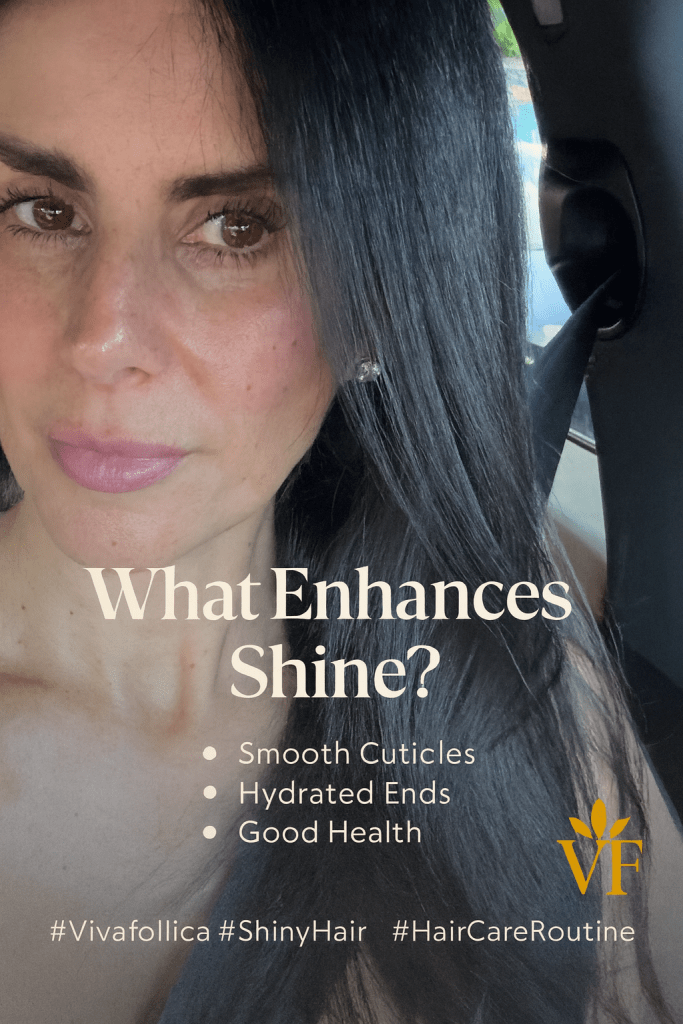
    There’s something about shiny hair that instantly signals health, confidence, and vitality. But true shine doesn’t come from a single product — it’s the result of consistent care, balanced nourishment, and a healthy scalp. Whether your hair is straight, wavy, or curly, these simple yet science-backed habits will help you achieve a natural, luminous glow.

    1. Start with Scalp Health

    Healthy shine begins where your hair does — at the scalp. When your scalp is clean, balanced, and free of buildup, it allows your follicles to function at their best.

    Vivafollica Tip: Use a gentle scalp serum or exfoliant once or twice a week to clear impurities and encourage micro-circulation. Ingredients like Niacinamide, Redensyl, and Fo-Ti root help energize the follicles and promote a healthy environment for growth.

    2. Hydrate From Root to End

    Dryness is the enemy of shine. Hair that’s dehydrated looks dull because the cuticle layer lifts, preventing light from reflecting smoothly off the strand.

    Keep your hair hydrated by:

    • Using a moisture-rich conditioner after every wash.
    • Applying a lightweight, non-greasy serum or leave-in treatment to seal in moisture.
    • Drinking enough water — internal hydration reflects externally.

    Vivafollica Insight: Look for ingredients like Panthenol (B5), Hyaluronic Acid, and Capixyl that attract and lock in moisture without weighing hair down.

    3. Protect Your Cuticle Layer

    Your hair’s outer cuticle is like the surface of a mirror — the smoother it is, the shinier your hair appears. Heat, UV exposure, and harsh brushing can roughen the cuticle, scattering light and creating dullness.

    Shine-Saving Tips:

    • Always use a heat protectant before styling tools.
    • Limit hot tools to 1–2 times per week.
    • Rinse hair with cool water after conditioning to help seal the cuticle.
    • Sleep on a silk or satin pillowcase to reduce friction and frizz.

    4. Feed Your Hair Nutrients

    Shine starts from within. Nutrient-dense foods rich in omega-3 fatty acids, zinc, iron, and biotin support glossy, resilient strands.

    Shine-Boosting Foods:

    • Salmon, chia seeds, or walnuts (for healthy fats)
    • Spinach, lentils, and beans (for iron and protein)
    • Berries and citrus fruits (for vitamin C to support collagen)

    A balanced diet supports scalp circulation and strengthens new growth — the foundation for long-term shine.

    5. Avoid Product Buildup

    Even the best products can dull your shine if they accumulate on the scalp or hair shaft. Over time, buildup blocks light reflection and weighs strands down.

    Use a gentle clarifying shampoo once every 1–2 weeks to reset your scalp and hair. If you use oils or dry shampoo often, this step is key to keeping your shine radiant and natural.

    6. Choose “Clean Shine” — Not Coated Shine

    Many conventional serums rely on heavy silicones that create temporary gloss but suffocate the hair shaft over time. Instead, choose clean-beauty formulas that nourish the hair without coating it.

    Vivafollica formulas use science-driven botanicals — like Redensyl, Fo-Ti Root, Niacinamide, and Rosemary Oil — to support healthy growth and hydration so your shine comes naturally, not artificially.

    The Vivafollica Way to Shine

    Shiny hair isn’t just about how it looks — it’s a reflection of how healthy and balanced your scalp and lifestyle are. With consistency, gentle care, and the right products, your hair can regain its natural luminosity and strength.

    Because real shine starts from within — and Vivafollica helps bring it to the surface.

  • Men vs. Women: How Our Scalps Differ — and Why It Matters for Hair Health

    Yes, there are some key biological differences between men’s and women’s scalps, even though they share the same basic structure. These differences explain why men and women often experience different hair thinning patterns, oil production, and scalp needs.

    Here’s a simple breakdown 👇

    1. Hormonal Differences (The Biggest Factor)

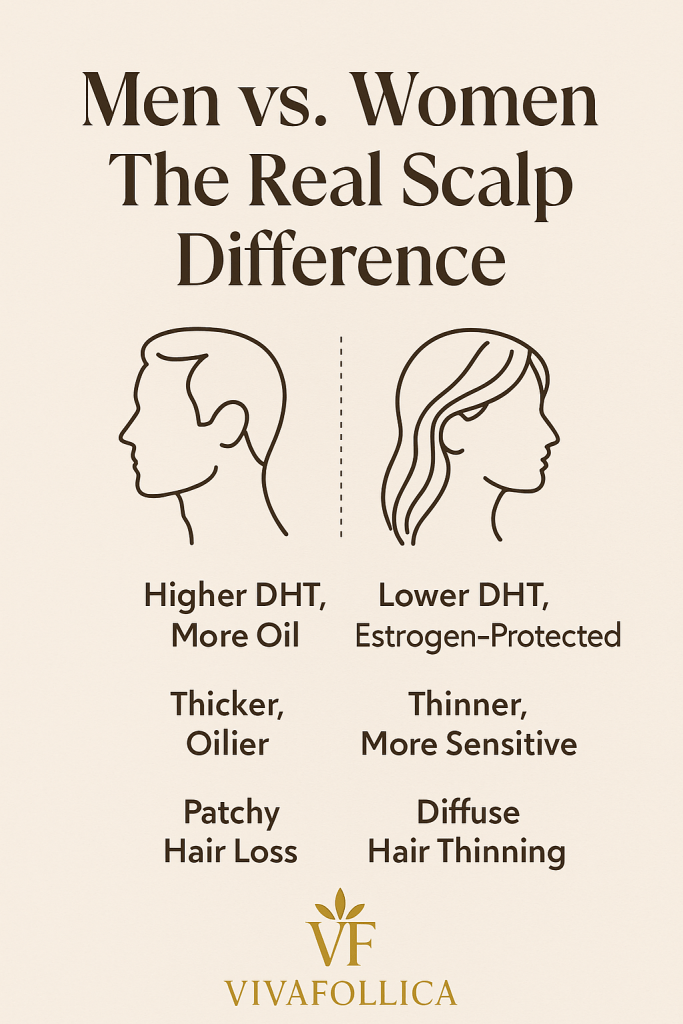
    The biggest difference between men’s and women’s scalps comes from hormones — especially androgens like testosterone and its more potent form, DHT (dihydrotestosterone).

    • Men: Have higher levels of DHT, which binds to hair follicles (especially around the crown and hairline) and gradually shrinks them — a process called miniaturization. This is why men typically experience receding hairlines and bald spots.
    • Women: Also have DHT, but in much lower amounts. Estrogen helps balance it out, protecting follicles longer. When estrogen drops (after pregnancy or during menopause), women may see diffuse thinning instead of patchy baldness.

    💬 So, men’s hair loss tends to be concentrated in specific areas, while women’s is usually more spread out.

    2. Oil (Sebum) Production

    Men’s scalps generally produce more sebum (oil) than women’s — up to 50% more in some studies.

    • Men’s scalps: Tend to be oilier, which can lead to clogged pores, buildup, or scalp acne if not washed regularly.
    • Women’s scalps: Usually stay more balanced but can fluctuate due to hormonal changes, stress, or overuse of styling products.

    💡 This is why men often prefer lightweight, purifying scalp care, while women may need more balancing and hydrating formulas.

    3. Skin Thickness and Sensitivity

    • Men’s scalps are typically thicker and have larger pores, which helps with oil flow but can also hold onto buildup.
    • Women’s scalps tend to be thinner and more sensitive, meaning harsh ingredients (like sulfates or alcohols) can cause irritation more easily.

    That’s why women’s scalp care often focuses on gentle nourishment and barrier repair — especially with serums that contain soothing ingredients like Niacinamide, Panthenol, or botanical extracts.

    4. Hair Follicle Density and Growth Cycle

    • Both men and women are born with roughly 100,000 hair follicles, but follicle density (how close together they are) and growth cycles differ slightly.
    • Men’s follicles can have shorter growth (anagen) phases due to DHT influence, meaning hair cycles faster and sheds sooner.
    • Women’s follicles usually stay in the growth phase longer, which is why women’s hair often grows longer before shedding.

    5. Hair Loss Patterns

    FeatureMenWomen
    Common patternReceding hairline, thinning crownWidening part, diffuse thinning
    Hormone involvedHigh DHTDHT + Low estrogen
    When it beginsOften in 20s–30sUsually after 40s or post-pregnancy
    Reversible?PartiallyOften treatable if follicles stay active

    6. Scalp Care Needs

    Because of these differences, ideal scalp care routines aren’t always the same.

    For Men:

    • Use clarifying or balancing shampoos to manage excess oil and buildup.
    • Add DHT-blocking ingredients like Capixyl, Redensyl, or saw palmetto.
    • Exfoliate weekly to keep follicles clear.

    For Women:

    • Use hydrating, gentle cleansers that preserve scalp moisture.
    • Support hormonal balance and follicle strength with ingredients like Fo-Ti RootNiacinamide, and caffeine.
    • Avoid harsh chemicals or tight hairstyles that stress the follicles.

    7. Shared Truth: Healthy Hair Starts with the Scalp

    Even though there are differences, one thing is true for both men and women:

    The scalp is skin — and healthy hair begins with healthy skin.

    Whether it’s controlling oil, soothing irritation, or boosting circulation, both men and women benefit from consistent scalp care that includes:

    • Regular cleansing (to remove buildup)
    • Gentle exfoliation
    • Daily nourishment (like a growth serum)
    • Stress management and balanced nutrition

    💜 In Summary

    AspectMen’s ScalpWomen’s Scalp
    HormonesHigher DHT, more oilLower DHT, estrogen-protected
    Skin typeThicker, oilierThinner, more sensitive
    Hair lossPatchy (crown/hairline)Diffuse (crown/part line)
    Care needsClarifying, anti-DHTHydrating, hormone-supportive

    Vivafollica’s Approach

    At Vivafollica, we design formulas that respect both biology and balance. Our growth serum, powered by Redensyl, Capixyl, Fo-Ti Root, and Niacinamide, targets the root cause of thinning while maintaining scalp health for both men and women.

    Our mission: Where science meets nature — for every scalp. 💜

  • How to Best Remove Product Buildup from Your Scalp

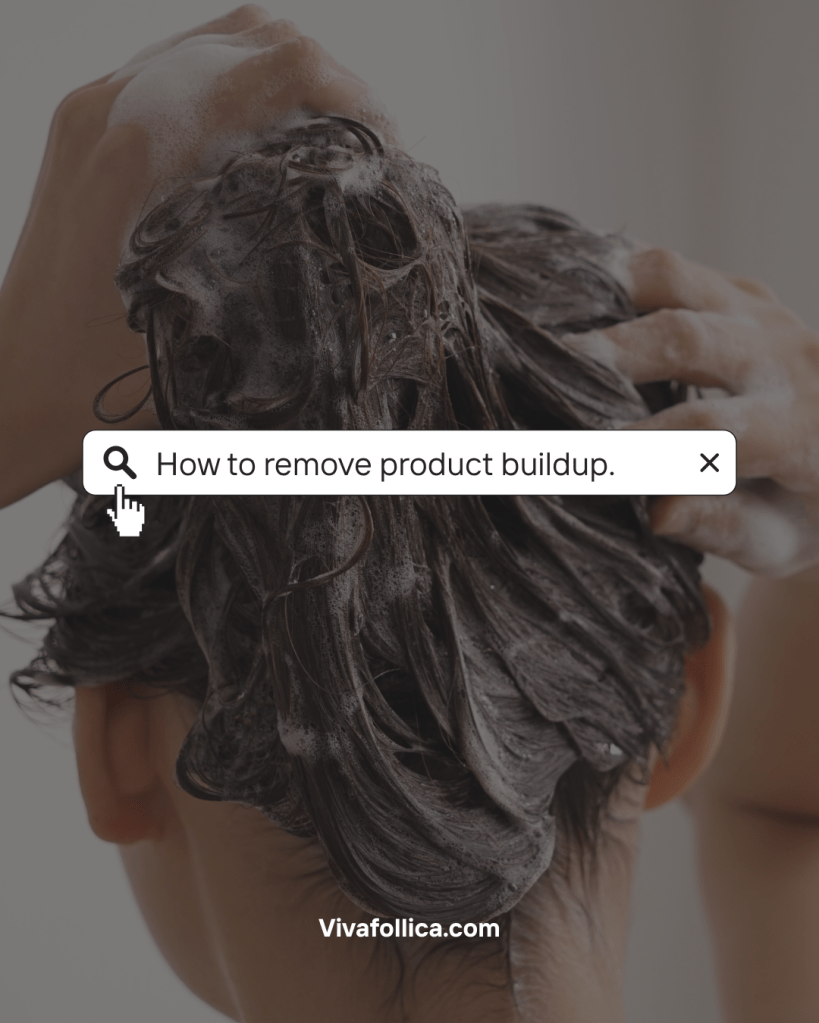
    We focus so much on skincare for our face — but how often do we think about the skin on our scalp? Over time, products like dry shampoo, oils, conditioners, and even natural sebum can build up on the scalp, clogging hair follicles and making it harder for your hair to grow healthy and strong.

    Just like our pores need cleansing, our scalp needs regular detoxing too. If you’ve ever noticed dull roots, flakes, or an itchy, heavy feeling at the crown, you’re likely experiencing scalp buildup — and the good news is, it’s completely treatable.

    Here’s how to recognize scalp buildup, why it happens, and how to safely remove it for a balanced, refreshed, and healthy scalp.

    What Is Scalp Buildup?

    Scalp buildup is a mix of dead skin cells, oil (sebum), sweat, and leftover product residue that accumulates on your scalp over time.

    Every time you apply shampoo, conditioner, leave-in treatments, hairspray, or dry shampoo, a little residue can remain — especially if you don’t wash frequently. Add to that natural oil and pollution, and your scalp becomes coated in a layer that blocks follicles and limits oxygen flow.

    Over time, this buildup can cause:

    • Clogged follicles (leading to hair thinning or slower growth)
    • Flakes and itching (similar to dandruff but not always the same)
    • Oily roots and dry ends
    • Lack of volume or dull appearance
    • Poor serum absorption — meaning your growth treatments can’t fully penetrate the scalp

    Common Causes of Scalp Buildup

    1. Overusing styling products
      Gels, creams, sprays, and serums can all leave behind residue. Silicone-based products are especially known for coating the scalp.
    2. Not washing often enough
      If you wash every 3–5 days (or longer), oils and product layers can combine to form a film over your scalp.
    3. Hard water
      Minerals in hard water bind with shampoo residue, making it difficult to rinse cleanly.
    4. Improper shampooing technique
      Applying shampoo only to hair strands — instead of focusing on the scalp — can leave the skin underneath unclean.
    5. Heavy oils or butters
      While nourishing, natural oils like coconut or castor oil can be hard to wash out fully and may clog pores if overused.

    How to Tell if You Have Scalp Buildup

    You might have buildup if you notice:

    • waxy or sticky feeling near the roots
    • Flakes or dryness even after washing
    • Itchiness or irritation
    • Hair that feels flat or lifeless
    • A white residue when you scratch your scalp gently with your nail

    If that sounds familiar, your scalp likely needs a reset.

    How to Remove Scalp Buildup — Safely and Effectively

    The goal isn’t to strip your scalp completely — it’s to deep clean while maintaining balance. Here’s how to do it properly:

    1️⃣ Start with a Clarifying Shampoo

    A clarifying shampoo is specially formulated to dissolve residue from oils, silicones, and styling products.

    Look for:

    • Sulfate-free or gentle surfactants
    • Ingredients like salicylic acidapple cider vinegar, or activated charcoal

    🪶 How to use:

    • Apply to wet hair and massage directly into your scalp for 1–2 minutes.
    • Rinse thoroughly and follow with a lightweight conditioner, focusing only on the ends.
    • Use once every 1–2 weeks — not daily, as overuse can dry the scalp.

    💜 Pro tip: If you use growth serums like Vivafollica’s Follicle Revival Serum, always clarify your scalp first so your treatment can absorb better.

    2️⃣ Exfoliate with a Scalp Scrub

    Just like facial exfoliation, your scalp benefits from gentle physical or chemical exfoliation.

    Options include:

    • Sugar or salt scrubs with botanical oils (like jojoba or tea tree)
    • Chemical exfoliants with glycolic acid or lactic acid, which dissolve dead skin

    🪶 How to use:

    • Apply scrub to a damp scalp before shampooing.
    • Massage gently in circular motions — don’t scratch with your nails.
    • Rinse thoroughly and follow with shampoo and conditioner.

    This helps lift buildup, boost circulation, and leave your scalp feeling refreshed.

    3️⃣ Try a Scalp Detox Treatment

    Scalp detoxes are lightweight liquids or masks that help rebalance pH and break down oil.

    DIY options:

    • Apple cider vinegar rinse: Mix 1 part ACV with 3 parts water and pour over your scalp after shampooing. Leave for 2–3 minutes, then rinse.
    • Aloe vera gel: Calms irritation and moisturizes while cleansing residue.

    Professional options:

    • Scalp detox sprays or serums with witch hazeltea tree, or salicylic acid.

    4️⃣ Massage the Scalp Regularly

    Massage encourages lymphatic drainage and circulation, which helps move waste products away from follicles.

    🪶 How to do it:

    • Use fingertips or a silicone scalp brush.
    • Massage in small circular motions for 2–3 minutes daily.
    • Can be done before bed, especially when applying a serum like Vivafollica.

    A healthy scalp = stronger roots and faster growth.

    5️⃣ Avoid Heavy Product Layering

    Once your scalp is clean, keep it that way by simplifying your routine.

    Try this clean, effective order:

    1. Clarify or exfoliate (1x weekly)
    2. Hydrate with a gentle, balanced shampoo and conditioner
    3. Apply serum or treatment directly to scalp (daily or nightly)
    4. Use styling products lightly, focusing on ends instead of roots

    Look for non-comedogenic, lightweight formulas that won’t clog follicles or weigh hair down — especially if you don’t wash every day.

    The Vivafollica Approach: Clean Scalp, Healthy Hair

    At Vivafollica, we believe scalp health is skin health.
    Our hair growth philosophy combines clean beauty + clinical science, ensuring ingredients like Redensyl, Capixyl, Fo-Ti Root, Niacinamide, and caffeine can do their best work — free from buildup and blockage.

    That’s why we recommend pairing your serum routine with a gentle detox ritual once a week to keep your follicles clear and receptive.

    When your scalp can breathe, your hair can thrive. 🌿

    Removing scalp buildup isn’t about harsh stripping — it’s about restoring balance. By cleansing gently, exfoliating regularly, and nourishing afterward, you’ll help your follicles perform their best and support thicker, shinier, more resilient hair.

    Remember: a clean scalp is the foundation of beautiful hair.
    Start small, stay consistent, and your scalp (and strands) will thank you. 💜

  • Where Women Experience the Most Hair Thinning — and Why It Happens

    Hair thinning is one of the most common concerns among women, yet it’s also one of the least openly discussed. Whether it’s noticing more hair in the shower drain, a widening part line, or reduced volume around the crown, female hair thinning can affect confidence and self-image.

    But here’s the good news: understanding where and why hair thinning happens is the first step to treating it effectively. By identifying the cause and pattern, women can choose the right products, lifestyle changes, and treatments to restore stronger, healthier hair.

    Let’s explore the most common areas where women experience hair thinning — and the real science behind why it happens.

    1. The Crown and Part Line

    The most common area where women notice thinning first is along the crown (top of the head) and the center part line.
    You might start to see more scalp showing through your hair or feel like your ponytail is thinner than it used to be.

    Why it happens:

    This type of thinning is often caused by female pattern hair loss (FPHL), a genetic and hormonal condition. Unlike men, who typically experience receding hairlines or bald spots, women tend to lose hair in a diffuse pattern — meaning gradual thinning across the top rather than complete bald patches.

    The main trigger here is dihydrotestosterone (DHT), a hormone derived from testosterone. Over time, DHT causes hair follicles at the crown to shrink — a process called miniaturization. The follicles still produce hair, but each strand becomes thinner, weaker, and shorter until it eventually stops growing.

    Stress, hormonal shifts (like menopause or postpartum changes), and genetics can accelerate this process.

    2. The Temples and Hairline

    Another common area where women see thinning is around the temples or front hairline.
    You may notice this especially when pulling your hair back — the edges appear less full or the hairline seems to recede slightly.

    Why it happens:

    This can be caused by a few key factors:

    • Traction alopecia: Constant pulling from tight hairstyles (like ponytails, braids, or buns) stresses the hair follicles and can lead to gradual hair loss around the temples.
    • Postpartum shedding: After pregnancy, estrogen levels drop sharply, triggering a temporary shedding phase known as telogen effluvium — often visible around the front hairline.
    • Hormonal changes: Perimenopause and menopause can reduce estrogen, which helps keep hair in its growth phase longer. As estrogen drops, follicles become more sensitive to androgens (male hormones), leading to thinning along the edges.

    The good news is that this type of hair loss is often reversible if caught early and the follicles are still active. Reducing scalp tension, using growth-stimulating ingredients like Redensyl and Capixyl, and improving scalp circulation can help regrow new, stronger hair.

    3. The Sides of the Scalp

    While less common than crown or temple thinning, some women experience hair loss along the sides of the head — especially above the ears.

    Why it happens:

    This is often linked to stress-related shedding (telogen effluvium). When the body experiences stress — emotional, physical, or nutritional — it diverts energy away from non-essential functions like hair growth.

    As a result, a large number of follicles enter the resting phase (telogen) at once. A few months later, hair begins to shed more noticeably, especially on the sides and back where strands are finer.

    Common triggers include:

    • Major life stressors or illness
    • Crash dieting or protein deficiency
    • Iron or vitamin D deficiency
    • Hormonal changes from birth control or thyroid conditions

    Once the stressor is addressed, the hair usually begins to regrow — but recovery can take several months.

    4. The Back of the Scalp or Nape Area

    Thinning at the back of the scalp or nape of the neck is less typical for women, but it does occur.

    Why it happens:

    This kind of loss is often related to mechanical damage — such as overuse of heat styling tools, tight ponytails, or hair extensions. It can also be associated with autoimmune conditions like alopecia areata, where the immune system mistakenly attacks hair follicles in patches.

    If you notice patchy loss rather than general thinning, it’s always best to consult a dermatologist or trichologist for a closer look.

    5. Diffuse Thinning (All Over)

    Many women experience diffuse thinning, where hair density decreases evenly across the entire scalp.
    You may not see bald spots, but your ponytail feels thinner, your scalp shows more easily, and your hair lacks volume.

    Why it happens:

    Diffuse thinning can result from several overlapping causes, including:

    • Hormonal fluctuations (menopause, postpartum, thyroid disorders)
    • Nutritional deficiencies (low iron, zinc, or protein)
    • Stress and inflammation
    • Over-processing or chemical damage
    • Chronic illness or certain medications

    This form of thinning often signals an imbalance within the body — whether hormonal, nutritional, or environmental. Supporting your scalp and follicles with both internal nutrients (like iron and biotin) and topical treatments can help restore balance.

    The Common Thread: Follicle Sensitivity

    No matter where hair thinning starts — crown, temples, or all over — the core issue is usually follicle sensitivity.

    When hair follicles are exposed to stressors like hormones (especially DHT), inflammation, or nutrient deficiency, they gradually shrink. Over time, this reduces their ability to produce strong, healthy strands.

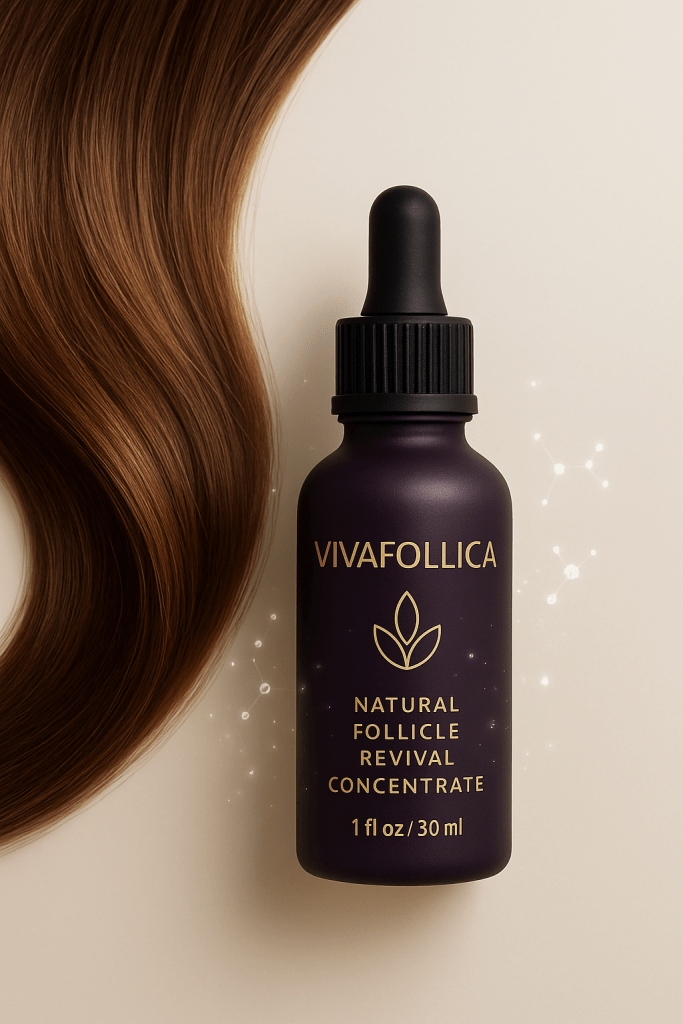
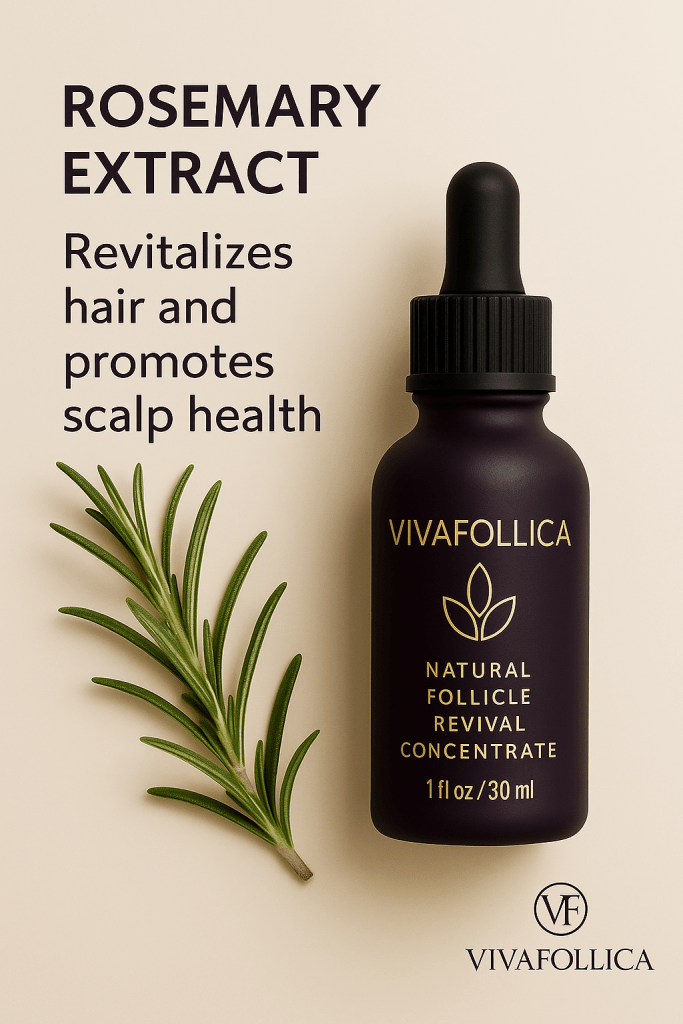
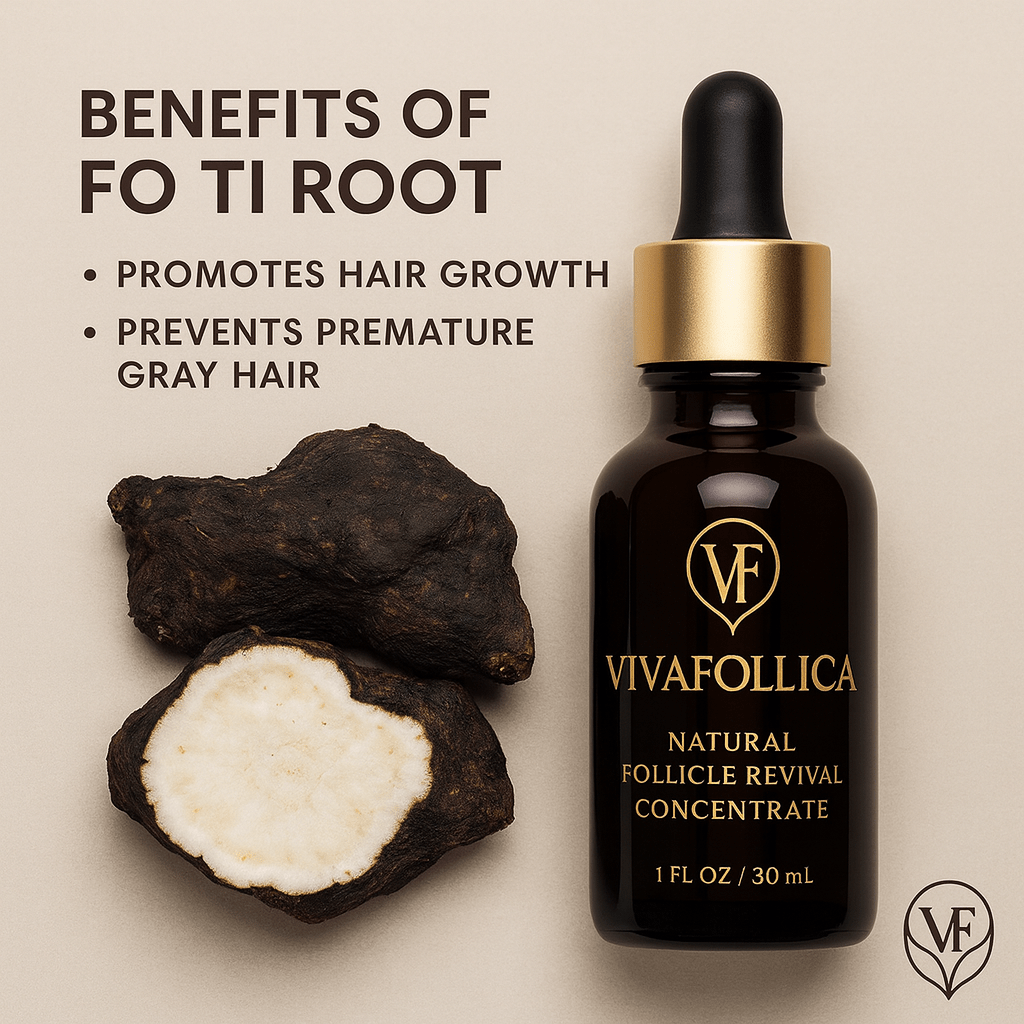
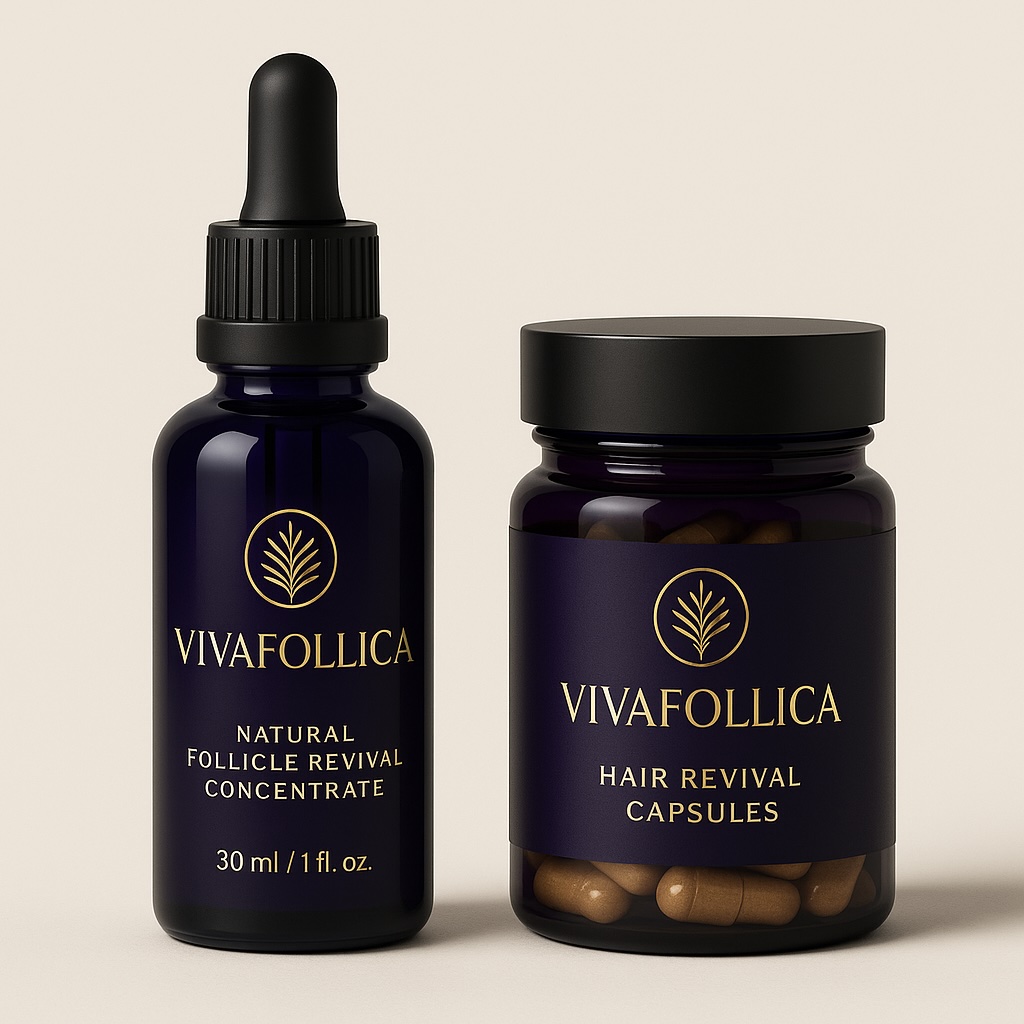
    That’s why treatments that strengthen and protect the follicle — like Vivafollica’s Natural Follicle Revival Concentrate, formulated with Redensyl, Capixyl, Fo-Ti root, and Niacinamide — target the root cause of thinning. These ingredients work together to:

    • Reactivate dormant follicles
    • Extend the hair’s growth phase
    • Reduce inflammation at the scalp
    • Improve scalp barrier health

    The Common Thread: Follicle Sensitivity

    No matter where hair thinning starts — crown, temples, or all over — the core issue is usually follicle sensitivity.

    When hair follicles are exposed to stressors like hormones (especially DHT), inflammation, or nutrient deficiency, they gradually shrink. Over time, this reduces their ability to produce strong, healthy strands.

    That’s why treatments that strengthen and protect the follicle — like Vivafollica’s Natural Follicle Revival Concentrate, formulated with Redensyl, Capixyl, Fo-Ti root, and Niacinamide — target the root cause of thinning. These ingredients work together to:

    • Reactivate dormant follicles
    • Extend the hair’s growth phase
    • Reduce inflammation at the scalp
    • Improve scalp barrier health

    How to Support Thinning-Prone Areas

    Here are some science-backed habits that make a visible difference:

    1. Apply a hair growth serum consistently. Use daily on clean scalp to stimulate follicles and support new growth.
    2. Massage your scalp. Improves circulation and encourages nutrient delivery.
    3. Avoid tight hairstyles. Give follicles room to recover.
    4. Eat a protein-rich diet. Hair is made of keratin — a protein — so nourishment starts from within.
    5. Manage stress. Meditation, sleep, and exercise can help reduce hair loss caused by cortisol.
    6. Protect from heat and UV. Overexposure damages hair shafts and weakens roots.

    Hair thinning is common, natural, and treatable. Whether you’re seeing changes along your part line, temples, or crown, remember — hair health starts at the scalp.

    By addressing the why behind your thinning and using targeted, clinically supported products like Vivafollica’s Follicle Revival Concentrate, you can help revive dormant follicles and restore visible thickness and shine.

    Healthy, beautiful hair isn’t about perfection — it’s about giving your scalp the care and consistency it deserves.

  • The Correct Way to Apply Hair Growth Serum: Timing, Frequency & Application Tips

    When it comes to promoting stronger, thicker, and healthier hair, hair growth serums have become a beauty essential. Whether your goal is to repair thinning areas, strengthen your scalp barrier, or boost shine, how you apply your serum matters just as much as what’s inside it.

    Many people invest in high-quality formulas with active ingredients like Redensyl, Capixyl, caffeine, niacinamide, and botanical extracts—but see limited results because of inconsistent or incorrect application. To help you get the best from your hair serum, let’s break down the correct way to apply it, when to use it, and how often for optimal results.

    Step 1: Start With a Clean, Dry (or Slightly Damp) Scalp

    A hair growth serum works best when it can directly reach your scalp, not your hair strands. That’s because it’s designed to nourish the follicles, where new hair grows.

    To prep properly:

    1. Shampoo your hair with a gentle, sulfate-free formula to remove buildup, oils, and styling products.
    2. Pat your hair dry with a towel until it’s slightly damp—your scalp should be clean but not soaking wet.
    3. Avoid using heavy conditioners or oils before applying your serum, as they can create a barrier that blocks absorption.

    💡 Pro tip: If you apply your serum to a dirty or oily scalp, the product may sit on the surface instead of reaching your follicles, limiting results.

    Step 2: Section Your Hair for Even Application

    For even coverage, divide your hair into small sections. This ensures every part of your scalp receives serum.

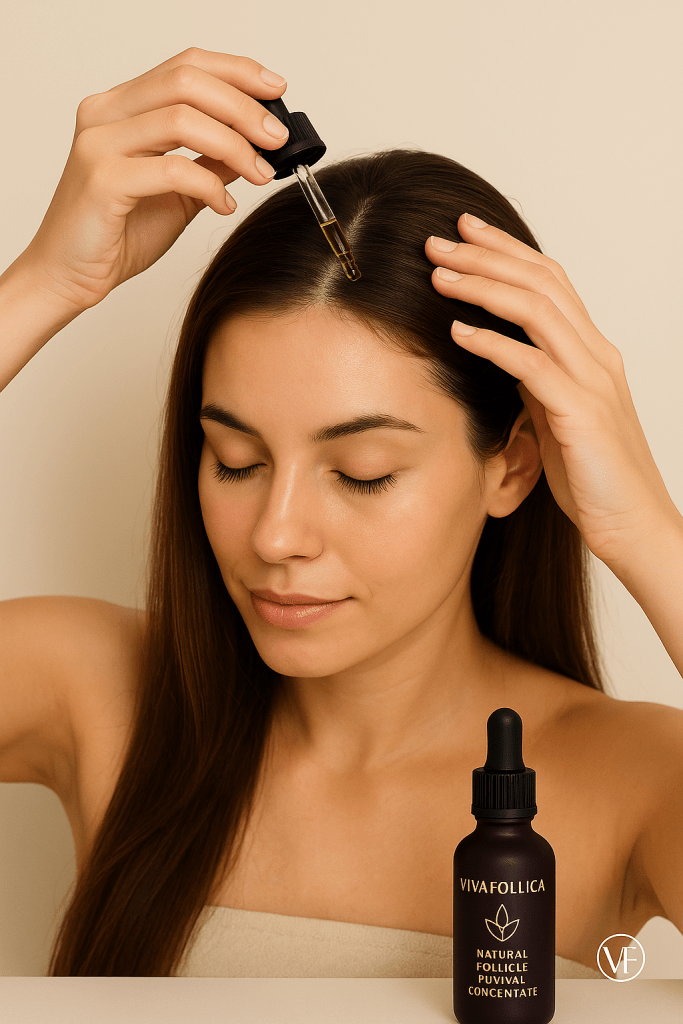
    1. Use the dropper to apply small drops directly onto your scalp—focusing on thinning or problem areas (like the hairline, temples, or crown).
    2. A few drops go a long way. Most serums only need 2–3 dropperfuls total, depending on your hair thickness.
    3. Avoid over-applying; it won’t make your hair grow faster and can make your roots feel greasy.

    💬 Think of this as feeding your scalp in tiny doses, not soaking it.

    Step 3: Massage Gently

    After applying your serum, use your fingertips to gently massage your scalp for 1–2 minutes. This helps boost circulation, encouraging nutrients to reach your hair follicles.

    You can use small circular motions starting at the front hairline and working toward the crown. Avoid scratching or applying too much pressure—gentle is key.

    If you want to elevate your ritual, try using a silicone scalp massager. It can make your application more effective and relaxing while boosting blood flow.

    💡 Bonus tip: Massage not only enhances absorption but can also help relieve tension—a small act of self-care that benefits your scalp health, too.

    Step 4: Let the Serum Absorb

    Once applied, don’t rinse your hair. Most hair growth serums are leave-in treatments designed to stay on your scalp and continue working throughout the day or night.

    • Allow the serum to absorb fully before applying other styling products.
    • If your serum feels sticky or heavy, you may be using too much. Try a smaller amount next time.

    For serums like Vivafollica, which contain advanced actives such as Redensyl, Capixyl, Fo-Ti root extract, and niacinamide, it’s important to let the product stay on the scalp for at least 6–8 hours for maximum benefit.

    When Is the Best Time to Apply Hair Growth Serum?

    Timing matters — and it depends on your daily routine.

    Morning Application:

    • Works well if you wash your hair in the morning.
    • Choose a lightweight, non-greasy serum that won’t affect your styling.
    • The key is consistency: apply before drying or styling, once the scalp is clean.

    Evening Application:

    • Great for overnight absorption.
    • Your scalp’s natural repair process is most active while you sleep, which makes night use ideal for deeper penetration and nourishment.
    • Apply after your evening shower or on a clean scalp before bed.

    💬 Many dermatologists recommend nighttime application, as it allows the actives to work undisturbed for several hours.

    How Often Should You Use Hair Growth Serum?

    Consistency is everything when it comes to visible results.

    • For best results: Apply once daily—either in the morning or evening.
    • If your serum is gentle enough (like Vivafollica’s Redensyl- and Capixyl-based formula), you can use it twice dailyduring the first few months to jumpstart growth.
    • After 3–4 months, once new baby hairs start appearing, you can reduce to once daily or every other day to maintain results.

    💡 It’s not about using a lot—it’s about using it regularly.

    When Will You See Results?

    Hair growth takes time, and patience is key.

    Here’s what to expect:

    • After 4–6 weeks: You may notice less shedding and a healthier-feeling scalp.
    • After 8–12 weeks: New “baby hairs” may begin to sprout near your hairline or crown.
    • After 4–6 months: Fuller, thicker, and stronger strands start to become noticeable.

    Like skincare, haircare results build gradually. Regular use, combined with a healthy diet and reduced stress, gives the best long-term results.

    Step 5: Combine With Healthy Hair Habits

    To maximize your serum’s effectiveness:

    • Avoid overwashing your hair—2–3 times per week is ideal for most people.
    • Use a sulfate-free shampoo and hydrating conditioner to protect your scalp barrier.
    • Avoid tight hairstyles that cause breakage.
    • Protect your scalp from UV rays—yes, even your scalp can get sun damage!
    • Eat foods rich in protein, iron, zinc, and biotin, which all support healthy follicles.

    💚 Remember, your scalp is skin—when it’s healthy, your hair thrives.

    In Summary

    Using your hair growth serum the right way makes all the difference.
    Here’s your quick recap:

    ✅ Apply to a clean scalp (morning or night)
    ✅ Use 2–3 droppers total — just enough to cover thinning areas
    ✅ Massage for 1–2 minutes to stimulate circulation
    ✅ Don’t rinse — let it absorb
    ✅ Use daily for the best long-term results

    Think of your hair growth serum as a daily ritual of renewal. Each application strengthens your scalp, revives dormant follicles, and supports the growth of beautiful, healthy strands.

    With consistency, patience, and the right technique, you’ll soon see (and feel) the difference — stronger roots, a balanced scalp, and hair that radiates vitality from within.

    💜 Where science meets nature — that’s the Vivafollica promise.

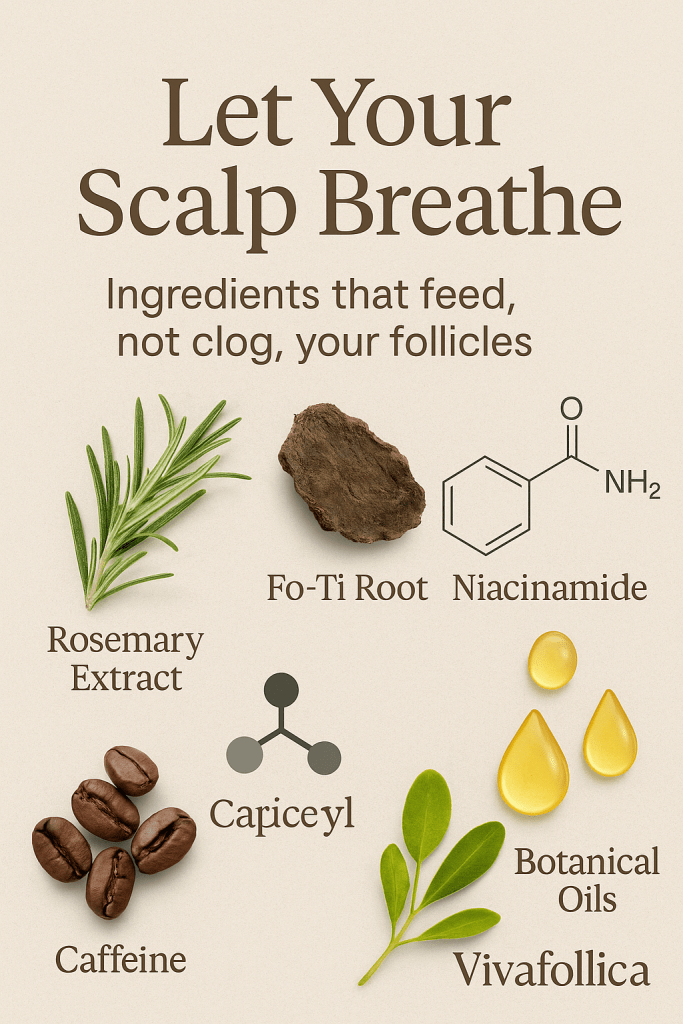
  • Let Your Scalp Breathe: Ingredients That Feed, Not Clog, Your Follicles

    When we think about healthy hair, our focus often lands on products that promise shine, volume, or strength. But what if the secret to truly beautiful hair starts deeper — at the scalp?

    Your scalp is skin, just like the skin on your face. It breathes, sweats, sheds, and renews itself. And just like facial pores, scalp pores can get clogged by heavy oils, residue, and harsh ingredients. The result? Sluggish follicles, buildup, flakes, and dull, lifeless strands.

    At Vivafollica, we believe that a clean, balanced scalp is the foundation for healthy hair growth. That’s why we formulate with ingredients that feed your follicles instead of suffocating them. Let’s dive into the natural, science-backed ingredients that nurture your scalp — and what makes them so effective.

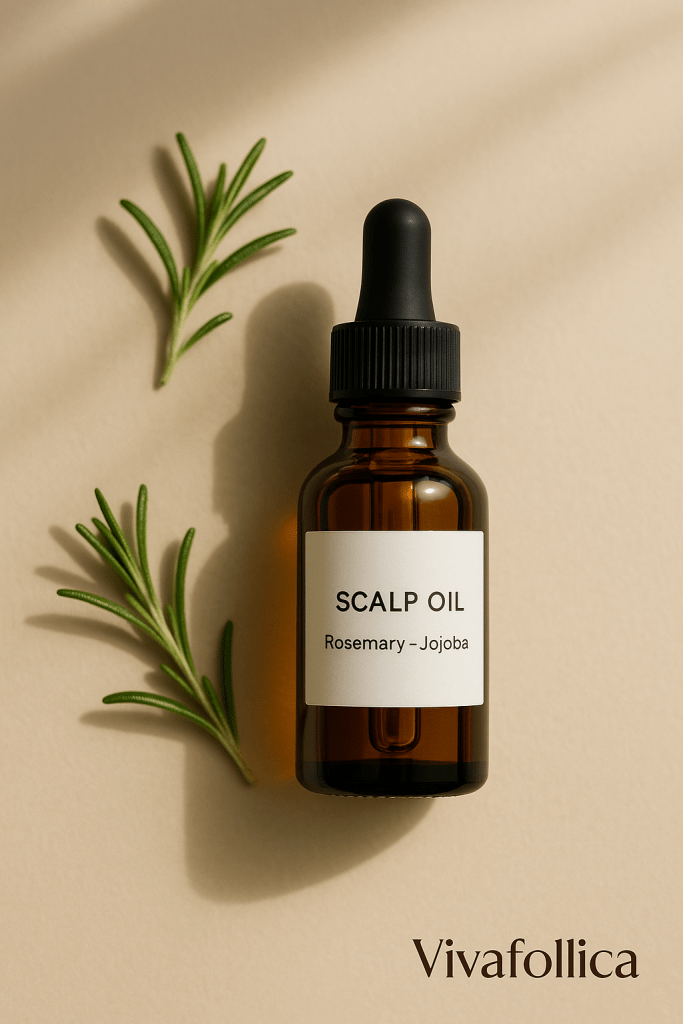
    🌿 Rosemary Extract: The Circulation Booster

    Rosemary has been used for centuries as a natural remedy for hair thinning and scalp imbalance. Modern studies have shown that rosemary oil can be just as effective as some clinical treatments for stimulating new hair growth — without the irritation.

    How it works:

    Rosemary improves blood circulation to the scalp, delivering oxygen and nutrients directly to the follicles. This increased flow nourishes the roots and helps extend the hair’s growth phase (the anagen phase).

    It also has antioxidant and antimicrobial properties, keeping your scalp clear of buildup and bacteria that can lead to inflammation or dandruff.

    💜 In Vivafollica formulations, rosemary extract is one of the key botanical actives that awaken dormant follicles and restore balance naturally.

    🌱 Fo-Ti Root: Ancient Herbal Rejuvenation

    Known as He Shou Wu in Traditional Chinese Medicine, Fo-Ti Root is celebrated as a longevity tonic — especially for hair vitality.

    Why it matters:

    Fo-Ti helps boost scalp microcirculation and supports the hair’s natural pigment production, often associated with reducing premature graying and thinning.

    It’s rich in antioxidants and bioactive compounds that strengthen the follicles and improve scalp elasticity, making it an essential ingredient for maintaining youthful, resilient hair.

    💜 Vivafollica incorporates Fo-Ti Root as part of our nature-meets-science philosophy — bridging traditional herbal wisdom with modern scalp care.

    💧 Niacinamide (Vitamin B3): The Barrier Protector

    Niacinamide isn’t just for glowing skin — it’s a superstar for your scalp too. This multitasking vitamin helps restore balance, strengthen the skin barrier, and reduce irritation.

    What it does:

    • Regulates sebum production to prevent an oily or congested scalp
    • Reduces inflammation and flakiness
    • Supports hydration and resilience

    When your scalp’s barrier is healthy, follicles can thrive in a calm, balanced environment.

    💜 Vivafollica uses Niacinamide to ensure your scalp stays soothed, hydrated, and protected from environmental stress.

    ☕ Caffeine: The Follicle Energizer

    If caffeine can wake you up in the morning, imagine what it can do for your hair follicles!

    Science behind it:

    Caffeine penetrates the scalp barrier and stimulates hair roots at the cellular level, extending the growth phase and delaying shedding. It also helps block the effects of DHT, a hormone linked to hair loss.

    By increasing circulation and energy supply to each follicle, caffeine energizes the scalp environment, helping new strands grow stronger from the root.

    💜 That’s why caffeine is a star ingredient in Vivafollica’s formulations — it energizes follicles naturally, without irritation.

    🔬 Redensyl & Capixyl: Where Nature Meets Science

    While botanical extracts form the heart of our philosophy, Vivafollica also integrates clinically tested actives like Redensyl and Capixyl — two advanced complexes that support visible hair growth.

    Redensyl

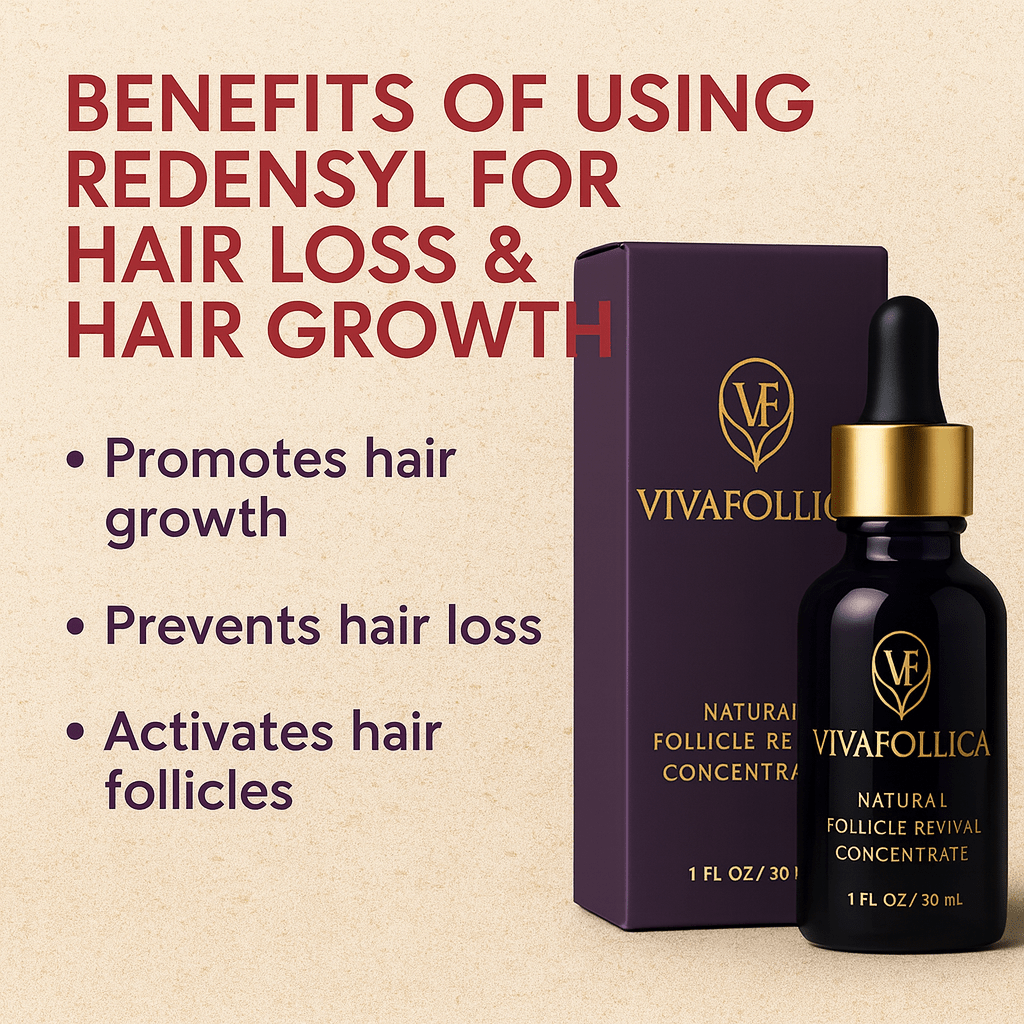
    Redensyl targets the hair follicle stem cells, encouraging new hair growth from the source. It helps reawaken dormant follicles, improving density and strength over time.

    Capixyl

    Capixyl is a blend of biomimetic peptides and red clover extract, which help reduce follicle inflammation and strengthen the anchoring of each hair strand. The result: less shedding and a thicker, fuller appearance.

    💜 By combining Redensyl and Capixyl with botanical extracts, Vivafollica creates a synergistic effect — where science enhances nature, not replaces it.

    🌸 Botanical Oils: Nourishment Without Buildup

    Not all oils clog pores. In fact, lightweight, non-comedogenic oils can help maintain scalp hydration without suffocating the follicles.

    Our favorites:

    • Jojoba Oil: Mimics your scalp’s natural sebum to balance moisture.
    • Squalane: Lightweight, fast-absorbing hydration that protects from dryness.
    • Grapeseed Oil: Rich in linoleic acid and antioxidants, perfect for sensitive scalps.

    These oils hydrate and nourish without residue, supporting a breathable, flexible scalp barrier that encourages stronger roots.

    💜 At Vivafollica, we believe hydration should feel clean — never greasy.

    ✨ The Vivafollica Difference

    Each ingredient in Vivafollica’s line has a purpose — not just to make hair look good, but to help it grow from a healthy foundation.
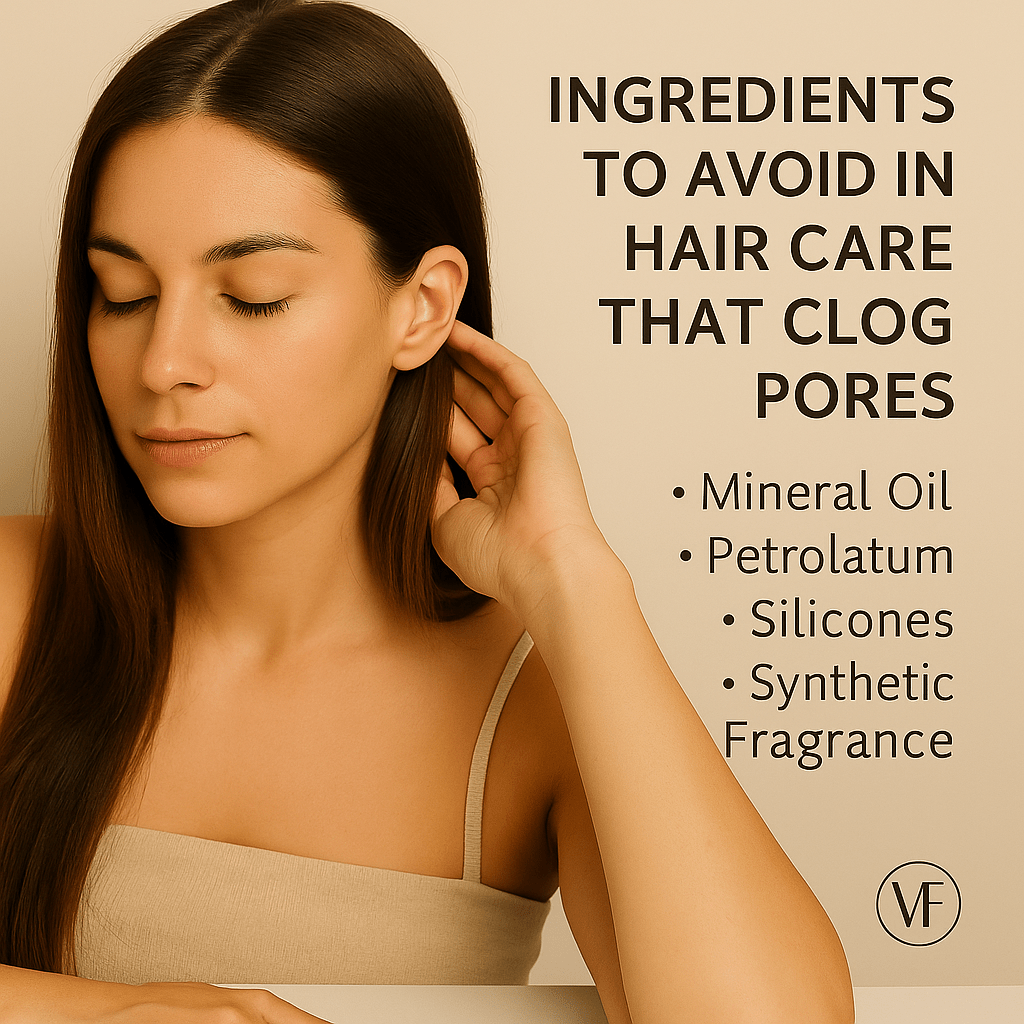
    We avoid the ingredients that clog and weigh down your scalp: no silicones, no mineral oils, no sulfates, and no harsh fragrances.

    Instead, we blend botanical extracts with modern science to achieve true scalp harmony — clean, breathable, and balanced.

    Because when your scalp can breathe, your hair can thrive. 🌿

    💆‍♀️ How to Support a Breathable Scalp at Home

    1. Choose scalp-safe products — avoid heavy, waxy formulas.
    2. Exfoliate gently once a week to remove buildup.
    3. Use lightweight oils to hydrate your scalp and ends.
    4. Massage regularly — stimulate circulation and relax tension.
    5. Stay consistent — real scalp health builds over time.

    💜 Your scalp is the soil where your hair grows — nourish it with care.

    Healthy hair starts with a clean foundation. The ingredients you choose matter — they can either clog your follicles or fuel your growth. By using natural, science-backed botanicals like rosemary, niacinamide, caffeine, Fo-Ti root, Redensyl, and Capixyl, you’re giving your scalp exactly what it needs: balance, vitality, and breathability.

    Vivafollica — Where Nature Meets Science.
    Nourish your roots. Let your scalp breathe.

  • Is Your Scalp Clogged? Ingredients You Should Avoid for Healthy Hair Growth

    When it comes to hair care, we often focus on our strands—shampooing, conditioning, and styling to achieve that smooth, glossy finish. But here’s the truth: your scalp is skin—and just like the skin on your face, it can become clogged, congested, and irritated if it’s not treated with care.

    If your scalp feels greasy a day after washing, or if you notice flakes, itchiness, or slow hair growth, buildup may be to blame. Let’s take a closer look at the ingredients that clog your scalp pores and hinder healthy hair growth, and how to choose better alternatives that let your scalp—and your hair—breathe.

    Why Scalp Congestion Matters

    Your scalp contains thousands of tiny follicles. Each one houses a hair strand and a sebaceous (oil) gland that keeps the hair soft and nourished. When pores and follicles are clogged by heavy oils, silicones, or styling residues, it disrupts the scalp’s natural balance. The result? Weakened hair follicles, reduced oxygen flow, and slower hair growth.

    Think of it like skincare: you wouldn’t apply a thick, pore-clogging product to your face and expect glowing skin. The same goes for your scalp.

    1. Heavy Silicones

    Silicones are often used to make hair look smooth and shiny. While they can give instant softness, they’re synthetic polymers that coat the hair and scalp with an invisible film. Over time, this film traps dirt, sweat, and sebum—creating buildup that’s hard to remove.

    Common silicones to avoid:

    • Dimethicone
    • Cyclopentasiloxane
    • Amodimethicone
    • Trimethylsilylamodimethicone

    These ingredients are not toxic, but they don’t allow the scalp to breathe, leading to dullness, dryness, and even flakiness. Instead, look for water-soluble silicones (like Dimethicone Copolyol) or natural alternatives like argan oil and jojoba oil, which hydrate without suffocating the scalp.

    2. Mineral Oil & Petrolatum

    Derived from petroleum, mineral oil and petrolatum are occlusive agents that seal in moisture—but they also seal out everything else. They can trap sweat, bacteria, and dead skin cells around the follicles, increasing the risk of scalp irritation and follicle blockage.

    These ingredients are especially common in hair greases and certain “shine” serums. If you’re aiming for healthy growth, skip the heavy petroleum-based products and reach for light botanical oils like grapeseedsweet almond, or squalane.

    3. Sulfates (Harsh Detergents)

    Sulfates such as Sodium Lauryl Sulfate (SLS) and Sodium Laureth Sulfate (SLES) are strong surfactants used for that “foamy” clean feeling. While effective at removing dirt, they can strip away natural oils and disrupt your scalp’s microbiome.

    A stripped scalp often overcompensates by producing even more oil—creating a vicious cycle of buildup, dryness, and greasiness. Instead, choose gentle, sulfate-free cleansers formulated with mild surfactants like Cocamidopropyl Betaineor Sodium Lauroyl Methyl Isethionate.

    4. Waxes & Butters

    While natural butters like shea or cocoa can nourish hair, they’re too heavy for the scalp—especially in leave-on products. These thick ingredients can clog follicles, making it harder for hair to grow freely.

    If your scalp tends to get oily or flaky, avoid formulations with:

    • Beeswax
    • Candelilla wax
    • Shea butter (in scalp treatments)

    Instead, reserve these for your hair ends where moisture is needed most, not directly on the scalp.

    5. Artificial Fragrance & Drying Alcohols

    Synthetic fragrances and certain alcohols (like isopropyl alcohol or SD alcohol 40) can irritate the scalp and compromise the skin barrier. Over time, irritation may trigger inflammation—a hidden enemy of healthy hair growth.

    Opt for fragrance-free or naturally scented formulas with essential oils like peppermintrosemary, or tea tree, known for stimulating and purifying properties. And when it comes to alcohols, remember: not all are bad. Fatty alcohols (like cetyl or stearyl alcohol) are actually moisturizing.

    6. Heavy Styling Products

    Dry shampoo, gels, sprays, and leave-ins can accumulate on the scalp if not properly washed out. Many of these contain polyquaterniumssynthetic resins, and film formers that block follicles over time.

    If you use styling products daily:

    • Clarify once a week with a gentle detox shampoo.
    • Rinse thoroughly after workouts or swimming.
    • Avoid applying products directly to the roots unless they’re meant for scalp care.

    How to Keep Your Scalp Clear and Balanced

    1. Exfoliate Weekly

    Just like your face, your scalp needs exfoliation. Use a scalp scrub or exfoliating serum to lift away dead skin and product residue. Look for ingredients like salicylic acid (BHA) or fruit enzymes for gentle cleansing.

    2. Balance with Lightweight Oils

    Light oils such as jojobaargan, or rosemary-infused oils can mimic your scalp’s natural sebum, hydrating without clogging pores.

    3. Maintain a Healthy Wash Routine

    Don’t overwash (it can trigger excess oil production), but don’t let buildup linger either. A balanced schedule—2–3 washes a week—works best for most scalp types.

    4. Use pH-Balanced Products

    Healthy scalp pH should hover around 4.5–5.5. Look for products that mention “pH balanced” or include niacinamide, which helps soothe and strengthen the scalp barrier.

    Vivafollica’s Philosophy: Clean, Breathable Scalp Care

    At Vivafollica, we believe that healthy hair begins at the root. Our formulations are designed to nourish without suffocating, using active botanicals like Redensyl, Capixyl, Fo-Ti, caffeine, and niacinamide—all backed by science to improve scalp vitality and encourage natural hair growth.

    Every ingredient is chosen intentionally, avoiding heavy silicones, sulfates, and pore-clogging agents. The result? A clean, balanced scalp that allows your hair to thrive—naturally.

    Your scalp deserves the same thoughtful care as your skin. By choosing clean, lightweight, and non-comedogenic hair products, you’re not just preventing buildup—you’re creating the foundation for stronger, shinier, more resilient hair.

    Remember: when your scalp can breathe, your hair can flourish.

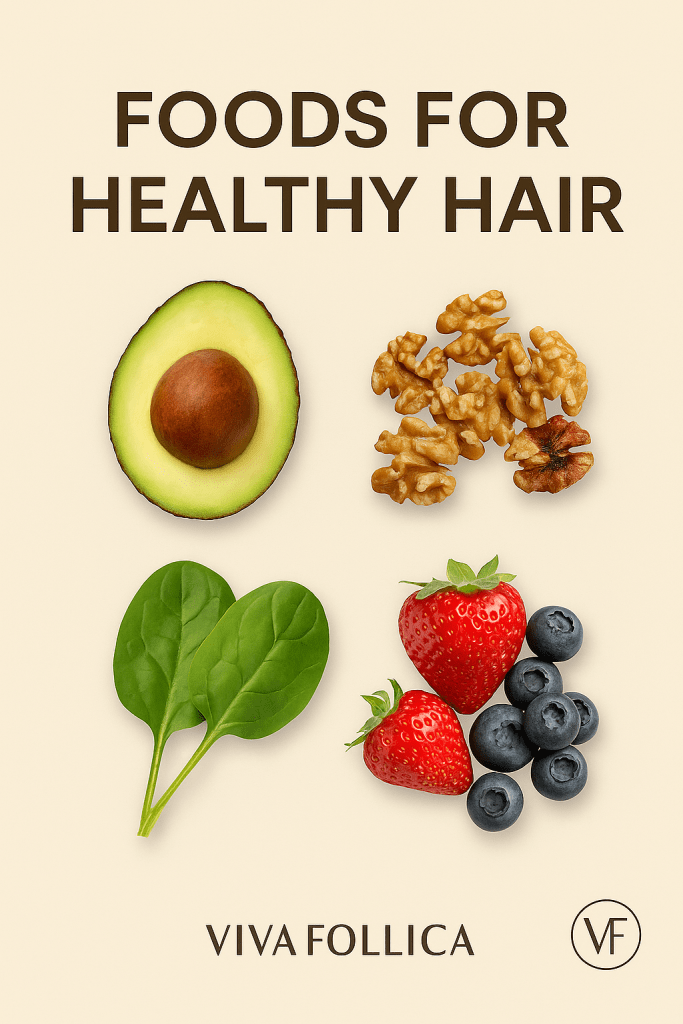
  • Feed Your Scalp: The Best Foods for Healthy Hair Growth

    When we think about hair care, we often focus on what we put on our hair—shampoos, conditioners, masks, and scalp oils. But the truth is, healthy hair starts from within. Your scalp is living skin, and each hair follicle depends on nutrients delivered through your bloodstream to grow strong, thick, and resilient strands.

    This means what you eat is just as important—if not more so—than the products you apply. By fueling your body with hair-loving foods, you give your scalp and follicles the essential building blocks they need for growth, shine, and strength.

    At Vivafollica, we believe in a holistic approach to scalp wellness: nourishing the scalp inside and out. Let’s dive into the top foods that should be on your plate if you want healthier, fuller hair.

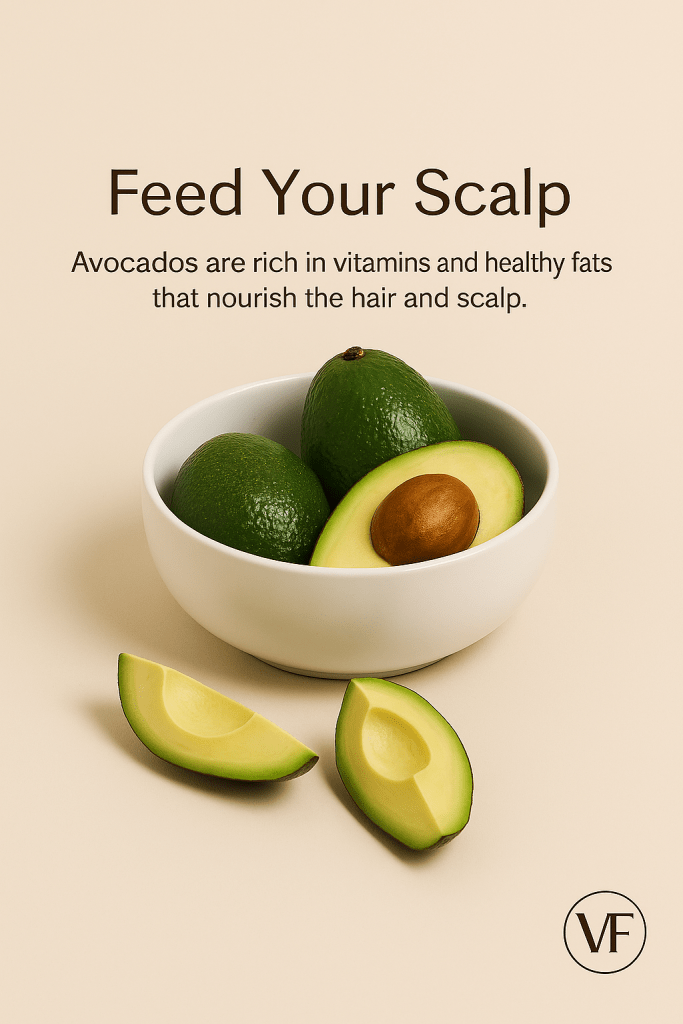
    1. Avocados: The Scalp Superfood

    Avocados are creamy, chic, and full of nutrients that your scalp craves. They’re packed with healthy fats, vitamins, and minerals that deeply support follicle health.

    • Vitamin E acts as an antioxidant, protecting follicles from oxidative stress while improving blood circulation to the scalp.
    • Biotin and folate, part of the B-vitamin family, are crucial for keratin production, the protein that makes up your hair strands.
    • Monounsaturated fats hydrate the scalp from within, reducing dryness and flakiness.

    Try adding avocado to salads, smoothies, or on top of whole-grain toast for a scalp-boosting meal.

    2. Spinach & Leafy Greens: Nature’s Multivitamin

    Spinach and other leafy greens like kale and arugula are nutritional powerhouses. They’re loaded with iron, vitamin A, vitamin C, and folate—all key for scalp health.

    • Iron supports red blood cells, which carry oxygen to hair follicles. Low iron is one of the most common causes of hair shedding.
    • Vitamin A helps the scalp produce sebum, your natural oil that keeps hair hydrated and shiny.
    • Vitamin C improves iron absorption and boosts collagen, strengthening hair structure.

    Incorporating leafy greens daily is one of the simplest ways to ensure your scalp stays nourished.

    3. Walnuts & Other Nuts: Omega-3 Hair Boosters

    Nuts, especially walnuts, are rich in omega-3 fatty acids, which help fight scalp dryness and inflammation. They also contain protein, vitamin E, zinc, and selenium, all important for follicle health.

    • Omega-3s nourish hair follicles and add natural shine.
    • Zinc and selenium protect the scalp and help regulate oil production.
    • Protein ensures your hair strands remain strong and resistant to breakage.

    Keep a small handful of nuts as a daily snack or sprinkle them over yogurt or salads.

    4. Berries: Antioxidant Powerhouses

    Berries like blueberries, strawberries, and raspberries are loaded with antioxidants and vitamin C, which protect hair follicles against free radical damage.

    • Vitamin C also helps your body absorb iron, a mineral that keeps follicles strong and oxygenated.
    • Antioxidants fight oxidative stress, which can weaken hair growth cycles.

    A bowl of fresh berries makes a perfect scalp-friendly breakfast or snack.

    5. Eggs: Protein & Biotin for Strong Strands

    Eggs are often called a “perfect protein,” and for good reason. Hair is made almost entirely of protein, and eggs provide it in abundance. They’re also one of the best natural sources of biotin, a B-vitamin essential for healthy hair.

    • Protein strengthens strands and prevents breakage.
    • Biotin helps produce keratin, boosting hair structure and resilience.
    • Vitamin D in eggs supports follicle activity and growth.

    Including eggs in your breakfast rotation is one of the easiest ways to feed your scalp.

    6. Sweet Potatoes: Beta-Carotene Brilliance

    Sweet potatoes are rich in beta-carotene, a compound that your body converts into vitamin A.

    • Vitamin A plays a key role in scalp health by regulating sebum production. Too little vitamin A can cause dry, brittle hair, while the right amount ensures your scalp stays moisturized.
    • Beta-carotene also supports cell growth, helping follicles function optimally.

    Roasted, mashed, or baked, sweet potatoes make a delicious and hair-friendly addition to your diet.

    7. Salmon & Fatty Fish: Growth-Boosting Omega-3s

    Fatty fish like salmon, mackerel, and sardines are excellent sources of omega-3 fatty acids, high-quality protein, and vitamin D.

    • Omega-3s improve scalp circulation, reduce inflammation, and help follicles produce healthier hair.
    • Vitamin D plays a role in creating new follicles and supporting growth cycles.

    For plant-based alternatives, chia seeds and flaxseeds also offer omega-3s, though in a slightly different form.

    8. Greek Yogurt: Protein + Probiotics

    Greek yogurt provides both protein and probiotics, which support overall health and indirectly benefit your scalp.

    • Protein builds strong strands.
    • Probiotics improve gut health, which can enhance nutrient absorption—ensuring your follicles get the vitamins and minerals they need.

    Top your yogurt with berries and walnuts for a nutrient-packed, scalp-friendly snack.

    Pairing Nutrition with Scalp Oiling

    While food fuels your scalp from the inside, topical treatments nourish it directly. That’s why Vivafollica encourages pairing scalp-friendly foods with regular scalp oiling.

    • Nutrient-rich oils like rosemary and jojoba deliver hydration and bioactive compounds directly to the scalp.
    • Massage improves circulation, enhancing nutrient delivery both internally and externally.

    This inside-out + outside-in approach ensures your scalp gets everything it needs for optimal hair health.

    How to Build Your “Feed Your Scalp” Routine

    1. Add scalp-friendly foods daily. Choose at least one from the list—avocado, spinach, eggs, or berries—and rotate them.
    2. Snack smart. Keep walnuts or almonds on hand for quick nourishment.
    3. Stay hydrated. Water helps transport nutrients to your scalp.
    4. Practice scalp oiling weekly. Massage Vivafollica’s concentrate into your scalp to boost blood flow and deliver active botanicals.
    5. Be consistent. Like skincare, results show up with regular care.

    Beautiful hair doesn’t just happen on the surface—it begins deep in the follicle. By combining scalp oiling rituals with a diet rich in avocados, spinach, walnuts, berries, eggs, sweet potatoes, and more, you’re giving your scalp exactly what it needs to thrive.

    At Vivafollica, we believe your scalp is skin, and it deserves the same thoughtful attention you give to your face. Feed it well from the inside, care for it from the outside, and watch your hair transform into its healthiest, most radiant state.

  • Feed Your Scalp: How Nutrition Fuels Healthy Hair Growth

    When it comes to beautiful, strong, and healthy hair, most of us think about shampoos, conditioners, and treatments. But the truth is, great hair starts at the scalp—and your scalp’s health depends not only on what you apply topically but also on what you feed your body. Just like glowing skin benefits from a nutrient-rich diet, your hair thrives when your scalp is nourished from within.

    This is the philosophy behind Vivafollica’s “Feed Your Scalp” approach: combining effective scalp oiling rituals with scalp-loving foods that provide the building blocks your follicles need to flourish.

    Why Feeding Your Scalp Matters

    Your scalp is living tissue, full of hair follicles—the tiny structures that produce each strand of hair. Each follicle is like a mini-organ, supplied with blood vessels that deliver oxygen, vitamins, and nutrients. Without the right nourishment, follicles can weaken, leading to dull, brittle hair, thinning, or even shedding.

    By “feeding your scalp” with both topical oils and internal nutrients, you create the conditions for:

    • Healthier follicles that produce stronger, thicker hair.
    • Balanced scalp function, reducing dryness, oiliness, or flakiness.
    • Improved circulation, helping oxygen and nutrients reach the roots.
    • Sustained growth cycles, ensuring hair stays in its active growth phase longer.

    In short, what you eat—and how you care for your scalp—shows up on your head.

    Avocados: The Scalp Superfood

    Among all the foods that support hair and scalp health, avocados stand out as a true superstar. Chic, nutrient-packed, and versatile, they deliver exactly what your scalp needs.

    1. Rich in Healthy Fats

    Avocados are loaded with monounsaturated fats, particularly oleic acid. These fats help keep cell membranes flexible and hydrated, supporting scalp barrier health. Just as you moisturize skin from the outside, healthy fats in your diet moisturize from the inside—reducing dryness, itchiness, and flakiness on the scalp.

    2. Full of Hair-Loving Vitamins

    Avocados are a great source of:

    • Vitamin E – a powerful antioxidant that protects follicles from oxidative stress and improves scalp circulation.
    • Vitamin C – crucial for collagen production, which strengthens hair structure.
    • Vitamin B-complex – especially biotin and folate, known for promoting hair growth and reducing breakage.

    3. High in Minerals

    Potassium and magnesium in avocados help maintain electrolyte balance and blood flow to the scalp. Improved circulation means nutrients are delivered more efficiently to the follicles.

    4. Easy to Incorporate

    Whether you mash avocado on toast, add slices to a salad, or blend it into a smoothie, it’s one of the easiest ways to boost your scalp nutrition daily.

    Other Scalp-Friendly Foods to Include

    While avocados are amazing, variety matters. Here are a few more foods that work wonders for scalp and hair health:

    • Walnuts – Provide omega-3 fatty acids, protein, and vitamin E to strengthen follicles.
    • Leafy greens (spinach, kale, arugula) – Packed with iron and vitamin A, supporting healthy sebum production.
    • Berries (blueberries, strawberries) – Loaded with antioxidants and vitamin C to protect follicles and aid collagen synthesis.
    • Eggs – A rich source of protein and biotin, essential for keratin production.
    • Sweet potatoes – Contain beta-carotene, which the body converts to vitamin A to regulate scalp oils.

    Pairing Nutrition with Scalp Oiling

    Food feeds your scalp from within, but topical treatments nourish it directly. That’s where Vivafollica’s scalp oiling ritual comes in. A few drops of rosemary-infused, nutrient-rich oil massaged into the scalp not only improves circulation but also delivers hydration and bioactive compounds directly to the follicles.

    Think of it as a two-way approach:

    • Internal nutrition (foods like avocado) supports follicle health from the inside.
    • External nourishment (Vivafollica oils) supports follicle health from the outside.

    Together, they create the ultimate environment for stronger, fuller, and shinier hair.

    How to Start a “Feed Your Scalp” Routine

    1. Add scalp-friendly foods to your plate. Start simple: half an avocado with breakfast, a handful of walnuts for a snack, or a spinach salad at lunch.
    2. Stay hydrated. Water helps transport nutrients to your scalp and keeps skin tissues hydrated.
    3. Practice weekly scalp oiling. Apply a few drops of Vivafollica oil directly to the scalp, massage for 5–10 minutes, and leave it on for at least 30 minutes before washing.
    4. Be consistent. Just like skin care, results show up over time with regular habits.
    5. Pair with gentle products. Use clean, sulfate-free shampoos and conditioners to avoid stripping away the natural balance you’re creating.

    Chic Self-Care Meets Science

    Feeding your scalp is more than a trend—it’s a fusion of timeless wisdom and modern science. Ancient practices like scalp oiling, now backed by research on ingredients like rosemary and niacinamide, work hand-in-hand with nutrient-rich foods to provide holistic care.

    At Vivafollica, we believe your scalp is skin—and deserves the same thoughtful attention you give to your face. By combining self-care rituals with intentional nutrition, you elevate hair care into a chic, wellness-driven lifestyle.

    Healthy hair starts with a nourished scalp. Foods like avocado provide the vitamins, minerals, and healthy fats your follicles need, while scalp oiling delivers hydration and stimulation externally. Together, they form the foundation for stronger, shinier, and more resilient hair.

    Next time you enjoy an avocado toast, think of it as more than just a meal—it’s scalp food. Pair it with a Vivafollica scalp massage, and you’re giving your hair the luxury care it deserves.

  • Why Scalp Oiling Doesn’t Clog Pores or Make Hair Oily—And How to Treat Your Ends, Too

    If you’ve ever hesitated to oil your scalp because you fear greasy hair or clogged pores, you’re not alone. It sounds counterintuitive: adding oil to a scalp that naturally produces sebum. But when done correctly, scalp oiling is one of the most effective rituals for stronger, healthier hair—and it does not lead to clogged pores or an oily mess.

    Here’s why.

    1. Understanding the Scalp’s Natural Balance

    Your scalp is skin. Like the skin on your face, it has sebaceous (oil) glands that secrete sebum—the natural oil that keeps hair soft and your scalp protected. Problems like itchiness, flakiness, or even excessive oiliness often stem from an imbalance: either too little sebum (leading to dryness) or overproduction triggered by irritation and product buildup.

    When applied properly, natural plant oils such as rosemary, jojoba, or argan actually help to balance this system. Instead of adding “more grease,” they:

    • Mimic the structure of natural sebum (especially jojoba oil) so the scalp recognizes it as familiar and stops overproducing oil.
    • Dissolve hardened sebum plugs and styling residue that can otherwise block follicles.
    • Reinforce the skin barrier, preventing dehydration and the irritation that can trigger excess oil production.

    The result? A healthier scalp that self-regulates, rather than one forced into overdrive.

    2. Why Scalp Oils Don’t Clog Pores

    Clogged pores—or folliculitis—occur when heavy, non-breathable ingredients sit on the scalp for long periods, trapping dead skin cells and bacteria. The key difference lies in which oils you use and how you apply them.

    • Choose non-comedogenic, lightweight oils. Jojoba, rosemary-infused carrier oils, argan, or grapeseed have molecular weights and fatty-acid profiles that sink into the skin instead of forming a waxy layer.
    • Apply sparingly. A few drops massaged into the scalp are enough to cover the entire area; drenching the scalp is unnecessary.
    • Massage and rinse. Gentle massage increases circulation and helps the oil penetrate, and washing with a mild shampoo ensures no residue lingers.

    In fact, the right oil blend cleanses follicles by loosening dead cells and hardened sebum, reducing the chance of blocked pores.

    3. Why It Doesn’t Make Hair “Too Oily”

    A well-formulated scalp oil doesn’t leave hair looking greasy for two main reasons:

    • Absorption and bonding: Oils like rosemary-infused jojoba or squalane absorb into the skin and upper hair shaft. They don’t simply sit on top of strands the way a heavy butter or mineral oil might.
    • Sebum feedback loop: When your scalp senses it’s properly moisturized, it scales back its own sebum production. Over time, this often means less natural oiliness, not more.

    Many people notice that after several weeks of consistent scalp oiling—especially if they previously struggled with oily roots—their wash frequency actually decreases because the scalp is finally balanced.

    4. How to Use Scalp Oil Correctly

    Step 1: Choose the right oil blend.
    Look for clean, cold-pressed oils with proven scalp benefits such as rosemary, tea tree, or peppermint in a light carrier like jojoba or grapeseed. Vivafollica’s blends, for example, pair rosemary with Redensyl and Capixyl for added follicle support.

    Step 2: Part hair and apply a few drops.
    Work in sections, applying drops directly to the scalp—not on the hair length.

    Step 3: Massage for 5–10 minutes.
    Use fingertips (not nails) to boost circulation and help the oil absorb.

    Step 4: Leave on 30 minutes to overnight.
    Cover with a silk scarf or shower cap if leaving overnight.

    Step 5: Cleanse gently.
    Shampoo as usual with a sulfate-free cleanser. If you used more oil, a double cleanse might be needed.

    5. The Bonus: Treating the Ends of Your Hair

    While the focus is on scalp health, the leftover oil on your hands after a massage is liquid gold for your hair ends. Here’s why applying it lightly to your lengths—especially the last 2–3 inches—makes a difference:

    • Prevents split ends: Oils fill microscopic gaps in the hair cuticle, reducing breakage.
    • Boosts shine and softness: They smooth the hair surface, reflecting light and reducing frizz.
    • Adds a protective layer: Particularly helpful before heat styling or exposure to dry indoor air.

    How to do it: After massaging your scalp, rub any excess oil between your palms and gently glide it over the lower half of your hair, focusing on the driest ends. There’s no need for extra oil; a whisper-thin layer is ideal.

    6. Common Myths Debunked

    Myth 1: Oil makes fine hair limp and greasy.
    Reality: Lightweight oils like jojoba are almost identical to natural scalp oils and absorb quickly. The key is using drops—not spoonfuls.

    Myth 2: You can skip shampoo after oiling.
    Reality: Cleansing is essential. The magic happens when the oil nourishes and then is washed away, leaving behind balanced hydration.

    Myth 3: Scalp oiling causes acne along the hairline.
    Reality: Acne near the scalp is more often linked to occlusive styling products, unwashed hats, or hormonal fluctuations. Non-comedogenic scalp oils, properly cleansed, are unlikely culprits.

    7. The Bigger Picture: Long-Term Benefits

    Regular scalp oiling delivers benefits that go beyond aesthetics:

    • Stronger hair from the root up
    • Balanced sebum production—meaning fewer “greasy hair days”
    • Healthier scalp microbiome with less itch or flake
    • Enhanced hair density and shine over time

    It’s an ancient practice validated by modern dermatology: nourishing the scalp is one of the simplest ways to transform the overall health of your hair.

    Key Takeaways

    • Scalp oiling doesn’t clog pores when you use lightweight, non-comedogenic oils and rinse properly.
    • It won’t make your hair oily—in fact, it helps regulate sebum production.
    • It doubles as a hair treatment when lightly smoothed over dry ends to prevent breakage and frizz.

    A few drops, a short massage, and a gentle cleanse are all it takes to reap these long-term rewards.

  • The Science-Backed Benefits of Rosemary Oil for Scalp Oiling

    Healthy, vibrant hair begins at the root—literally. While shampoos, conditioners, and styling products get plenty of attention, the scalp is the true foundation of hair growth and strength. One botanical ingredient that continues to capture the spotlight for scalp care is rosemary oil. Long used in traditional medicine and now increasingly supported by modern research, rosemary oil offers a powerful yet natural way to nourish the scalp and stimulate healthy hair growth.

    In this article, we’ll explore how rosemary oil works, why it’s so beneficial for scalp oiling, and how to incorporate it into your routine.

    1. What Makes Rosemary Oil Special

    Rosemary (Rosmarinus officinalis) is an aromatic evergreen shrub native to the Mediterranean. Its essential oil is distilled from the leaves and flowering tops, producing a concentrated extract rich in beneficial compounds such as:

    • Carnosic acid and rosmarinic acid: potent antioxidants that help neutralize free radicals and protect scalp tissue from oxidative stress.
    • 1,8-cineole and camphor: compounds with mild antimicrobial and anti-inflammatory properties.
    • Ursolic acid: a natural compound thought to help improve circulation and strengthen the hair follicle environment.

    These phytochemicals give rosemary oil its multi-dimensional benefits: stimulating hair growth, calming irritation, and supporting overall scalp wellness.

    2. Stimulates Hair Growth by Boosting Circulation

    One of the most celebrated benefits of rosemary oil is its ability to increase blood flow to the scalp. Better circulation delivers more oxygen and essential nutrients to hair follicles, creating the ideal environment for robust hair growth.

    Several scientific studies back this up. A well-cited 2015 clinical trial compared rosemary oil to 2% minoxidil (a common hair-growth treatment) for people with androgenetic alopecia. After six months, both groups showed similar improvements in hair count—but the rosemary oil group experienced less scalp itching. This suggests rosemary oil may provide comparable results to pharmaceutical treatments while being gentler on the scalp.

    3. Strengthens Hair Follicles and Reduces Shedding

    Hair loss often starts at the follicle, where stress, hormonal changes, or nutrient deficiencies weaken the hair root. Rosemary oil’s antioxidant content protects follicles from oxidative damage, while its anti-inflammatory action can reduce irritation around the follicle bulb.

    By strengthening the follicular structure and keeping the scalp’s microenvironment balanced, regular rosemary oil massage can help reduce breakage and hair shedding, encouraging thicker, fuller hair over time.

    4. Natural Solution for Dandruff and Scalp Imbalances

    Flakes, itchiness, and excess oil are signs that the scalp microbiome—the balance of yeast and bacteria on your skin—is out of harmony. Rosemary oil naturally combats this by providing antimicrobial and antifungal effects. These properties can help:

    • Control Malassezia yeast, a common cause of dandruff
    • Reduce scalp itch and irritation
    • Keep pores and hair follicles clear of buildup

    Because it’s plant-based and free from harsh chemicals, rosemary oil can be a soothing alternative to medicated shampoos, especially for those with sensitive skin.

    5. Regulates Sebum Production

    Whether your scalp tends to be dry and flaky or oily and greasy, rosemary oil helps balance sebum production. Its mild astringent qualities can reduce excess oil without stripping natural moisture, while its antioxidants help strengthen the scalp barrier so that it retains hydration where needed. The result is a scalp that feels clean, comfortable, and nourished—setting the stage for stronger, shinier hair.

    6. Provides a Calming Aromatherapy Experience

    Scalp health isn’t only about biology—it’s also about stress management. Chronic stress is a well-known contributor to hair thinning and shedding. The fresh, herbal scent of rosemary oil offers a therapeutic aromatherapy benefit, helping to reduce feelings of tension and promote relaxation during your self-care ritual. A gentle scalp massage with rosemary oil can double as a stress-relief session, improving overall well-being.

    7. How to Incorporate Rosemary Oil into Your Routine

    Rosemary oil is highly concentrated, so it’s important to use it correctly:

    Dilute before applying
    Mix 3–5 drops of rosemary essential oil with a carrier oil such as jojoba, coconut, or argan oil. This not only prevents irritation but also helps the oil spread evenly across the scalp.

    Massage into the scalp
    Apply the mixture to the scalp using gentle circular motions for 5–10 minutes. This massage action further stimulates blood flow and aids absorption.

    Leave on and rinse
    For maximum benefit, leave the oil on for at least 30 minutes before washing with a gentle shampoo. Some people prefer an overnight treatment (using a shower cap to protect bedding) for deeper conditioning.

    Consistency is key
    Repeat 2–3 times per week. Visible improvements—such as reduced shedding or new baby hairs—often appear after several months of regular use.

    8. DIY vs. Ready-to-Use Products

    While pure rosemary essential oil is readily available, many high-quality hair serums and scalp treatments now feature rosemary oil as a star ingredient, often blended with synergistic botanicals like peppermint oil, niacinamide, or caffeine. These formulations can simplify the process, ensuring proper dilution and providing added benefits.

    For example, brands like Vivafollica combine rosemary oil with scientifically proven growth factors such as Redensyl and Capixyl for an advanced scalp-care experience that merges traditional herbal wisdom with cutting-edge innovation.

    9. Safety Tips and Considerations

    • Always conduct a patch test on the inner arm before full application to rule out sensitivity.
    • Avoid direct contact with eyes and mucous membranes.
    • If you’re pregnant, nursing, or have a medical condition such as epilepsy, consult your doctor before use.
    • Keep essential oils out of reach of children and pets.

    Scalp oiling with rosemary oil is far more than an old herbal remedy—it’s a science-backed approach to holistic hair health. From stimulating hair growth and strengthening follicles to balancing oil production and soothing scalp irritation, rosemary oil addresses multiple root causes of hair loss and poor scalp health at once.

    Whether you choose to DIY your oil blend or opt for an expertly formulated scalp serum, adding rosemary oil to your self-care routine can transform your hair from the roots up. In a world crowded with chemical treatments and quick fixes, rosemary oil stands out as a time-honored, natural solution that nourishes, protects, and revitalizes—bringing you closer to stronger, healthier, and more radiant hair.

  • Scalp Oiling 101: The Ancient Ritual Making a Modern Comeback

    Healthy, beautiful hair begins at the root—and that means caring for the scalp itself.
    One timeless practice that’s regaining popularity is scalp oiling.
    Used for centuries in cultures from India to the Mediterranean, scalp oiling nourishes the skin of the scalp, strengthens follicles, and creates an ideal environment for growth and shine.

    Whether you’re curious about natural hair care, struggling with dryness, or looking to boost thickness, this guide covers everything you need to know: the benefitshow to do it correctlywho it’s best for, and expert tips for making it part of your routine.

    Why the Scalp Needs Extra Care

    Your scalp is living skin—complete with sebaceous (oil) glands, blood vessels, and a delicate barrier that keeps hair follicles healthy.
    Daily washing, heat styling, pollution, and stress can dry or inflame that skin, leading to flakiness, itching, or hair that grows in weaker and thinner.

    Scalp oiling acts like a nourishing facial for your head, delivering moisture, antioxidants, and fatty acids directly to where your hair grows.

    Top Benefits of Scalp Oiling

    1. Deep Hydration & Barrier Repair
      Natural plant oils replenish lost lipids and help repair the scalp’s protective layer.
      This relieves dryness, flaking, and irritation, and improves the scalp’s ability to hold moisture.
    2. Improved Circulation for Growth
      Massaging oil into the scalp increases blood flow.
      Better circulation means more oxygen and nutrients reach hair follicles—encouraging stronger, longer growth.
    3. Reduced Breakage & Split Ends
      By moisturizing both the scalp and the first inch of hair, oiling keeps strands more elastic and resistant to breakage.
    4. Balanced Sebum Production
      Counterintuitively, applying oil can signal the scalp to produce less of its own sebum over time, helping calm an oily or flaky scalp.
    5. Stress Relief & Self-Care
      The gentle massage of scalp oiling relaxes tense muscles and provides a spa-like, mindful moment at home.

    Choosing the Right Oil

    Different oils bring unique nutrients.
    Some can be used alone; many people blend them.

    OilBest ForKey Nutrients
    Coconut oilDry or brittle hairLauric acid, deep penetration
    Jojoba oilOily or flaky scalpClosest to natural sebum
    Argan oilFrizz & shineVitamin E, antioxidants
    Rosemary-infused oilGrowth & circulationRosmarinic acid, stimulates follicles
    Almond oilSensitive scalpVitamin B & E, lightweight moisture
    Vivafollica serum blend (with Redensyl, Capixyl, Fo-Ti, Niacinamide)Overall follicle supportBotanical actives + vitamins for long-term growth

    Tip: Look for cold-pressed, unrefined oils to ensure the highest nutrient content.

    How to Oil Your Scalp Correctly

    Proper technique turns scalp oiling into an effective treatment rather than a messy chore.

    Step 1: Start with dry or slightly damp hair
    Oil spreads better when hair is not soaking wet.
    Detangle gently to avoid knots.

    Step 2: Section the hair
    Use clips or the end of a comb to part hair into small sections for even application.

    Step 3: Warm a small amount of oil
    Warming between your palms (or slightly in a bowl) helps the oil glide and improves absorption.

    Step 4: Massage into the scalp
    Using your fingertips (not nails), massage in small circles for 5–10 minutes.
    This stimulates blood flow and helps nutrients penetrate.

    Step 5: Leave it on

    • Minimum: 30 minutes
    • Ideal: 1–2 hours
    • Overnight: great for very dry hair (protect pillow with a towel)

    Step 6: Wash out gently
    Use a mild, sulfate-free shampoo.
    Two quick shampoos may be needed if using heavier oils.

    Step 7: Frequency

    • Dry scalp: 1–2 times per week
    • Normal scalp: once per week
    • Oily scalp: every other week

    Who Can Benefit Most

    Scalp oiling is versatile, but it shines for certain needs:

    • Dry, flaky, or itchy scalp
      The extra lipids soothe and rebalance.
    • Brittle or thinning hair
      Follicle nourishment and stronger roots reduce breakage and shedding.
    • Color-treated or heat-styled hair
      Oils help protect against moisture loss and heat damage.
    • People in dry climates or winter months
      Indoor heating and low humidity can strip natural oils.

    It can also be a relaxing ritual for anyone seeking a spa-like self-care practice.

    Tips for Best Results

    • Don’t overuse: A few teaspoons of oil are enough; excess won’t absorb better.
    • Focus on the scalp, not just the ends: Follicle health begins at the root.
    • Combine with balanced cleansing: Over-oiling without gentle washing can lead to buildup.
    • Choose the right time: Evening or a lazy weekend morning works well since you need time to let the oil sit.
    • Pair with powerful actives: Using a serum that combines nourishing oils with proven ingredients like Redensyl or Niacinamide can deliver both immediate moisture and long-term follicle support.

    Scalp Oiling vs. Hair Masking

    While a hair mask coats the hair shaft, scalp oiling targets the skin of the scalp and the follicles inside it.
    For maximum results, you can combine the two: oil the scalp and apply a hydrating mask to the mid-lengths and ends.

    Modern Scalp Oiling: Nature + Science

    Today’s best scalp treatments merge traditional plant oils with cutting-edge ingredients.
    For example, Vivafollica’s Natural Follicle Revival Concentrate blends nourishing botanicals with Redensyl, Capixyl, Niacinamide, and Fo-Ti Root—all scientifically shown to encourage growth and protect pigment.

    This marriage of ancient wisdom and modern science means you don’t have to choose between natural rituals and proven results.

    Key Takeaways

    • Scalp oiling is skincare for your scalp—hydrating, strengthening, and stimulating growth.
    • Choose the right oil or oil-serum blend for your hair type.
    • Massage gently and consistently for the best results.
    • Works especially well for dry, brittle, or heat-styled hair, and in cold or dry climates.
    • Combining traditional oils with modern actives like those in Vivafollica gives both immediate and long-term benefits.

    Scalp oiling is a simple, time-honored ritual that nourishes the root of healthy hair.
    Whether you use pure botanical oils or a modern serum rich in Redensyl, Capixyl, Fo-Ti Root, and Niacinamide, the key is consistency.
    Your scalp is skin—treat it with the same care and it will reward you with stronger, thicker, more vibrant hair.

  • Your Scalp Is Skin: Why It Deserves the Same Care as Your Face and Body

    When most of us think about skincare, we picture cleansers, serums, and moisturizers for the face and body. But there’s one very important part of our skin that often gets ignored: the scalp. Just like the skin on our cheeks or arms, the scalp is living tissue with pores, oil glands, and a delicate barrier that protects and nourishes what grows from it—our hair.

    Treating the scalp as an afterthought can lead to dryness, itching, flaking, excess oil, and even hair thinning. If you want strong, glossy hair, scalp care should be step one, not an occasional add-on.

    Your Scalp = Skin

    Under a microscope, the scalp is virtually identical to the skin elsewhere on the body. It has:

    • Epidermis and dermis layers that renew every 28–30 days.
    • Sebaceous (oil) glands that lubricate and protect.
    • Sweat glands and a microbiome that maintain healthy pH.

    What makes the scalp unique is density: it has more oil glands and hair follicles per square inch than anywhere else on the body. Those follicles are living mini-organs that depend on healthy skin to grow strong hair.

    Just like facial skin, the scalp’s barrier can become dehydrated, inflamed, or clogged, leading to irritation, excess shedding, or slow growth.

    Why Scalp Neglect Shows Up in Your Hair

    If facial skin is neglected, it looks dull and ages faster. The scalp behaves the same way:

    • Build-up of product and oil suffocates follicles and can slow growth.
    • Dryness and micro-inflammation weaken hair roots and cause breakage.
    • Poor circulation limits delivery of oxygen and nutrients, leading to thinner strands.

    Healthy hair begins well below the surface. Without scalp care, styling products and even genetics can only go so far.

    Skincare Principles that Apply to the Scalp

    Think of scalp care as facial care, translated upward:

    Face Care StepScalp EquivalentWhy It Matters
    Gentle cleansingScalp shampoo or exfoliating treatmentRemoves product, sebum, dead cells
    Hydrating serumLeave-in scalp serumBalances oil, hydrates, soothes
    Antioxidant serumBotanical extracts (e.g., Fo-Ti root)Protects against free radicals & aging
    SPFUV protection spraysPrevents sun damage and dryness

    Your scalp thrives on the same routines—cleanse, treat, protect—that keep facial skin vibrant.

    Science-Backed Ingredients for a Healthy Scalp

    Here are four hero ingredients that Vivafollica champions, each chosen for its ability to create the optimal scalp environment for healthy, thick hair:

    1. Redensyl®

    A plant-based complex that targets hair follicle stem cells, helping to restart the growth cycle. Redensyl nourishes the papilla (the follicle’s growth engine) and improves density over time.

    2. Capixyl™

    A peptide + red clover blend that helps reduce inflammation around follicles, anchoring hair more securely and discouraging miniaturization (a common cause of thinning). It’s like a calm, nutrient-rich cushion for each strand.

    3. Fo-Ti Root (He Shou Wu)

    An antioxidant powerhouse long used in Chinese herbal traditions to protect natural pigment and slow premature graying. Modern research shows Fo-Ti can help improve circulation and protect follicle cells from oxidative stress.

    4. Niacinamide (Vitamin B3)

    Famous in facial serums, Niacinamide boosts microcirculation, strengthens the scalp’s barrier, and supports keratin production for stronger, thicker hair. It also helps calm irritation and regulate oil—vital for balanced scalp health.

    How to Incorporate Scalp Care Daily

    1. Cleanse Thoughtfully
    Choose a gentle, sulfate-free shampoo and massage it in with your fingertips (not nails) for 60 seconds. This lifts debris and stimulates blood flow.

    2. Exfoliate Weekly
    A mild scalp scrub or an exfoliating tonic removes dead cells and styling build-up, keeping follicles clear.

    3. Feed the Skin
    Apply a lightweight scalp serum—ideally one rich in Redensyl, Capixyl, Fo-Ti root, and Niacinamide—to supply antioxidants, peptides, and hydration directly where hair begins.

    4. Protect and Balance
    If you spend time outdoors, a scalp-friendly UV spray prevents sun damage and dryness.

    Lifestyle Habits That Support Scalp Skin

    • Stay hydrated and eat nutrient-rich foods (leafy greens, protein, omega-3s) to support cell renewal.
    • Avoid tight hairstyles that restrict blood flow.
    • Limit harsh chemical treatments and excessive heat.
    • Manage stress, which can increase shedding and affect oil production.

    Why Vivafollica Focuses on the Scalp

    Vivafollica was founded on the principle that hair wellness starts at the root. Our Natural Follicle Revival Concentrate blends Redensyl, Capixyl, Fo-Ti root, and Niacinamide to nourish the scalp as carefully as you nourish your face. This synergy helps:

    • Improve follicle strength and density
    • Maintain natural pigment and delay graying
    • Reduce irritation and dryness
    • Create the ideal foundation for stronger, more resilient hair

    It’s the same philosophy that guides great skincare—clean, treat, protect—brought to the scalp.

    Healthy, beautiful hair begins with a healthy scalp. Care for it with the same attention you give to your face, and you’ll see the results from root to tip.

  • Niacinamide (Vitamin B3): The Secret to Thicker, Stronger Hair

    More Than a Skincare Ingredient

    When most people think of Niacinamide (Vitamin B3), they picture glowing skin, minimized pores, and a smooth complexion. But this powerhouse vitamin isn’t just a skincare favorite — it’s also emerging as a key player in hair health. From boosting scalp circulation to strengthening follicles, Niacinamide has become an essential ingredient in advanced haircare formulas like Vivafollica’s Natural Follicle Revival Concentrate.

    In this article, we’ll explore how Niacinamide helps regrow and thicken hair, the science behind its benefits, and why it deserves a permanent place in your hair wellness routine.

    What Is Niacinamide?

    Niacinamide is a form of Vitamin B3, a water-soluble vitamin essential for energy metabolism and cellular repair. Unlike some nutrients, Vitamin B3 cannot be stored by the body for long, meaning we need a constant supply through diet, supplements, or topical products.

    When applied to the scalp, Niacinamide:

    • Enhances blood flow
    • Boosts keratin and protein production
    • Strengthens the skin barrier (including the scalp)
    • Provides antioxidant protection

    Together, these actions create the perfect environment for healthy hair growth and thickness.

    How Niacinamide Benefits Hair Growth

    1. Improves Blood Circulation to the Scalp

    Healthy hair begins with a nourished scalp. Niacinamide helps increase microcirculation, delivering more oxygen and nutrients to hair follicles. A well-fed follicle is stronger, more resilient, and capable of producing thicker strands.

    👉 Think of it like watering a plant — the better the roots are nourished, the healthier the plant grows.

    2. Boosts Keratin and Protein Synthesis

    Hair is primarily made of keratin, a structural protein. Niacinamide plays a role in boosting keratin and other proteins, making strands stronger and less prone to breakage.

    This is especially important for those with thinning or brittle hair. By strengthening the structural foundation, Niacinamide helps hair grow longer without snapping or splitting.

    3. Supports Fuller, Thicker Hair Growth

    By reducing oxidative stress and improving scalp health, Niacinamide supports follicles during the anagen phase (active growth phase). This means not only more strands, but denser, fuller hair overall.

    4. Reduces Scalp Inflammation

    Inflammation at the follicle level can cause shedding, thinning, and even scalp discomfort. Niacinamide’s anti-inflammatory properties help soothe the scalp, creating a balanced environment for regrowth.

    5. Provides Antioxidant Protection

    Oxidative stress — caused by pollution, UV rays, and lifestyle factors — accelerates hair aging and weakens follicles. Niacinamide functions as an antioxidant, neutralizing free radicals that damage cells and lead to thinning or premature graying.

    Scientific Evidence Behind Niacinamide for Hair

    Several studies have highlighted the benefits of topical Niacinamide:

    • A 2005 study found that a topical preparation with Niacinamide improved hair fullness, volume, and scalp healthin women experiencing hair thinning.
    • Dermatology research suggests that Niacinamide enhances epidermal barrier function, meaning it strengthens the scalp’s ability to hold moisture and resist damage.
    • Its role in boosting NAD+ (nicotinamide adenine dinucleotide) levels improves cellular energy — essential for hair follicles, which are among the fastest-growing cells in the body.

    While more research is ongoing, the evidence so far supports Niacinamide as a valuable ingredient for hair regrowth and thickening formulas.

    Niacinamide vs. Other Hair Ingredients

    Niacinamide works best when paired with complementary actives. For example:

    • Redensyl → Activates stem cells to restart growth.
    • Capixyl → Reduces follicle inflammation and anchors hair at the root.
    • Fo-Ti Root (He Shou Wu) → Protects pigment cells to slow graying.

    Together, these create a synergistic formula targeting every stage of the hair growth cycle — from stimulating follicles to protecting against future thinning.

    This is the philosophy behind Vivafollica’s Natural Follicle Revival Concentrate: a blend of modern science and natural botanicals.

    How to Use Niacinamide for Hair

    Niacinamide is most effective when applied topically to the scalp. Here’s how to integrate it into your routine:

    1. Apply Daily – Consistency is key for visible results.
    2. Massage Into Scalp – Improves circulation and absorption.
    3. Target Thinning Areas – Focus on the hairline, crown, or spots with noticeable shedding.
    4. Combine With Lifestyle Care – Balanced nutrition, stress management, and sun protection all support healthy growth.

    Safety and Side Effects

    One of the best things about Niacinamide is its excellent safety profile.

    • Non-irritating for most skin types.
    • Works well with other active ingredients.
    • Rarely causes sensitivity.

    As with all topicals, it’s smart to do a patch test before full application, especially if you have sensitive skin.

    Vivafollica: Where Nature Meets Science

    At Vivafollica, we believe that the future of haircare lies in combining time-tested botanicals with clinically proven actives. That’s why our formulas include Niacinamide, alongside Redensyl, Capixyl, and Fo-Ti Root — for a complete approach to reviving and protecting your hair.

    👉 Ready to experience the difference? Discover Vivafollica Natural Follicle Revival Concentrate — because your hair deserves the perfect balance of science and nature.
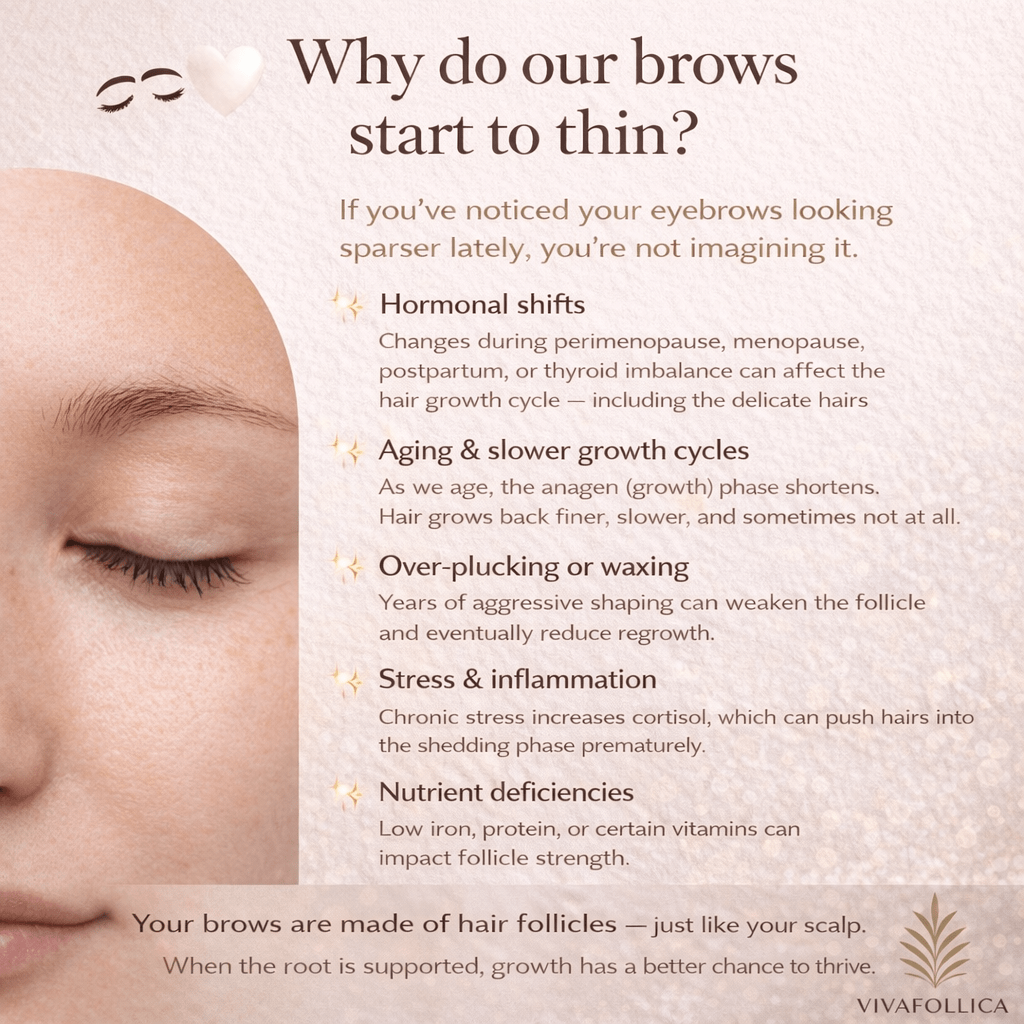
  • Hair Color and Gray Hair: Does Dyeing Make It Better or Worse?

    Introduction: The Gray Dilemma

    For many, the first instinct after spotting grays is to reach for the dye. But does coloring hair make gray hair worse, or can it be done without damage? The truth is, the answer depends on the type of coloring, hair health, and the products used. Let’s explore the science behind hair color and gray hair.

    Why Gray Hair Is Different

    Gray hair isn’t just hair that has lost pigment — its texture and structure change too:

    • Coarser texture: Grays often feel wiry or rough.
    • Thinner cuticle layer: This makes gray hair more porous and prone to dryness.
    • Lack of melanin: Without pigment, the hair shaft is more vulnerable to UV and oxidative damage.

    👉 This is why grays may react differently to coloring compared to pigmented hair.

    How Hair Color Works

    To understand the impact, it helps to know how dye works:

    1. Permanent dyes open the cuticle and deposit color deep into the cortex using ammonia and peroxide.
    2. Semi-permanent dyes coat the hair shaft with color but don’t penetrate deeply.
    3. Natural dyes (like henna or herbal blends) stain the surface of the hair without harsh chemicals.

    Each type affects gray hair differently.

    Can Hair Dye Make Grays Worse?

    1. Chemical Stress

    Permanent dyes use ammonia and peroxide, which can weaken the cuticle. Over time, this:

    • Dries out gray hair (already prone to dryness).
    • Causes brittleness and breakage.
    • May make grays appear more prominent as damaged hair reflects light unevenly.

    2. Fading & Resistance

    Gray hair is notoriously resistant to color because of its coarse texture. This often leads people to re-dye frequently, exposing hair to more chemicals and increasing long-term damage.
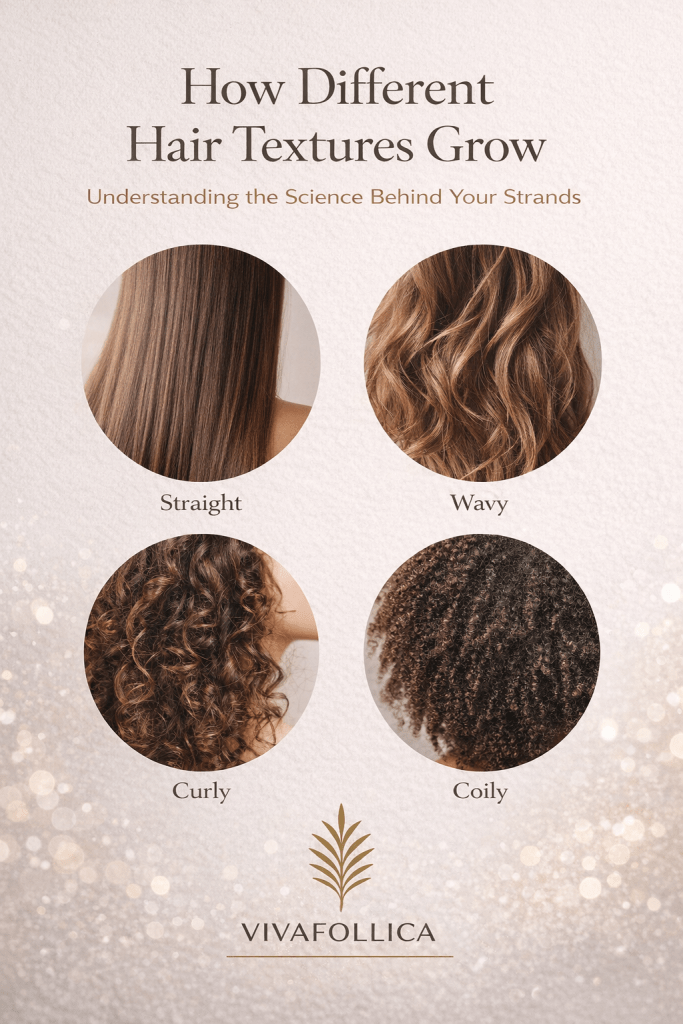
    3. Oxidative Damage

    Some dyes generate free radicals in the coloring process, which accelerate oxidative stress — the same process that caused hair to gray in the first place.

    When Hair Color Doesn’t Hurt Grays

    On the other hand, not all coloring is harmful. With the right approach, dyeing gray hair can actually enhance appearance without worsening the condition:

    • Semi-permanent or demi-permanent dyes: Gentler, no ammonia, and often infused with conditioning agents. They can blend grays softly without heavy damage.
    • Natural dyes: Henna, indigo, or herbal blends coat hair strands and improve shine without lifting the cuticle.
    • Professional salon techniques: Low-ammonia formulas, gloss treatments, and strategic highlighting can disguise grays while maintaining hair health.

    How to Color Gray Hair Without Damage

    1. Choose Gentle Formulas

    Look for ammonia-free, low-peroxide, or plant-based color systems. These minimize cuticle disruption and keep hair stronger.

    2. Focus on Blending, Not Covering

    Instead of full coverage every 3–4 weeks, consider blending techniques like balayage or highlights, which soften grays without harsh upkeep.

    3. Hydration Is Key

    Conditioning masks, scalp serums, and leave-ins restore moisture lost during coloring. Gray hair especially benefits from hydrating ingredients like hyaluronic acid, peptides, and plant oils.

    4. Antioxidant Support

    Since oxidative stress contributes to both graying and dye damage, using antioxidants (like those in Fo-Ti Root, green tea, or vitamin E) can help protect hair cells and maintain vibrancy.

    5. Protect Between Colors

    UV rays fade dye quickly — especially on grays. A UV-protectant spray or serum helps preserve both pigment and strength.

    The Vivafollica Approach

    At Vivafollica, we understand that many clients color their hair but still want strong, healthy follicles. That’s why our formulations focus on:

    • Scalp nutrition → feeding follicles with Redensyl, Capixyl, and Caffeine.
    • Antioxidant protection → Fo-Ti root and botanical extracts combat oxidative stress.
    • Strengthening hair fiber → hydration and resilience to withstand external stressors like coloring.

    This means you can enjoy your chosen shade while keeping hair and scalp in their healthiest state.

    Coloring gray hair doesn’t have to make it worse — but it depends on how you do it. By choosing gentler dyes, spacing out treatments, and pairing coloring with nourishing scalp and hair care, you can enjoy vibrant color without compromising health.

    👉 With Vivafollica, you don’t have to choose between beauty and science — you can have both.

  • Why Does Hair Turn Gray? Understanding the Causes of Graying Hair

    Introduction: The Mystery of Gray Hair

    Few things signal aging as clearly as the first silver strand in your hair. For some, it happens in their 40s or 50s; for others, grays begin to appear as early as their 20s. While gray hair is a completely natural part of life, understanding why it happens can help us slow the process and keep hair looking youthful for longer.

    The Role of Melanin in Hair Color

    Hair color is determined by melanin, a natural pigment produced by specialized cells called melanocytes, located in each hair follicle.

    • Eumelanin → produces black or brown tones.
    • Pheomelanin → produces blonde and red tones.

    When melanocytes reduce melanin production, hair loses its natural color and turns gray, silver, or white.

    The Main Causes of Gray Hair

    1. Genetics (The Biggest Factor)

    Genetics largely determine when and how quickly your hair turns gray. If your parents or grandparents grayed early, chances are you might too. Research shows that specific genes — such as the IRF4 gene — regulate melanin production and influence the onset of graying.

    👉 This is why some people in their 20s already see gray strands, while others may not gray until their 60s.

    2. Aging and Cellular Decline

    As we age, melanocytes naturally slow down and eventually stop producing melanin. This is the most common and unavoidable cause of gray hair. With each new hair cycle, the pigment supply decreases, leading to lighter and lighter strands.

    3. Oxidative Stress and Free Radical Damage

    Oxidative stress plays a critical role in premature graying. Here’s how:

    • Free radicals (unstable molecules) damage melanocytes.
    • This weakens their ability to produce melanin.
    • Over time, the balance between melanin production and oxidative stress tips — resulting in grays.

    Environmental factors like pollution, UV exposure, and even smoking can accelerate this process.

    4. Hydrogen Peroxide Build-Up

    Surprisingly, hydrogen peroxide isn’t just in your medicine cabinet — your body produces it too. Over time, hair follicles accumulate excess hydrogen peroxide, which bleaches melanin from within.

    • Younger individuals efficiently break it down with enzymes (like catalase).
    • As we age, enzyme levels decline, and hydrogen peroxide builds up, lightening hair from the inside out.

    5. Nutritional Deficiencies

    Lack of key nutrients can accelerate graying:

    • Vitamin B12: Deficiency is strongly linked to early graying.
    • Copper: Essential for melanin production.
    • Iron & Zinc: Support healthy follicle function.
    • Antioxidants (Vitamin C, E, and Polyphenols): Help fight oxidative stress.

    Poor diet or malabsorption conditions (like anemia or thyroid disorders) may contribute to premature grays.

    6. Stress: Myth or Reality?

    The idea that stress causes gray hair has been debated for decades. Recent studies suggest stress can indeed play a role:

    • Stress increases the release of norepinephrine, which depletes stem cells in the hair follicle responsible for regenerating pigment.
    • High-stress events may trigger sudden pigment loss in some individuals.

    So while stress may not be the sole cause, it can certainly accelerate graying in those already predisposed.

    7. Medical Conditions

    Certain health conditions can lead to premature graying:

    • Thyroid disorders: Affect melanin production.
    • Vitiligo: Autoimmune condition that destroys pigment cells.
    • Alopecia Areata: Can cause sudden graying when hair regrows without pigment.

    8. Lifestyle Factors

    Your daily habits also play a role:

    • Smoking: Smokers are 2.5 times more likely to gray prematurely.
    • Excessive alcohol: Contributes to oxidative stress.
    • Poor sleep: Impacts cellular repair, including pigment cells.

    Can Gray Hair Be Prevented or Reversed?

    While some causes (like genetics and aging) are inevitable, others can be managed:

    • Antioxidant-rich diet → berries, leafy greens, nuts, green tea.
    • Scalp circulation → massage, treatments that improve blood flow.
    • Nutrient support → vitamins and minerals essential for pigment production.
    • Topical solutions → botanicals like Fo-Ti root and active ingredients that protect and nourish melanocytes.

    How Vivafollica Approaches Gray Hair Prevention

    At Vivafollica, we believe in a holistic, science-meets-nature approach:

    • Fo-Ti Root → rich in antioxidants, historically used to preserve natural hair color.
    • Redensyl & Capixyl → clinically tested actives that strengthen follicles.
    • Caffeine & Botanical Extracts → improve scalp circulation and nutrient delivery.

    By combining advanced biotechnology with time-honored herbal ingredients, Vivafollica creates products designed to slow premature graying while reviving hair strength and fullness.

    Gray hair is natural, but understanding its causes empowers you to take proactive steps for healthier, more youthful hair. By nourishing your follicles, protecting pigment cells, and reducing oxidative stress, you can maintain your natural color longer — and embrace the beauty of hair at every stage of life.

    👉 Discover Vivafollica’s science-backed formulas today — and give your hair the gift of timeless vitality.

  • Fo-Ti Root: The Ancient Herbal Secret for Hair Growth and Gray Prevention

    What Is Fo-Ti Root?

    Fo-Ti root, also known as He Shou Wu, is a traditional Chinese herb that has been used for over 1,000 years to support vitality, longevity, and beauty. The name He Shou Wu literally translates to “Mr. He’s Black Hair,” a reference to the legendary story of an aging man whose gray hair turned black again after using this remarkable root.

    While myths and folklore surround its origin, modern research has begun to explore Fo-Ti’s potential role in supporting hair and scalp health.

    The Science Behind Fo-Ti and Hair Growth

    Fo-Ti root contains a unique blend of antioxidants, zinc, iron, and stilbene glycosides. Together, these compounds may:

    • Nourish hair follicles: By improving blood flow and circulation to the scalp, Fo-Ti helps deliver oxygen and nutrients directly to the roots of the hair.
    • Protect pigment cells: Its antioxidant properties help shield melanocytes (the cells responsible for hair color) from damage, slowing down premature graying.
    • Reduce oxidative stress: Oxidative stress is one of the key drivers of hair thinning and aging. Fo-Ti’s compounds may help neutralize free radicals that damage hair cells.

    Benefits of Fo-Ti Root for Hair

    1. Supports Hair Growth

    Fo-Ti is believed to stimulate dormant hair follicles, encouraging the growth of thicker, healthier strands. Consistent nourishment of the scalp promotes long-term hair vitality.

    2. Helps Prevent Premature Graying

    Thanks to its antioxidant-rich profile, Fo-Ti helps protect melanin, the pigment responsible for your natural hair color. This may reduce the speed at which hair turns gray, keeping it youthful for longer.

    3. Improves Scalp Circulation

    A healthy scalp means healthy hair. Fo-Ti’s circulation-enhancing properties ensure that essential nutrients reach each follicle, creating the optimal environment for hair growth.

    4. Boosts Overall Hair Strength

    Fo-Ti’s mineral content contributes to stronger, shinier strands that are more resistant to breakage.

    Tradition Meets Modern Innovation

    For centuries, Fo-Ti has been steeped in Chinese herbal medicine as a longevity tonic. Today, modern science is uncovering how its antioxidant and bioactive compounds may support not only hair revival but also overall wellness.

    At Vivafollica, we honor this balance of ancient wisdom and modern research. By carefully combining Fo-Ti root with clinically studied actives like Redensyl, Capixyl, and Caffeine, our formulations maximize results for stronger, fuller, and more youthful-looking hair.

    Is Fo-Ti Safe?

    When used in topical formulations like Vivafollica Natural Follicle Revival Concentrate, Fo-Ti is safe and effective for scalp and hair application. Oral supplements of Fo-Ti root can sometimes cause side effects when taken improperly — which is why we focus on carefully balanced, topical solutions that deliver targeted benefits directly where your hair needs it most.

    How to Use Fo-Ti for Hair Care

    Incorporating Fo-Ti into your hair routine is simple when it’s part of a complete, science-backed formula:

    1. Apply Daily – Massage the serum into your scalp once or twice per day.
    2. Focus on the Roots – Apply directly to thinning areas or where graying is most noticeable.
    3. Be Consistent – Visible improvements often require 3–6 months of regular use.

    The Future of Herbal Hair Science

    As more research emerges, Fo-Ti root continues to be recognized as one of nature’s most powerful ingredients for hair vitality. Combined with modern biotechnology, it represents a holistic approach to hair growth and anti-aging that goes beyond quick fixes.

    Vivafollica: Where Nature Meets Science

    At Vivafollica, our mission is simple: to restore confidence by reviving your hair naturally. That’s why we combine ancient botanicals like Fo-Ti root with scientifically validated ingredients to create products that truly transform.

  • Redensyl + Capixyl: The Dynamic Duo for Hair Growth and Scalp Health

    Hair loss and thinning hair affect millions of people worldwide. Whether it’s caused by stress, aging, hormones, or genetics, the impact goes far beyond appearance—it often affects confidence and overall well-being.

    Thankfully, modern cosmetic science has discovered ingredients that go deeper than surface-level treatments. Two of the most powerful are Redensyl® and Capixyl™. When used together, they form a synergistic duo that doesn’t just mask hair problems—it actively supports the scalp, strengthens follicles, and promotes new, healthier hair growth.

    In this blog, we’ll explore what Redensyl and Capixyl are, how they work individually, and why the combination is so effective.

    What Is Redensyl?

    Redensyl is often called the “hair galvanizer.” It’s a patented ingredient designed to target the root cause of hair loss—the inactivity of hair follicle stem cells.

    Here’s how it works:

    • Reactivates stem cells: Redensyl stimulates the stem cells inside hair follicles, encouraging them to re-enter the growth phase (anagen phase).
    • Extends growth cycles: It helps keep hair in the growth stage for longer, reducing the amount of hair that enters the shedding stage.
    • Non-hormonal: Unlike some hair loss treatments, Redensyl does not interfere with hormones, making it safe for both men and women.

    ✨ The result? More strands stay on your head, and new ones begin to grow in previously thinning areas.

    What Is Capixyl?

    Capixyl is another breakthrough ingredient for scalp and hair health. It’s a biomimetic peptide combined with red clover extract, designed to strengthen the scalp environment and reduce follicle inflammation.

    Key benefits include:

    • Reduces scalp inflammation: A calm, healthy scalp is essential for healthy follicles. Capixyl reduces irritation that can block growth.
    • Strengthens the extracellular matrix: This supports the follicle’s “anchor,” making hair stronger at the root.
    • Balances DHT activity: While not hormonal, Capixyl helps counter the effects of DHT (a hormone linked to hair miniaturization), especially useful for those with pattern thinning.

    ✨ The result? Hair grows in a more stable, nourished environment, with reduced shedding and breakage.

    Why Redensyl + Capixyl Work Better Together

    Individually, both ingredients are powerful. But when combined, they target different pathways of hair health, creating a complete system for growth and strength.

    • Redensyl focuses on growth activation. It wakes up dormant follicles and encourages new strands to emerge.
    • Capixyl focuses on follicle strength and scalp balance. It ensures the new hair has a healthier foundation to grow from.

    Think of it like gardening:

    • Redensyl is the seed activator, pushing dormant seeds to sprout.
    • Capixyl is the nutrient-rich soil conditioner, ensuring the sprouts grow strong and resilient.

    Together, they address both the cause and the environment of hair loss.

    The Benefits of Using Redensyl + Capixyl Together

    When used in a serum like Vivafollica’s Natural Follicle Revival Concentrate, these two ingredients work hand-in-hand to deliver noticeable improvements:

    1. Reduces Hair Shedding
      Many users first notice less hair falling out during brushing or showering.
    2. Boosts New Hair Growth
      By reactivating dormant follicles, more hairs enter the growth phase.
    3. Improves Thickness and Density
      New hair is stronger, and existing strands grow thicker, creating a fuller look.
    4. Supports Scalp Health
      A calm, nourished scalp creates the ideal environment for growth.
    5. Works for Both Men and Women
      Because the approach is non-hormonal, it’s safe and effective for all hair types.

    What Do Studies Say?

    Clinical studies have shown that:

    • Redensyl can increase hair density by up to 17% in three months.
    • Capixyl significantly improves scalp health markers and reduces follicle miniaturization.
    • When combined, results are often visible within 8–12 weeks of consistent use.

    Who Should Use Redensyl + Capixyl?

    These ingredients are a great option if you are:

    • Experiencing early signs of thinning or shedding
    • Noticing a wider part, receding hairline, or reduced ponytail volume
    • Wanting a clean beauty alternative without harsh chemicals
    • Looking for a non-invasive way to support long-term hair health

    How to Use It for Best Results

    • Apply a few drops of serum directly onto the scalp daily.
    • Massage gently to stimulate circulation.
    • Be consistent—results take time, but most users see improvements within 3 months.
    • Pair with gentle hair care and a balanced diet for maximum results.

    The Vivafollica Approach

    At Vivafollica, we’ve combined Redensyl and Capixyl with other powerhouse ingredients like Caffeine and Of-ti Root Extract to create a holistic scalp treatment.

    💜 Plus, our promise to you:
    ✔️ Vegan
    ✔️ Cruelty-Free
    ✔️ Mineral Oil Free
    ✔️ Sulphate Free

    Because we believe in science-backed beauty that’s also clean and ethical.

    Hair health isn’t just about what you see on the outside—it’s about what happens at the root. Redensyl and Capixyl together create a science-driven, natural solution that targets both hair follicles and scalp health, offering real hope for those experiencing thinning or hair loss.

    If you’ve been searching for a gentle yet powerful approach to fuller, stronger hair, this dynamic duo may be exactly what you need.

    📽️ Watch the video below to see how Redensyl + Capixyl work together and why they’re at the heart of Vivafollica’s Natural Follicle Revival Concentrate.

  • Unlocking the Power of Redensyl: A Breakthrough in Hair Growth

    Hair loss and thinning hair affect millions of people worldwide—men and women alike. Whether it’s noticing more hair in the shower drain, a widening part, or thinning edges, the experience can be frustrating and impact your self-confidence.

    Thankfully, advancements in cosmetic science have given us new ways to address hair loss without resorting to invasive procedures or harsh chemicals. One of the most promising discoveries in this field is Redensyl®, a patented ingredient that has quickly gained recognition as one of the most effective solutions for promoting hair growth.

    In this blog, we’ll break down what Redensyl is, how it works, and why it’s becoming a go-to choice for people seeking healthier, thicker, and fuller hair.

    What Is Redensyl?

    Redensyl is a scientifically developed hair care ingredient that targets the root cause of hair loss by focusing on the cells responsible for hair follicle regeneration. Unlike traditional treatments that may only strengthen existing hair, Redensyl works at the follicle level to stimulate new hair growth.

    Often described as the “hair growth galvanizer,” Redensyl is made up of active molecules like dihydroquercetin-glucoside (DHQG) and EGCG-glucoside, which are designed to:

    • Boost the activity of stem cells in hair follicles
    • Encourage dormant follicles to enter the growth phase (anagen phase)
    • Reduce inflammation around hair roots, creating a healthier scalp environment

    How Does Redensyl Work?

    The science behind Redensyl is both fascinating and encouraging. Here’s how it tackles hair loss at the root:

    1. Stimulates Hair Follicle Stem Cells
      Hair growth begins at the follicle, and Redensyl activates the stem cells located in the “bulge” of the follicle. This encourages them to produce new, stronger hair strands.
    2. Improves the Anagen/Telogen Ratio
      Hair grows in cycles—anagen (growth), catagen (resting), and telogen (shedding). Redensyl helps extend the anagen phase while reducing the telogen (shedding) phase, meaning more strands growing and fewer falling out.
    3. Reduces Inflammation
      A healthy scalp equals healthy hair. Redensyl has anti-inflammatory properties that calm the scalp and create the perfect conditions for hair to thrive.
    4. Non-Hormonal Approach
      Unlike some other treatments, Redensyl doesn’t interfere with hormones. This makes it a gentle, safe, and versatile solution for both men and women.

    The Proven Benefits of Using Redensyl

    So, what can you expect if you start using a Redensyl-based serum, like Vivafollica’s Natural Follicle Revival Concentrate? Here are the key benefits backed by clinical studies and real-world results:

    1. Reduces Hair Loss

    Regular use of Redensyl can lead to a noticeable decrease in hair shedding. For many users, this is the first positive sign—they see fewer hairs on their pillow, in the shower, or on their brush.

    2. Encourages New Hair Growth

    By reactivating dormant follicles, Redensyl helps stimulate the growth of new, healthy strands, adding to hair density and thickness.

    3. Thicker, Fuller Hair

    Over time, hair not only becomes stronger but also visibly fuller, helping restore volume and body to thinning areas.

    4. Works for Both Men and Women

    Because it’s non-hormonal, Redensyl is suitable for all genders and different hair types.

    5. Clinically Proven Results

    Studies show that Redensyl users experienced up to a 17% increase in hair density in just three months. That translates to thousands of new hairs growing back.

    Why Choose Redensyl Over Other Treatments?

    You may be wondering—why Redensyl when there are already popular hair growth products on the market?

    • Gentle & Non-Irritating: Unlike minoxidil, which may cause itching or irritation for some, Redensyl is designed to be gentle on the scalp.
    • No Hormonal Side Effects: Some hair loss treatments target hormones (like DHT blockers), which may not be suitable for everyone. Redensyl avoids this entirely.
    • Science + Nature: Redensyl combines the precision of science with bio-based molecules, offering a natural yet effective solution.

    Who Should Use Redensyl?

    Redensyl is a great option if you are:

    • Experiencing early signs of thinning or shedding
    • Dealing with stress-related or age-related hair loss
    • Looking for a non-invasive, gentle treatment for hair growth
    • Someone who prefers clean beauty solutions

    Vivafollica’s formula, for example, is not only powered by Redensyl but also enriched with Capixyl, Caffeine, and Of-ti Root Extract for a holistic approach to scalp and hair health.

    How to Use Redensyl for Best Results

    Consistency is key when it comes to hair growth. Here are some tips:

    1. Apply the serum daily or as directed to the scalp, focusing on thinning areas.
    2. Massage gently to boost circulation.
    3. Be patient—most users start noticing improvements within 8–12 weeks.
    4. Pair with a healthy diet, stress management, and gentle hair care practices.

    Real Confidence, Real Results

    The journey to regaining thicker, fuller hair is also a journey back to self-confidence. Redensyl gives people hope where they might have felt helpless about hair loss. Whether you’re a man noticing early thinning at the crown, or a woman struggling with postpartum or age-related shedding, Redensyl provides a safe, effective, and empowering solution.

    Hair loss can feel overwhelming, but thanks to innovations like Redensyl, there are effective ways to turn the tide. By targeting hair follicle stem cells, reducing shedding, and promoting new growth, Redensyl has become a leading ingredient in modern hair care.

    At Vivafollica, we’ve harnessed this powerful ingredient in our Natural Follicle Revival Concentrate to help you reclaim your hair health and confidence—naturally and effectively.

    📽️ Watch our video below to see how Redensyl works and why it’s considered one of the best solutions for hair growth today.

    ✨ Your journey to fuller, healthier hair starts here—with science, nature, and Vivafollica.

  • Clean Beauty Meets Hair Growth: Why Vivafollica Is Different

    For years, haircare has been caught in a tricky space: products that work often rely on harsh chemicals, while products that are “gentle” don’t always deliver results. But what if you didn’t have to choose between performance and purity?

    That’s the philosophy behind Vivafollica—a new era of haircare where clean beauty meets proven hair growth science.

    As more people demand transparency and wellness-driven products, Vivafollica is setting a new standard: effective, results-driven hair growth without sulfates, mineral oils, harsh chemicals, or animal testing. Let’s dive into why this approach matters and how it’s reshaping the haircare industry.

    What “Clean Beauty” Really Means

    The term clean beauty gets tossed around a lot these days. But at its core, clean beauty means products that are:

    1. Free from harmful or questionable ingredients (like sulfates, parabens, mineral oils, and silicones).
    2. Safe for long-term use, with gentle formulations that respect your skin and scalp.
    3. Ethical and sustainable, including cruelty-free practices and eco-conscious choices.

    In other words, clean beauty is about taking care of you without compromise—products that support your body, not stress it.

    Why Traditional Hair Growth Products Fall Short

    Hair growth products have historically leaned on strong, often synthetic chemicals. While some may stimulate growth, they can also lead to unwanted side effects like irritation, dryness, or dependency.

    • Harsh sulfates strip away natural oils, leaving the scalp vulnerable.
    • Mineral oils and silicones create buildup, suffocating hair follicles instead of nourishing them.
    • Animal testing remains an outdated practice in parts of the beauty industry.

    This “old school” approach has left many people skeptical: Can hair growth products really be both effective and safe?

    Science + Clean Beauty = Vivafollica

    At Vivafollica, we believe the answer is yes. Our approach combines scientific breakthroughs in hair follicle biologywith a clean beauty ethos. That means you get powerful results—without harsh ingredients.

    Our Star Ingredients:

    • Redensyl®: Stimulates stem cells in hair follicles to boost density and growth.
    • Capixyl™: Strengthens follicle anchoring and helps block DHT, a key factor in thinning.
    • Caffeine: Improves scalp circulation and energizes follicles.
    • Botanicals (like ginseng, nettle root, and red clover): Provide vitamins, antioxidants, and anti-inflammatory support.

    Together, these create a synergistic formula that works with your body, not against it.

    Why the “Free-From” Promise Matters

    Vivafollica is proudly:

    • Sulfate-Free: No harsh detergents that strip scalp oils.
    • Mineral Oil-Free: No pore-clogging barriers that suffocate follicles.
    • Cruelty-Free & Vegan: Because beauty shouldn’t harm animals.
    • Clean Formulated: Gentle enough for long-term use, strong enough to deliver results.

    By removing the bad and focusing on the good, Vivafollica ensures your scalp and hair get exactly what they need to thrive—without unnecessary baggage.

    Clean Beauty = Scalp Health

    When we think of skincare, we think of gentle, nourishing ingredients. But what about the skin on your head?

    Your scalp is living tissue—it has pores, glands, and blood vessels that directly impact follicle health. Using harsh ingredients creates imbalance, leading to inflammation, dryness, and eventually weaker hair.

    Vivafollica flips the script by treating the scalp as the foundation of healthy hair. Our clean formulations calm, nourish, and rebalance the scalp so that follicles can do what they do best: grow strong, thick hair.

    Confidence Without Compromise

    There’s a bigger story here than just ingredients. Clean beauty is also about confidence—knowing you’re using a product that’s safe, ethical, and effective.

    • You don’t have to worry about long ingredient lists full of chemicals you can’t pronounce.
    • You don’t have to trade health for results.
    • You don’t have to compromise your values to achieve your hair goals.

    With Vivafollica, confidence comes from both the inside (your values) and the outside (your results).

    The Future of Hair Growth Is Clean

    The global beauty industry is shifting, and haircare is finally catching up. Consumers are asking more questions, reading labels, and seeking solutions that align with their lifestyles.

    The next generation of hair growth isn’t about “quick fixes.” It’s about sustainable, science-driven solutions that last. Vivafollica is proud to be at the forefront of this movement.

    For too long, people struggling with thinning hair have been forced to choose between effectiveness and safety. But not anymore.

    Vivafollica is rewriting the rules by combining clean, cruelty-free beauty with clinically backed hair growth ingredients. The result? Stronger, thicker, healthier hair—without the compromises of outdated formulas.

    Because your hair deserves more than a band-aid solution. It deserves the best of science and nature, working together for results you can trust.

  • From Thin to Thick: The New Era of Confidence in Haircare

    Hair isn’t just something that grows out of our scalp—it’s a part of who we are. It frames our faces, expresses our style, and often serves as a reflection of our health and vitality. For many, thinning hair can feel like losing a part of their identity. But here’s the good news: we’re entering a new era of haircare—one where science, innovation, and self-care meet to restore not only thicker, fuller hair but also the confidence that comes with it.

    In this blog, we’ll explore why thinning hair is more common than you might think, how it impacts self-esteem, and how modern haircare solutions like Vivafollica are changing the conversation around hair health.

    Why Thinning Hair Happens

    Hair thinning is not just a “men’s issue” or a sign of aging. It affects both men and women across different ages and lifestyles. Here are some of the most common reasons:

    1. Genetics: If your parents experienced thinning hair, chances are higher that you might too.
    2. Hormonal Shifts: Menopause, postpartum changes, and thyroid imbalances all play a role.
    3. Stress: Emotional and physical stress can push hair into the shedding phase.
    4. Nutritional Deficiencies: Without the right vitamins and minerals, follicles weaken.
    5. Scalp Health: Buildup, inflammation, and poor circulation can suffocate follicles.

    The key takeaway? Thinning hair isn’t always about age—it’s about what’s happening at the follicle level.

    The Emotional Impact: More Than Just Hair

    When hair starts to thin, it doesn’t just affect your look—it affects how you feel. Research shows that hair loss is strongly linked to decreased self-confidence, social anxiety, and even avoidance of certain situations.

    • Women often report feeling less feminine or attractive.
    • Men may feel older than their age or less confident in professional and social settings.
    • Many people admit to spending extra time covering up thinning areas with hats, hairstyles, or products.

    But here’s the important part: confidence can be rebuilt. Just as hair health can be restored, so can the way we see ourselves.

    The Rise of Holistic Haircare

    For decades, the only widely known options for hair thinning were extreme: invasive surgeries, harsh chemical treatments, or “cover-ups” like fibers and wigs. But today, the haircare industry is evolving—thanks to a holistic, science-meets-wellness approach.

    Modern solutions focus on:

    • Supporting follicle health naturally (instead of masking thinning).
    • Using clean, safe ingredients that respect both scalp and environment.
    • Strengthening confidence by addressing the root causes, not just the symptoms.

    This shift is creating a new era—where self-care and science combine to provide real, visible results.

    Enter Vivafollica: Confidence in a Bottle

    At Vivafollica, we believe that your hair deserves the same attention as your skin, body, and overall wellness. That’s why our upcoming launch is centered around advanced, clinically backed ingredients that target thinning from multiple angles:

    • Redensyl®: Reactivates dormant hair follicles and boosts density.
    • Capixyl™: Strengthens hair at the root and reduces shedding.
    • Caffeine: Energizes follicles and promotes circulation for optimal growth.
    • Botanicals: Nourish the scalp, calm inflammation, and support overall follicle health.

    Together, these ingredients don’t just aim to grow hair—they aim to transform your relationship with your reflection.

    Confidence Beyond the Mirror

    Thicker hair is not just about aesthetics—it’s about empowerment. When you feel good about your hair, you feel good about yourself. Here’s how healthy hair can translate to confidence in daily life:

    • At Work: Walking into meetings or presentations without worrying about thinning spots.
    • In Social Settings: Enjoying gatherings, photos, and conversations without self-consciousness.
    • In Self-Care: Viewing your haircare routine as an act of self-love, not just damage control.

    The ripple effect of restored hair confidence is huge—it touches every part of life.

    Real Change, Real Hope

    It’s easy to feel discouraged if you’ve tried countless products with little to no results. That’s why transparency and science-backed solutions matter. Clinical studies show that ingredients like Redensyl and Capixyl can lead to visible improvements in just a few months, giving people hope where they once felt helpless.

    And unlike temporary “cover-ups,” these innovations focus on restoring hair naturally, at the root level, so results are healthier and longer-lasting.

    A Movement, Not Just a Product

    Vivafollica isn’t just about a serum—it’s about joining a movement. A movement that says:

    • Hair thinning doesn’t define you.
    • Science and clean beauty can coexist.
    • Confidence should be accessible to everyone, regardless of age, gender, or genetics.

    By embracing both innovation and compassion, we’re not just changing haircare—we’re changing how people see themselves.

    Thinning hair may be common, but it doesn’t have to be permanent. With the right ingredients, care, and mindset, we’re entering an era where people can go from thin to thick—not only in their hair, but in their confidence.

    At Vivafollica, we’re proud to be part of this revolution. Because when your hair thrives, so do you.

  • The Science of Hair Growth: How Cutting-Edge Ingredients Are Changing the Game

    It seems that we have been searching for the secret to fuller, healthier hair for eternity. From homemade remedies passed down through generations to high-tech salon treatments, the desire for thick, vibrant hair is universal. But here’s the truth: modern science has finally caught up with this age-old need.

    Thanks to advanced research in dermatology and biotechnology, we now understand how hair grows—and more importantly, how to support that growth naturally and effectively. This is where breakthrough ingredients like Redensyl®, Capixyl™, caffeine, and botanical extracts come in.

    Let’s break down how these cutting-edge ingredients work, why they matter, and how they’re transforming the way we think about hair health.

    Understanding the Hair Growth Cycle

    Before diving into ingredients, it helps to know what’s really going on with your hair. Each strand of hair on your head is going through one of three stages:

    1. Anagen (Growth Phase): Lasts 2–7 years. This is when your hair is actively growing.
    2. Catagen (Transition Phase): A short 2–3 week phase where hair stops growing and prepares to shed.
    3. Telogen (Resting/Shedding Phase): Lasts around 3 months. The hair eventually falls out, and the follicle prepares for a new growth cycle.

    In a healthy scalp, 90% of hair is in the growth phase at any given time. But stress, hormones, genetics, and poor scalp health can shift this balance, leading to thinning, shedding, and weaker strands.

    That’s where science-driven ingredients come into play.

    Redensyl®: The “Hair Fertilizer”

    Nicknamed the “hair fertilizer,” Redensyl® has become one of the most talked-about hair growth ingredients in recent years—and for good reason.

    How It Works:

    • Redensyl targets stem cells in the hair follicle, which are responsible for kickstarting new growth.
    • It reactivates dormant follicles, encouraging them to shift back into the growth phase.
    • Clinical studies show that Redensyl can help increase hair density by up to 8% in just three months—that’s like gaining around 28,000 new hairs on the scalp.

    Why It Matters:

    Unlike harsh treatments, Redensyl is non-irritating and works at the root cause of hair thinning: weakened follicles. It’s a science-backed alternative to outdated solutions that often come with side effects.

    Capixyl™: The Strength Builder

    If Redensyl is the fertilizer, then Capixyl™ is the foundation. This unique ingredient is a biomimetic peptide combined with red clover extract—a powerful duo for reducing hair loss.

    How It Works:

    • Capixyl helps block DHT (dihydrotestosterone), the hormone strongly linked to hair thinning.
    • It strengthens the extracellular matrix (the follicle’s support system), which keeps each strand firmly anchored.
    • It improves scalp environment by reducing inflammation.

    Why It Matters:

    Hair doesn’t just need to grow—it needs to stay strong and anchored. Capixyl is like reinforcing the roots of a tree so the strands don’t fall out prematurely.

    Caffeine: More Than a Morning Pick-Me-Up

    We all know caffeine gives us energy, but did you know it can energize your hair follicles too?

    How It Works:

    • Caffeine stimulates microcirculation in the scalp, ensuring follicles get the nutrients and oxygen they need.
    • It counteracts the effects of DHT, helping prolong the growth phase.
    • It penetrates the scalp quickly and has been shown to improve hair shaft length in both men and women.

    Why It Matters:

    Caffeine is a natural booster that not only wakes you up but also keeps your follicles more active, giving your hair that extra push it needs to thrive.

    Botanical Extracts: Nature’s Support System

    Science doesn’t stop at lab-made peptides—botanical extracts play a major role in modern hair growth solutions. Ingredients like saw palmetto, ginseng, and nettle root have been used for centuries and are now being validated by science.

    How They Work:

    • Saw Palmetto: Helps block DHT naturally.
    • Ginseng: Increases blood flow and provides antioxidant protection.
    • Nettle Root: Packed with vitamins and minerals to nourish the scalp.

    Why They Matter:

    Botanical extracts create a balanced, holistic approach—working hand in hand with biotech ingredients for maximum impact.

    Why These Ingredients Are a Game-Changer

    Traditional hair loss treatments often focus on surface-level fixes or rely on chemicals with side effects. What makes ingredients like Redensyl, Capixyl, and caffeine revolutionary is that they:

    • Work at the follicle level (the true source of growth).
    • Are backed by clinical studies and measurable results.
    • Are gentle, safe, and effective for long-term use.

    This science-first, clean-beauty approach means you no longer have to choose between effectiveness and safety—you can have both.

    Bringing It All Together

    At Vivafollica, our prelaunch mission is simple: bring you the most advanced hair growth solutions rooted in science and powered by nature. By combining Redensyl, Capixyl, caffeine, and nourishing botanicals, we’re creating a formula designed not just to grow hair, but to restore confidence, vitality, and self-expression.

    Hair is more than just hair—it’s identity, strength, and beauty. And with today’s scientific breakthroughs, fuller, healthier hair is no longer a dream. It’s a reality within reach.

    The future of haircare is here. Gone are the days of empty promises and outdated solutions. With breakthrough ingredients like Redensyl, Capixyl, caffeine, and botanicals, the science of hair growth is entering a new era—one that’s clean, effective, and life-changing.

    If you’ve ever struggled with thinning hair or wondered whether there’s truly hope for regrowth, now is the time to stay tuned. Vivafollica is bringing innovation to your routine—because your hair deserves more than “good enough.” It deserves the best science has to offer.

  • Why Redensyl® Is a Hero Ingredient for Hair Growth and Scalp HealthRedensyl

    In the world of hair care, there are countless ingredients that promise thicker, fuller hair—but few are as scientifically backed and results-driven as Redensyl®. Often called the “plant-based alternative to hair transplant”, Redensyl has earned its place as a hero ingredient for those looking to improve hair growth and overall scalp vitality.

    But what exactly is Redensyl, and why is it becoming a go-to for people struggling with thinning hair and weak follicles? Let’s explore what makes Redensyl a game-changer for hair and scalp health.

    🌱 What Is Redensyl?

    Redensyl® is a patented hair growth active developed by Induchem (now part of Givaudan Active Beauty). It’s often described as a biotech hair booster made from plant extracts, zinc, and amino acids that work synergistically to stimulate hair growth and reduce hair loss.

    Its key active components include:

    • Dihydroquercetin-Glucoside (DHQG) – a patented polyphenol that targets stem cells in hair follicles.
    • EGCG-glucoside – a green tea-derived antioxidant that protects hair cells from oxidative stress.
    • Zinc Chloride – essential for healthy hair structure and oil gland regulation.
    • Glycine and Zinc – amino acids and minerals known to support keratin production and cellular metabolism.

    Together, these ingredients form a potent complex that activates the stem cells of hair follicles, encouraging new growth and restoring healthy function.

    How Redensyl Works: Science Meets Results

    Unlike conventional hair growth treatments that merely slow down shedding or improve scalp circulation, Redensyl targets the root cause: stem cell function and inflammation within the hair follicle.

    Here’s how it works:

    1. Reactivates Hair Follicle Stem Cells – Redensyl reawakens dormant stem cells in the outer root sheath and dermal papilla, encouraging them to shift back into the anagen (growth) phase of the hair cycle.
    2. Reduces Inflammation – Chronic scalp inflammation is a leading cause of hair loss. Redensyl calms this inflammation, creating a healthier environment for follicles to thrive.
    3. Increases Hair Density – Clinical studies have shown Redensyl can increase hair density by up to 17% in just 3 months of use.
    4. Minimizes Hair Fall – Users report a noticeable reduction in daily hair shedding, with strands appearing stronger and more resilient.

    Backed by Clinical Results

    Redensyl isn’t just a buzzword—it’s backed by science. In an independent study conducted over 84 days on 26 male volunteers with androgenic alopecia (male pattern baldness), Redensyl achieved the following:

    • +17% increase in hair density
    • +9% increase in the number of growing hair strands
    • -17% decrease in the number of shedding hairs

    These numbers are comparable to or better than results seen with Minoxidil, but without the side effects like scalp irritation, unwanted facial hair, or heart palpitations.

    Scalp Health Benefits

    Healthy hair begins with a healthy scalp, and Redensyl addresses this too.

    Here’s how it supports scalp vitality:

    • Hydration Boost – Redensyl’s bio-actives improve scalp hydration, reducing flakiness and dryness.
    • Sebum Regulation – Zinc and polyphenols balance oil production, which can help prevent follicle blockages and scalp acne.
    • Anti-Microbial Support – The natural antioxidants in Redensyl reduce microbial imbalances that often lead to itchiness, irritation, or dandruff.

    Who Can Benefit from Redensyl?

    Redensyl is ideal for:

    • Men and women experiencing early to moderate hair thinning
    • Postpartum hair loss
    • Stress-related hair shedding (telogen effluvium)
    • Anyone looking to maintain healthy hair density
    • People with sensitive scalps who cannot tolerate harsh actives like Minoxidil

    Since it’s non-hormonal and plant-based, it’s gentle enough for long-term use and can be safely combined with other growth-supporting ingredients like Capixyl™, Biotin, and Caffeine.

    How to Use Redensyl in Your Routine

    Redensyl is commonly found in:

    • Serums applied directly to the scalp
    • Leave-in sprays or lotions
    • Shampoos designed for hair fall reduction

    For best results:

    • Use daily, preferably on a clean, dry scalp.
    • Gently massage into the roots to encourage absorption.
    • Results are typically visible after 8–12 weeks of consistent use.

    Why Redensyl Is a Hero Ingredient

    In a saturated market filled with quick fixes and empty promises, Redensyl stands out as a clinically tested, botanically powered, and scalp-safe solution for hair regrowth.

    ✔️ Backed by science
    ✔️ Gentle and non-irritating
    ✔️ Effective for both men and women
    ✔️ Promotes long-term scalp and follicle health

    Whether you’re looking to jumpstart regrowth, reduce hair fall, or simply maintain a fuller, healthier mane, Redensyl deserves a front-row spot in your hair care routine.

    At a time when hair loss affects more people than ever due to stress, environmental toxins, and hormonal shifts, ingredients like Redensyl offer a beacon of hope—science-backed, nature-powered, and highly effective. If you’ve been searching for a growth ally that respects your scalp and delivers visible results, Redensyl might just be your new hero.

  • Introducing Vivafollica: The All-Natural Hair Follicle Revival System for Scalp Vitality & Hair Strength

    Hair thinning. Scalp sensitivity. Weak, lifeless strands. These concerns have moved from the shadows into the spotlight—and not just for men. Women also also are speaking openly about their hair struggles, and it’s sparked a powerful movement, one that’s driven by education, honesty, and a demand for natural, effective solutions.

    That’s where we come in…..

    We’re thrilled to introduce Vivafollica—an all-new, all-natural, dual-action system designed to revive hair folliclesrestore scalp health, and bring strength back to your strands. This is more than a product launch—it’s a wellness-forward solution backed by nature, science, and your real-life needs.

    A Modern Epidemic: Thinning Hair & Follicle Fatigue

    The rise in follicle issues is easy to understand. From chronic stress and hormonal imbalances to pollution, poor nutrition, and harsh styling habits—our scalps take a hit on a daily basis. Hair thinning and scalp sensitivity are no longer isolated concerns. They’re everyday conversations happening in bathrooms, barbershops, and dermatology clinics around the world.

    Vivafollica was born from these conversations.

    We saw the need for a clean, powerful, natural solution that doesn’t rely on synthetic drugs or harsh chemicals. After years of intensive consideration, we’ve crafted a solution powered by 28 high-performing natural ingredients—each chosen to bring your scalp and follicles back to life.

    Powered by Nature: 28 Natural Ingredients That Work

    The Vivafollica system includes two synergistic formulas: a topical Follicle Revival Concentrate and daily Hair Revival Capsules. Together, they work to:

    • Reactivate dormant follicles
    • Rebalance the scalp microbiome
    • Improve circulation to the scalp
    • Reduce inflammation that blocks hair growth
    • Nourish roots with essential nutrients
    • Support hormonal balance and stress relief

    Meet Vivafollica: The Inside-Out Hair Revival System

    Vivafollica Follicle Revival Concentrate
    A lightweight, fast-absorbing scalp serum infused with 28 plant-based actives to awaken your roots and energize the scalp. Massage it into clean scalp once daily—it leaves no greasy residue and works beautifully as part of your nighttime or post-shower routine.

    Vivafollica Hair Revival Capsules
    Formulated with adaptogens, micronutrients, and follicle-nourishing botanicals, our once-a-day capsule works internally to tackle the root causes of hair thinning—hormonal imbalances, nutritional deficiencies, stress, and inflammation.

    Together, these products form a complete system—because scalp health is whole-body health.

    Who Is Vivafollica For?

    Vivafollica was developed for every hair typeevery gender, and every stage of life. Whether you’re:

    • Noticing early signs of thinning or shedding
    • Experiencing postpartum or perimenopausal hair loss
    • Looking to support your follicles through high-stress phases
    • Struggling with scalp flakiness, buildup, or sensitivity
    • Or simply ready to future-proof your hair

    Vivafollica is your natural ally for long-term hair and scalp wellness.

    From Concern to Confidence: Why This Launch Matters

    We didn’t just want to create another hair supplement. We set out to build a truly transformative ritual—a system that empowers people to reclaim their confidence and care for their hair with intention.

    Our research and development process involved collaboration of science and real world users. We sourced the cleanest possible ingredients. We prioritized results and safety.

    Vivafollica is the result of that dedication.

    Be First to Experience Vivafollica

    Our official launch is just around the corner—and we couldn’t be more excited to share Vivafollica with you.

    This isn’t a quick fix. It’s a long-term partnership with your follicles. It’s about rebuilding from the root up and giving your hair the natural strength it deserves.

    Let Your Hair Flourish Naturally

    Hair loss may be common, but it doesn’t have to be your forever. With Vivafollica, we’re proving that natural solutionscan be powerful solutions—and that healthy hair starts with trust, care, and the right ingredients.

    We can’t wait for you to try it.
    Your scalp will thank you. Your strands will too.