Introduction: The Mystery of Gray Hair
Few things signal aging as clearly as the first silver strand in your hair. For some, it happens in their 40s or 50s; for others, grays begin to appear as early as their 20s. While gray hair is a completely natural part of life, understanding why it happens can help us slow the process and keep hair looking youthful for longer.
The Role of Melanin in Hair Color
Hair color is determined by melanin, a natural pigment produced by specialized cells called melanocytes, located in each hair follicle.
- Eumelanin → produces black or brown tones.
- Pheomelanin → produces blonde and red tones.
When melanocytes reduce melanin production, hair loses its natural color and turns gray, silver, or white.
The Main Causes of Gray Hair
1. Genetics (The Biggest Factor)
Genetics largely determine when and how quickly your hair turns gray. If your parents or grandparents grayed early, chances are you might too. Research shows that specific genes — such as the IRF4 gene — regulate melanin production and influence the onset of graying.
👉 This is why some people in their 20s already see gray strands, while others may not gray until their 60s.
2. Aging and Cellular Decline
As we age, melanocytes naturally slow down and eventually stop producing melanin. This is the most common and unavoidable cause of gray hair. With each new hair cycle, the pigment supply decreases, leading to lighter and lighter strands.
3. Oxidative Stress and Free Radical Damage
Oxidative stress plays a critical role in premature graying. Here’s how:
- Free radicals (unstable molecules) damage melanocytes.
- This weakens their ability to produce melanin.
- Over time, the balance between melanin production and oxidative stress tips — resulting in grays.
Environmental factors like pollution, UV exposure, and even smoking can accelerate this process.
4. Hydrogen Peroxide Build-Up
Surprisingly, hydrogen peroxide isn’t just in your medicine cabinet — your body produces it too. Over time, hair follicles accumulate excess hydrogen peroxide, which bleaches melanin from within.
- Younger individuals efficiently break it down with enzymes (like catalase).
- As we age, enzyme levels decline, and hydrogen peroxide builds up, lightening hair from the inside out.
5. Nutritional Deficiencies
Lack of key nutrients can accelerate graying:
- Vitamin B12: Deficiency is strongly linked to early graying.
- Copper: Essential for melanin production.
- Iron & Zinc: Support healthy follicle function.
- Antioxidants (Vitamin C, E, and Polyphenols): Help fight oxidative stress.
Poor diet or malabsorption conditions (like anemia or thyroid disorders) may contribute to premature grays.
6. Stress: Myth or Reality?
The idea that stress causes gray hair has been debated for decades. Recent studies suggest stress can indeed play a role:
- Stress increases the release of norepinephrine, which depletes stem cells in the hair follicle responsible for regenerating pigment.
- High-stress events may trigger sudden pigment loss in some individuals.
So while stress may not be the sole cause, it can certainly accelerate graying in those already predisposed.
7. Medical Conditions
Certain health conditions can lead to premature graying:
- Thyroid disorders: Affect melanin production.
- Vitiligo: Autoimmune condition that destroys pigment cells.
- Alopecia Areata: Can cause sudden graying when hair regrows without pigment.
8. Lifestyle Factors
Your daily habits also play a role:
- Smoking: Smokers are 2.5 times more likely to gray prematurely.
- Excessive alcohol: Contributes to oxidative stress.
- Poor sleep: Impacts cellular repair, including pigment cells.
Can Gray Hair Be Prevented or Reversed?
While some causes (like genetics and aging) are inevitable, others can be managed:
- Antioxidant-rich diet → berries, leafy greens, nuts, green tea.
- Scalp circulation → massage, treatments that improve blood flow.
- Nutrient support → vitamins and minerals essential for pigment production.
- Topical solutions → botanicals like Fo-Ti root and active ingredients that protect and nourish melanocytes.
How Vivafollica Approaches Gray Hair Prevention
At Vivafollica, we believe in a holistic, science-meets-nature approach:
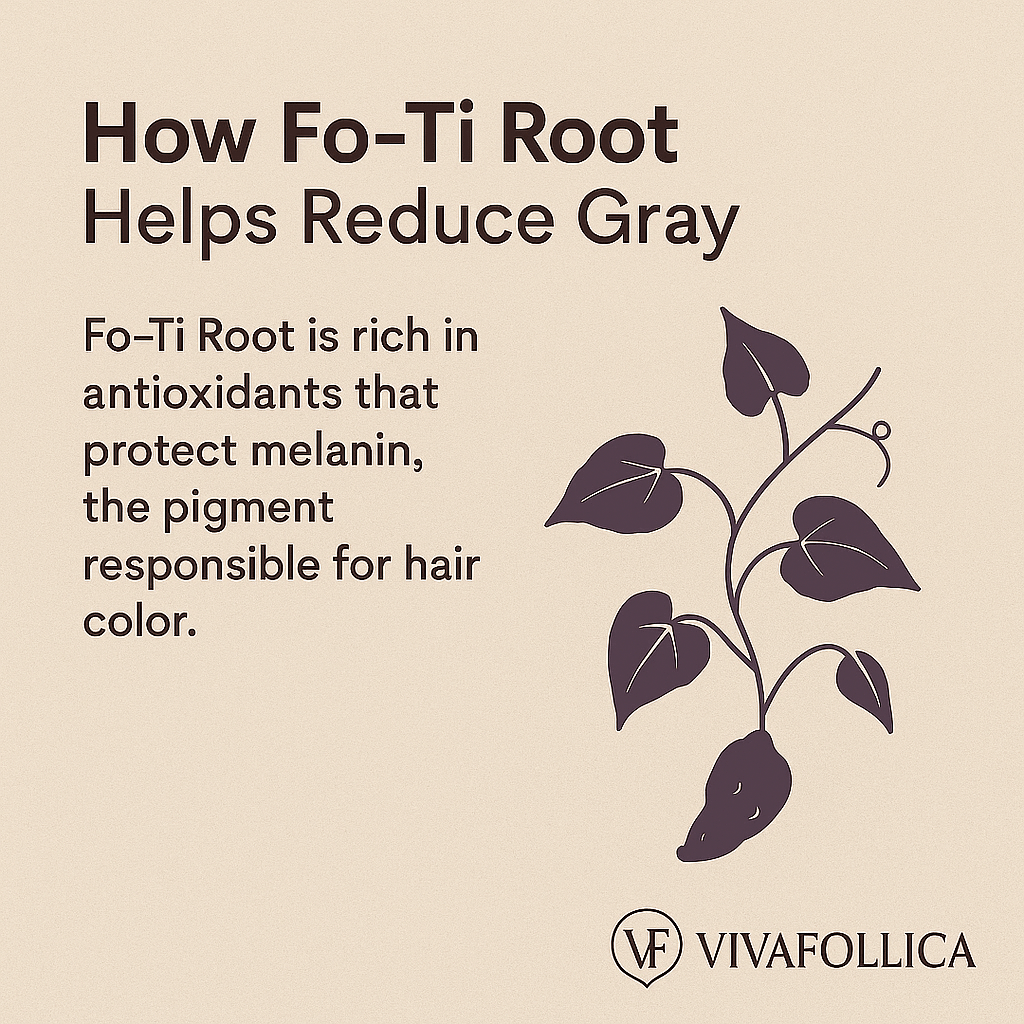
- Fo-Ti Root → rich in antioxidants, historically used to preserve natural hair color.
- Redensyl & Capixyl → clinically tested actives that strengthen follicles.
- Caffeine & Botanical Extracts → improve scalp circulation and nutrient delivery.
By combining advanced biotechnology with time-honored herbal ingredients, Vivafollica creates products designed to slow premature graying while reviving hair strength and fullness.
Gray hair is natural, but understanding its causes empowers you to take proactive steps for healthier, more youthful hair. By nourishing your follicles, protecting pigment cells, and reducing oxidative stress, you can maintain your natural color longer — and embrace the beauty of hair at every stage of life.
👉 Discover Vivafollica’s science-backed formulas today — and give your hair the gift of timeless vitality.
 VivaFollica
Leave a comment