Tag: fo ti root

  • Hair Color and Gray Hair: Does Dyeing Make It Better or Worse?

    Introduction: The Gray Dilemma

    For many, the first instinct after spotting grays is to reach for the dye. But does coloring hair make gray hair worse, or can it be done without damage? The truth is, the answer depends on the type of coloring, hair health, and the products used. Let’s explore the science behind hair color and gray hair.

    Why Gray Hair Is Different

    Gray hair isn’t just hair that has lost pigment — its texture and structure change too:

    • Coarser texture: Grays often feel wiry or rough.
    • Thinner cuticle layer: This makes gray hair more porous and prone to dryness.
    • Lack of melanin: Without pigment, the hair shaft is more vulnerable to UV and oxidative damage.

    👉 This is why grays may react differently to coloring compared to pigmented hair.

    How Hair Color Works

    To understand the impact, it helps to know how dye works:

    1. Permanent dyes open the cuticle and deposit color deep into the cortex using ammonia and peroxide.
    2. Semi-permanent dyes coat the hair shaft with color but don’t penetrate deeply.
    3. Natural dyes (like henna or herbal blends) stain the surface of the hair without harsh chemicals.

    Each type affects gray hair differently.

    Can Hair Dye Make Grays Worse?

    1. Chemical Stress

    Permanent dyes use ammonia and peroxide, which can weaken the cuticle. Over time, this:

    • Dries out gray hair (already prone to dryness).
    • Causes brittleness and breakage.
    • May make grays appear more prominent as damaged hair reflects light unevenly.

    2. Fading & Resistance

    Gray hair is notoriously resistant to color because of its coarse texture. This often leads people to re-dye frequently, exposing hair to more chemicals and increasing long-term damage.

    3. Oxidative Damage

    Some dyes generate free radicals in the coloring process, which accelerate oxidative stress — the same process that caused hair to gray in the first place.

    When Hair Color Doesn’t Hurt Grays

    On the other hand, not all coloring is harmful. With the right approach, dyeing gray hair can actually enhance appearance without worsening the condition:

    • Semi-permanent or demi-permanent dyes: Gentler, no ammonia, and often infused with conditioning agents. They can blend grays softly without heavy damage.
    • Natural dyes: Henna, indigo, or herbal blends coat hair strands and improve shine without lifting the cuticle.
    • Professional salon techniques: Low-ammonia formulas, gloss treatments, and strategic highlighting can disguise grays while maintaining hair health.

    How to Color Gray Hair Without Damage

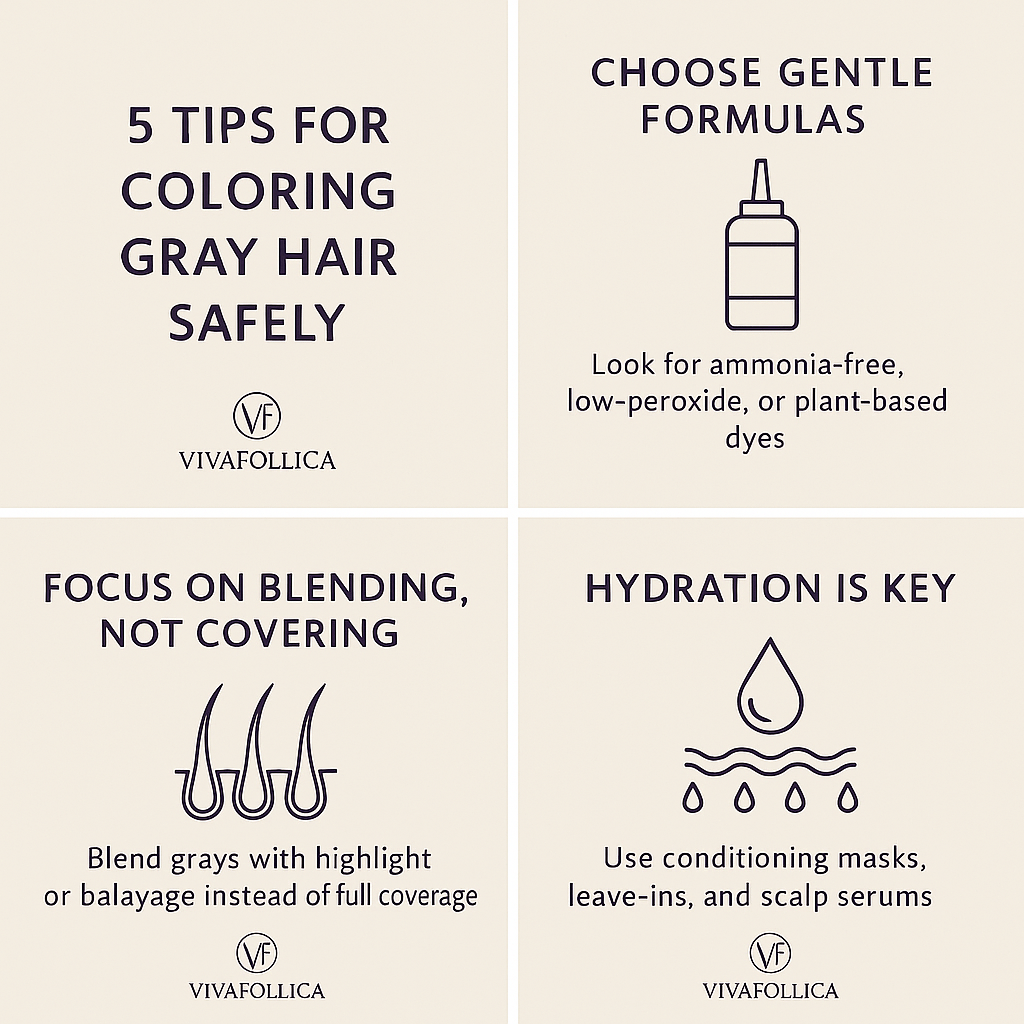
    1. Choose Gentle Formulas

    Look for ammonia-free, low-peroxide, or plant-based color systems. These minimize cuticle disruption and keep hair stronger.

    2. Focus on Blending, Not Covering

    Instead of full coverage every 3–4 weeks, consider blending techniques like balayage or highlights, which soften grays without harsh upkeep.

    3. Hydration Is Key

    Conditioning masks, scalp serums, and leave-ins restore moisture lost during coloring. Gray hair especially benefits from hydrating ingredients like hyaluronic acid, peptides, and plant oils.

    4. Antioxidant Support

    Since oxidative stress contributes to both graying and dye damage, using antioxidants (like those in Fo-Ti Root, green tea, or vitamin E) can help protect hair cells and maintain vibrancy.

    5. Protect Between Colors

    UV rays fade dye quickly — especially on grays. A UV-protectant spray or serum helps preserve both pigment and strength.

    The Vivafollica Approach

    At Vivafollica, we understand that many clients color their hair but still want strong, healthy follicles. That’s why our formulations focus on:

    • Scalp nutrition → feeding follicles with Redensyl, Capixyl, and Caffeine.
    • Antioxidant protection → Fo-Ti root and botanical extracts combat oxidative stress.
    • Strengthening hair fiber → hydration and resilience to withstand external stressors like coloring.

    This means you can enjoy your chosen shade while keeping hair and scalp in their healthiest state.

    Coloring gray hair doesn’t have to make it worse — but it depends on how you do it. By choosing gentler dyes, spacing out treatments, and pairing coloring with nourishing scalp and hair care, you can enjoy vibrant color without compromising health.

    👉 With Vivafollica, you don’t have to choose between beauty and science — you can have both.
  • Why Does Hair Turn Gray? Understanding the Causes of Graying Hair

    Introduction: The Mystery of Gray Hair

    Few things signal aging as clearly as the first silver strand in your hair. For some, it happens in their 40s or 50s; for others, grays begin to appear as early as their 20s. While gray hair is a completely natural part of life, understanding why it happens can help us slow the process and keep hair looking youthful for longer.

    The Role of Melanin in Hair Color

    Hair color is determined by melanin, a natural pigment produced by specialized cells called melanocytes, located in each hair follicle.

    • Eumelanin → produces black or brown tones.
    • Pheomelanin → produces blonde and red tones.

    When melanocytes reduce melanin production, hair loses its natural color and turns gray, silver, or white.

    The Main Causes of Gray Hair

    1. Genetics (The Biggest Factor)

    Genetics largely determine when and how quickly your hair turns gray. If your parents or grandparents grayed early, chances are you might too. Research shows that specific genes — such as the IRF4 gene — regulate melanin production and influence the onset of graying.

    👉 This is why some people in their 20s already see gray strands, while others may not gray until their 60s.

    2. Aging and Cellular Decline

    As we age, melanocytes naturally slow down and eventually stop producing melanin. This is the most common and unavoidable cause of gray hair. With each new hair cycle, the pigment supply decreases, leading to lighter and lighter strands.

    3. Oxidative Stress and Free Radical Damage

    Oxidative stress plays a critical role in premature graying. Here’s how:

    • Free radicals (unstable molecules) damage melanocytes.
    • This weakens their ability to produce melanin.
    • Over time, the balance between melanin production and oxidative stress tips — resulting in grays.

    Environmental factors like pollution, UV exposure, and even smoking can accelerate this process.

    4. Hydrogen Peroxide Build-Up

    Surprisingly, hydrogen peroxide isn’t just in your medicine cabinet — your body produces it too. Over time, hair follicles accumulate excess hydrogen peroxide, which bleaches melanin from within.

    • Younger individuals efficiently break it down with enzymes (like catalase).
    • As we age, enzyme levels decline, and hydrogen peroxide builds up, lightening hair from the inside out.

    5. Nutritional Deficiencies

    Lack of key nutrients can accelerate graying:

    • Vitamin B12: Deficiency is strongly linked to early graying.
    • Copper: Essential for melanin production.
    • Iron & Zinc: Support healthy follicle function.
    • Antioxidants (Vitamin C, E, and Polyphenols): Help fight oxidative stress.

    Poor diet or malabsorption conditions (like anemia or thyroid disorders) may contribute to premature grays.

    6. Stress: Myth or Reality?

    The idea that stress causes gray hair has been debated for decades. Recent studies suggest stress can indeed play a role:

    • Stress increases the release of norepinephrine, which depletes stem cells in the hair follicle responsible for regenerating pigment.
    • High-stress events may trigger sudden pigment loss in some individuals.

    So while stress may not be the sole cause, it can certainly accelerate graying in those already predisposed.

    7. Medical Conditions

    Certain health conditions can lead to premature graying:

    • Thyroid disorders: Affect melanin production.
    • Vitiligo: Autoimmune condition that destroys pigment cells.
    • Alopecia Areata: Can cause sudden graying when hair regrows without pigment.

    8. Lifestyle Factors

    Your daily habits also play a role:

    • Smoking: Smokers are 2.5 times more likely to gray prematurely.
    • Excessive alcohol: Contributes to oxidative stress.
    • Poor sleep: Impacts cellular repair, including pigment cells.

    Can Gray Hair Be Prevented or Reversed?

    While some causes (like genetics and aging) are inevitable, others can be managed:

    • Antioxidant-rich diet → berries, leafy greens, nuts, green tea.
    • Scalp circulation → massage, treatments that improve blood flow.
    • Nutrient support → vitamins and minerals essential for pigment production.
    • Topical solutions → botanicals like Fo-Ti root and active ingredients that protect and nourish melanocytes.

    How Vivafollica Approaches Gray Hair Prevention

    At Vivafollica, we believe in a holistic, science-meets-nature approach:

    • Fo-Ti Root → rich in antioxidants, historically used to preserve natural hair color.
    • Redensyl & Capixyl → clinically tested actives that strengthen follicles.
    • Caffeine & Botanical Extracts → improve scalp circulation and nutrient delivery.

    By combining advanced biotechnology with time-honored herbal ingredients, Vivafollica creates products designed to slow premature graying while reviving hair strength and fullness.

    Gray hair is natural, but understanding its causes empowers you to take proactive steps for healthier, more youthful hair. By nourishing your follicles, protecting pigment cells, and reducing oxidative stress, you can maintain your natural color longer — and embrace the beauty of hair at every stage of life.

    👉 Discover Vivafollica’s science-backed formulas today — and give your hair the gift of timeless vitality.

  • Fo-Ti Root: The Ancient Herbal Secret for Hair Growth and Gray Prevention

    What Is Fo-Ti Root?

    Fo-Ti root, also known as He Shou Wu, is a traditional Chinese herb that has been used for over 1,000 years to support vitality, longevity, and beauty. The name He Shou Wu literally translates to “Mr. He’s Black Hair,” a reference to the legendary story of an aging man whose gray hair turned black again after using this remarkable root.

    While myths and folklore surround its origin, modern research has begun to explore Fo-Ti’s potential role in supporting hair and scalp health.

    The Science Behind Fo-Ti and Hair Growth

    Fo-Ti root contains a unique blend of antioxidants, zinc, iron, and stilbene glycosides. Together, these compounds may:

    • Nourish hair follicles: By improving blood flow and circulation to the scalp, Fo-Ti helps deliver oxygen and nutrients directly to the roots of the hair.
    • Protect pigment cells: Its antioxidant properties help shield melanocytes (the cells responsible for hair color) from damage, slowing down premature graying.
    • Reduce oxidative stress: Oxidative stress is one of the key drivers of hair thinning and aging. Fo-Ti’s compounds may help neutralize free radicals that damage hair cells.

    Benefits of Fo-Ti Root for Hair

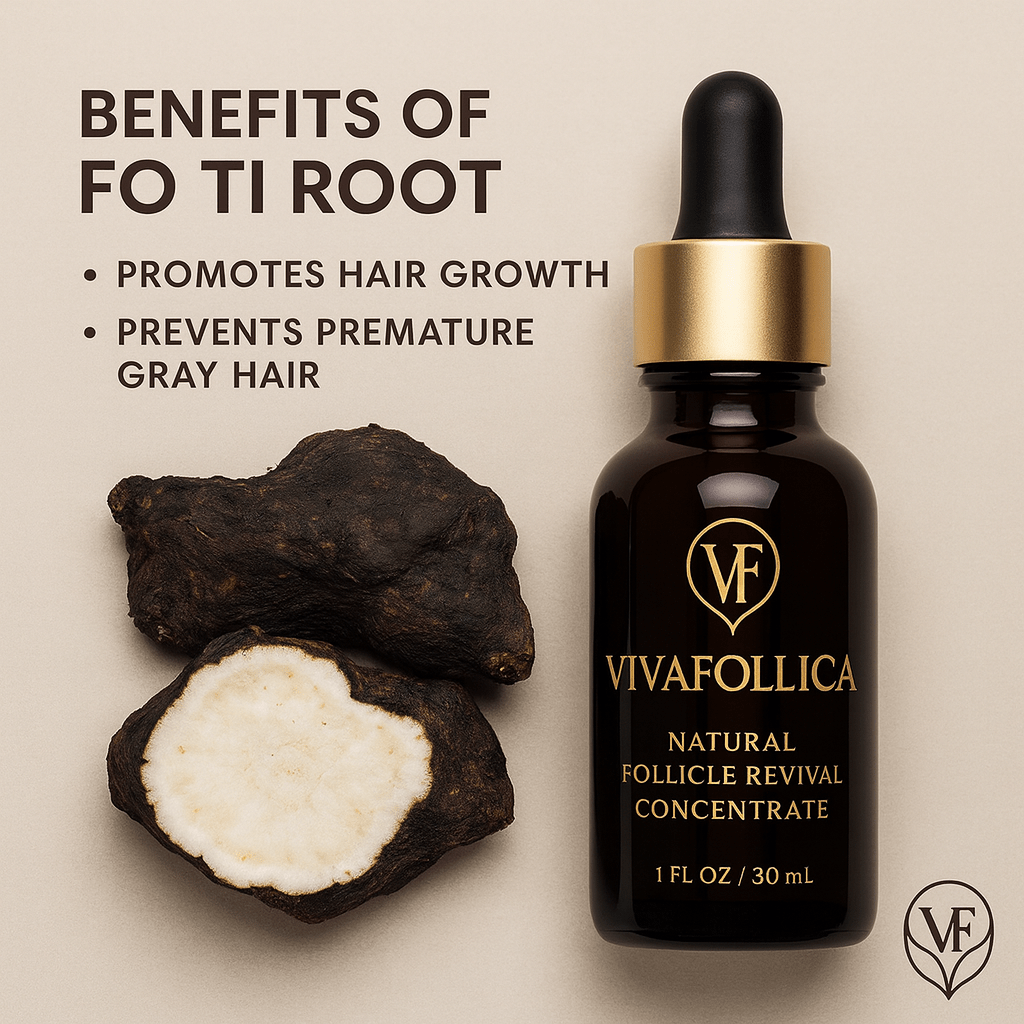
    1. Supports Hair Growth

    Fo-Ti is believed to stimulate dormant hair follicles, encouraging the growth of thicker, healthier strands. Consistent nourishment of the scalp promotes long-term hair vitality.

    2. Helps Prevent Premature Graying

    Thanks to its antioxidant-rich profile, Fo-Ti helps protect melanin, the pigment responsible for your natural hair color. This may reduce the speed at which hair turns gray, keeping it youthful for longer.

    3. Improves Scalp Circulation

    A healthy scalp means healthy hair. Fo-Ti’s circulation-enhancing properties ensure that essential nutrients reach each follicle, creating the optimal environment for hair growth.

    4. Boosts Overall Hair Strength

    Fo-Ti’s mineral content contributes to stronger, shinier strands that are more resistant to breakage.

    Tradition Meets Modern Innovation

    For centuries, Fo-Ti has been steeped in Chinese herbal medicine as a longevity tonic. Today, modern science is uncovering how its antioxidant and bioactive compounds may support not only hair revival but also overall wellness.

    At Vivafollica, we honor this balance of ancient wisdom and modern research. By carefully combining Fo-Ti root with clinically studied actives like Redensyl, Capixyl, and Caffeine, our formulations maximize results for stronger, fuller, and more youthful-looking hair.

    Is Fo-Ti Safe?

    When used in topical formulations like Vivafollica Natural Follicle Revival Concentrate, Fo-Ti is safe and effective for scalp and hair application. Oral supplements of Fo-Ti root can sometimes cause side effects when taken improperly — which is why we focus on carefully balanced, topical solutions that deliver targeted benefits directly where your hair needs it most.

    How to Use Fo-Ti for Hair Care

    Incorporating Fo-Ti into your hair routine is simple when it’s part of a complete, science-backed formula:

    1. Apply Daily – Massage the serum into your scalp once or twice per day.
    2. Focus on the Roots – Apply directly to thinning areas or where graying is most noticeable.
    3. Be Consistent – Visible improvements often require 3–6 months of regular use.

    The Future of Herbal Hair Science

    As more research emerges, Fo-Ti root continues to be recognized as one of nature’s most powerful ingredients for hair vitality. Combined with modern biotechnology, it represents a holistic approach to hair growth and anti-aging that goes beyond quick fixes.

    Vivafollica: Where Nature Meets Science

    At Vivafollica, our mission is simple: to restore confidence by reviving your hair naturally. That’s why we combine ancient botanicals like Fo-Ti root with scientifically validated ingredients to create products that truly transform.