Introduction: The Gray Dilemma
For many, the first instinct after spotting grays is to reach for the dye. But does coloring hair make gray hair worse, or can it be done without damage? The truth is, the answer depends on the type of coloring, hair health, and the products used. Let’s explore the science behind hair color and gray hair.
Why Gray Hair Is Different
Gray hair isn’t just hair that has lost pigment — its texture and structure change too:
- Coarser texture: Grays often feel wiry or rough.
- Thinner cuticle layer: This makes gray hair more porous and prone to dryness.
- Lack of melanin: Without pigment, the hair shaft is more vulnerable to UV and oxidative damage.
👉 This is why grays may react differently to coloring compared to pigmented hair.
How Hair Color Works
To understand the impact, it helps to know how dye works:
- Permanent dyes open the cuticle and deposit color deep into the cortex using ammonia and peroxide.
- Semi-permanent dyes coat the hair shaft with color but don’t penetrate deeply.
- Natural dyes (like henna or herbal blends) stain the surface of the hair without harsh chemicals.
Each type affects gray hair differently.
Can Hair Dye Make Grays Worse?
1. Chemical Stress
Permanent dyes use ammonia and peroxide, which can weaken the cuticle. Over time, this:
- Dries out gray hair (already prone to dryness).
- Causes brittleness and breakage.
- May make grays appear more prominent as damaged hair reflects light unevenly.
2. Fading & Resistance
Gray hair is notoriously resistant to color because of its coarse texture. This often leads people to re-dye frequently, exposing hair to more chemicals and increasing long-term damage.
3. Oxidative Damage
Some dyes generate free radicals in the coloring process, which accelerate oxidative stress — the same process that caused hair to gray in the first place.
When Hair Color Doesn’t Hurt Grays
On the other hand, not all coloring is harmful. With the right approach, dyeing gray hair can actually enhance appearance without worsening the condition:
- Semi-permanent or demi-permanent dyes: Gentler, no ammonia, and often infused with conditioning agents. They can blend grays softly without heavy damage.
- Natural dyes: Henna, indigo, or herbal blends coat hair strands and improve shine without lifting the cuticle.
- Professional salon techniques: Low-ammonia formulas, gloss treatments, and strategic highlighting can disguise grays while maintaining hair health.
How to Color Gray Hair Without Damage
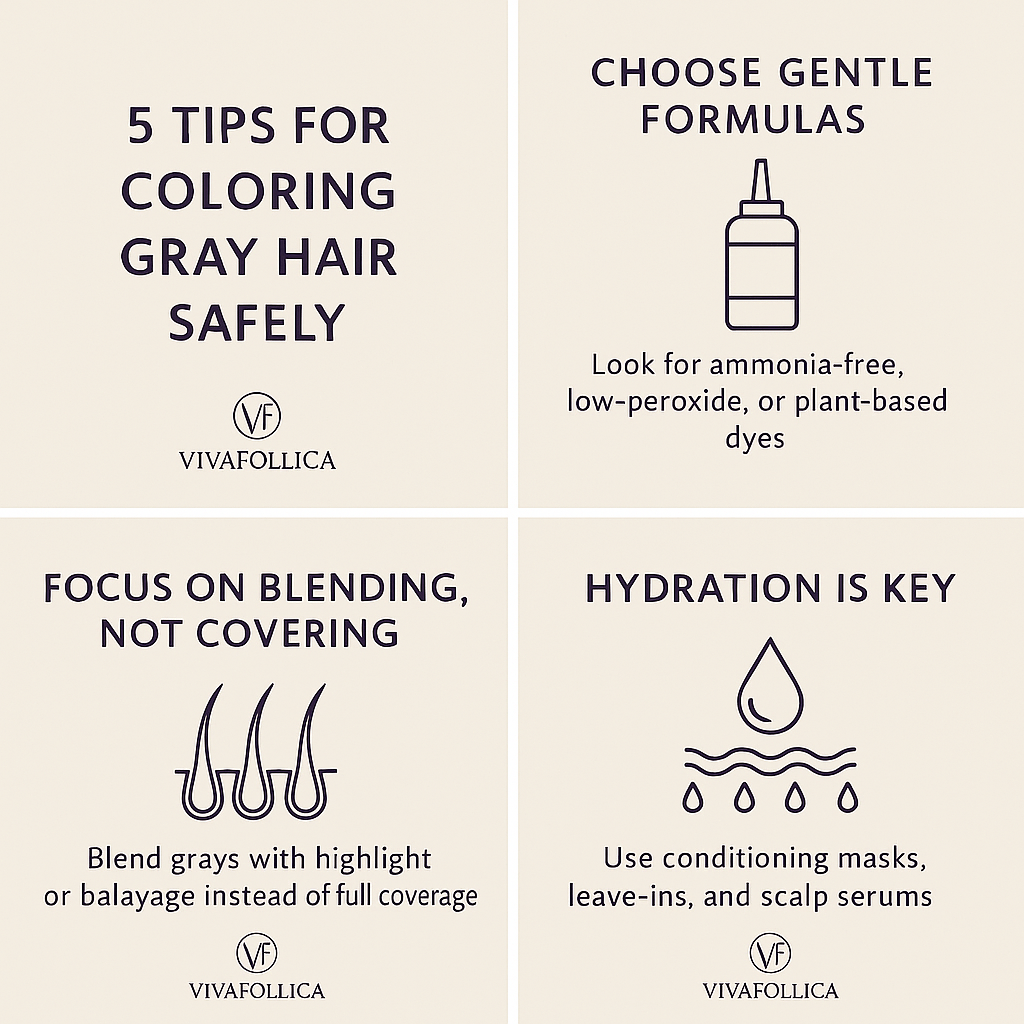
1. Choose Gentle Formulas
Look for ammonia-free, low-peroxide, or plant-based color systems. These minimize cuticle disruption and keep hair stronger.
2. Focus on Blending, Not Covering
Instead of full coverage every 3–4 weeks, consider blending techniques like balayage or highlights, which soften grays without harsh upkeep.
3. Hydration Is Key
Conditioning masks, scalp serums, and leave-ins restore moisture lost during coloring. Gray hair especially benefits from hydrating ingredients like hyaluronic acid, peptides, and plant oils.
4. Antioxidant Support
Since oxidative stress contributes to both graying and dye damage, using antioxidants (like those in Fo-Ti Root, green tea, or vitamin E) can help protect hair cells and maintain vibrancy.
5. Protect Between Colors
UV rays fade dye quickly — especially on grays. A UV-protectant spray or serum helps preserve both pigment and strength.
The Vivafollica Approach
At Vivafollica, we understand that many clients color their hair but still want strong, healthy follicles. That’s why our formulations focus on:
- Scalp nutrition → feeding follicles with Redensyl, Capixyl, and Caffeine.
- Antioxidant protection → Fo-Ti root and botanical extracts combat oxidative stress.
- Strengthening hair fiber → hydration and resilience to withstand external stressors like coloring.
This means you can enjoy your chosen shade while keeping hair and scalp in their healthiest state.
Coloring gray hair doesn’t have to make it worse — but it depends on how you do it. By choosing gentler dyes, spacing out treatments, and pairing coloring with nourishing scalp and hair care, you can enjoy vibrant color without compromising health.
👉 With Vivafollica, you don’t have to choose between beauty and science — you can have both.
 VivaFollica