Tag: healthy-scalp

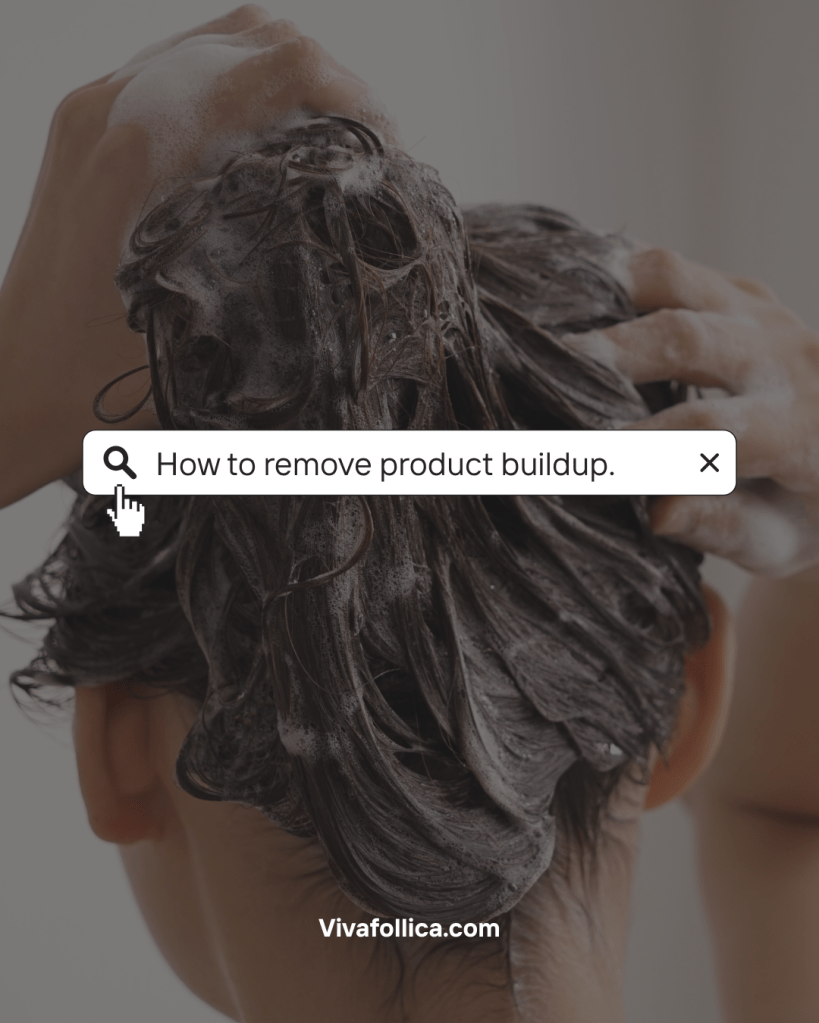
  • How to Best Remove Product Buildup from Your Scalp

    We focus so much on skincare for our face — but how often do we think about the skin on our scalp? Over time, products like dry shampoo, oils, conditioners, and even natural sebum can build up on the scalp, clogging hair follicles and making it harder for your hair to grow healthy and strong.

    Just like our pores need cleansing, our scalp needs regular detoxing too. If you’ve ever noticed dull roots, flakes, or an itchy, heavy feeling at the crown, you’re likely experiencing scalp buildup — and the good news is, it’s completely treatable.

    Here’s how to recognize scalp buildup, why it happens, and how to safely remove it for a balanced, refreshed, and healthy scalp.

    What Is Scalp Buildup?

    Scalp buildup is a mix of dead skin cells, oil (sebum), sweat, and leftover product residue that accumulates on your scalp over time.

    Every time you apply shampoo, conditioner, leave-in treatments, hairspray, or dry shampoo, a little residue can remain — especially if you don’t wash frequently. Add to that natural oil and pollution, and your scalp becomes coated in a layer that blocks follicles and limits oxygen flow.

    Over time, this buildup can cause:

    • Clogged follicles (leading to hair thinning or slower growth)
    • Flakes and itching (similar to dandruff but not always the same)
    • Oily roots and dry ends
    • Lack of volume or dull appearance
    • Poor serum absorption — meaning your growth treatments can’t fully penetrate the scalp

    Common Causes of Scalp Buildup

    1. Overusing styling products
      Gels, creams, sprays, and serums can all leave behind residue. Silicone-based products are especially known for coating the scalp.
    2. Not washing often enough
      If you wash every 3–5 days (or longer), oils and product layers can combine to form a film over your scalp.
    3. Hard water
      Minerals in hard water bind with shampoo residue, making it difficult to rinse cleanly.
    4. Improper shampooing technique
      Applying shampoo only to hair strands — instead of focusing on the scalp — can leave the skin underneath unclean.
    5. Heavy oils or butters
      While nourishing, natural oils like coconut or castor oil can be hard to wash out fully and may clog pores if overused.

    How to Tell if You Have Scalp Buildup

    You might have buildup if you notice:

    • waxy or sticky feeling near the roots
    • Flakes or dryness even after washing
    • Itchiness or irritation
    • Hair that feels flat or lifeless
    • A white residue when you scratch your scalp gently with your nail

    If that sounds familiar, your scalp likely needs a reset.

    How to Remove Scalp Buildup — Safely and Effectively

    The goal isn’t to strip your scalp completely — it’s to deep clean while maintaining balance. Here’s how to do it properly:

    1️⃣ Start with a Clarifying Shampoo

    A clarifying shampoo is specially formulated to dissolve residue from oils, silicones, and styling products.

    Look for:

    • Sulfate-free or gentle surfactants
    • Ingredients like salicylic acidapple cider vinegar, or activated charcoal

    🪶 How to use:

    • Apply to wet hair and massage directly into your scalp for 1–2 minutes.
    • Rinse thoroughly and follow with a lightweight conditioner, focusing only on the ends.
    • Use once every 1–2 weeks — not daily, as overuse can dry the scalp.

    💜 Pro tip: If you use growth serums like Vivafollica’s Follicle Revival Serum, always clarify your scalp first so your treatment can absorb better.

    2️⃣ Exfoliate with a Scalp Scrub

    Just like facial exfoliation, your scalp benefits from gentle physical or chemical exfoliation.

    Options include:

    • Sugar or salt scrubs with botanical oils (like jojoba or tea tree)
    • Chemical exfoliants with glycolic acid or lactic acid, which dissolve dead skin

    🪶 How to use:

    • Apply scrub to a damp scalp before shampooing.
    • Massage gently in circular motions — don’t scratch with your nails.
    • Rinse thoroughly and follow with shampoo and conditioner.

    This helps lift buildup, boost circulation, and leave your scalp feeling refreshed.

    3️⃣ Try a Scalp Detox Treatment

    Scalp detoxes are lightweight liquids or masks that help rebalance pH and break down oil.

    DIY options:

    • Apple cider vinegar rinse: Mix 1 part ACV with 3 parts water and pour over your scalp after shampooing. Leave for 2–3 minutes, then rinse.
    • Aloe vera gel: Calms irritation and moisturizes while cleansing residue.

    Professional options:

    • Scalp detox sprays or serums with witch hazeltea tree, or salicylic acid.

    4️⃣ Massage the Scalp Regularly

    Massage encourages lymphatic drainage and circulation, which helps move waste products away from follicles.

    🪶 How to do it:

    • Use fingertips or a silicone scalp brush.
    • Massage in small circular motions for 2–3 minutes daily.
    • Can be done before bed, especially when applying a serum like Vivafollica.

    A healthy scalp = stronger roots and faster growth.

    5️⃣ Avoid Heavy Product Layering

    Once your scalp is clean, keep it that way by simplifying your routine.

    Try this clean, effective order:

    1. Clarify or exfoliate (1x weekly)
    2. Hydrate with a gentle, balanced shampoo and conditioner
    3. Apply serum or treatment directly to scalp (daily or nightly)
    4. Use styling products lightly, focusing on ends instead of roots

    Look for non-comedogenic, lightweight formulas that won’t clog follicles or weigh hair down — especially if you don’t wash every day.

    The Vivafollica Approach: Clean Scalp, Healthy Hair

    At Vivafollica, we believe scalp health is skin health.
    Our hair growth philosophy combines clean beauty + clinical science, ensuring ingredients like Redensyl, Capixyl, Fo-Ti Root, Niacinamide, and caffeine can do their best work — free from buildup and blockage.

    That’s why we recommend pairing your serum routine with a gentle detox ritual once a week to keep your follicles clear and receptive.

    When your scalp can breathe, your hair can thrive. 🌿

    Removing scalp buildup isn’t about harsh stripping — it’s about restoring balance. By cleansing gently, exfoliating regularly, and nourishing afterward, you’ll help your follicles perform their best and support thicker, shinier, more resilient hair.

    Remember: a clean scalp is the foundation of beautiful hair.
    Start small, stay consistent, and your scalp (and strands) will thank you. 💜
  • Why Scalp Oiling Doesn’t Clog Pores or Make Hair Oily—And How to Treat Your Ends, Too

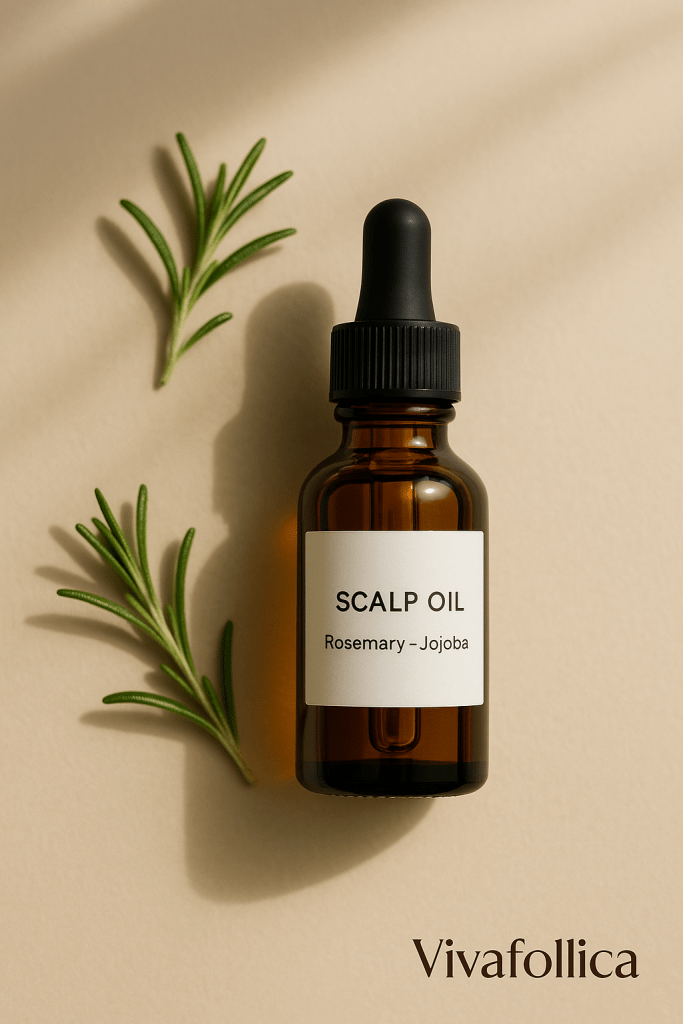
    If you’ve ever hesitated to oil your scalp because you fear greasy hair or clogged pores, you’re not alone. It sounds counterintuitive: adding oil to a scalp that naturally produces sebum. But when done correctly, scalp oiling is one of the most effective rituals for stronger, healthier hair—and it does not lead to clogged pores or an oily mess.

    Here’s why.

    1. Understanding the Scalp’s Natural Balance

    Your scalp is skin. Like the skin on your face, it has sebaceous (oil) glands that secrete sebum—the natural oil that keeps hair soft and your scalp protected. Problems like itchiness, flakiness, or even excessive oiliness often stem from an imbalance: either too little sebum (leading to dryness) or overproduction triggered by irritation and product buildup.

    When applied properly, natural plant oils such as rosemary, jojoba, or argan actually help to balance this system. Instead of adding “more grease,” they:

    • Mimic the structure of natural sebum (especially jojoba oil) so the scalp recognizes it as familiar and stops overproducing oil.
    • Dissolve hardened sebum plugs and styling residue that can otherwise block follicles.
    • Reinforce the skin barrier, preventing dehydration and the irritation that can trigger excess oil production.

    The result? A healthier scalp that self-regulates, rather than one forced into overdrive.

    2. Why Scalp Oils Don’t Clog Pores

    Clogged pores—or folliculitis—occur when heavy, non-breathable ingredients sit on the scalp for long periods, trapping dead skin cells and bacteria. The key difference lies in which oils you use and how you apply them.

    • Choose non-comedogenic, lightweight oils. Jojoba, rosemary-infused carrier oils, argan, or grapeseed have molecular weights and fatty-acid profiles that sink into the skin instead of forming a waxy layer.
    • Apply sparingly. A few drops massaged into the scalp are enough to cover the entire area; drenching the scalp is unnecessary.
    • Massage and rinse. Gentle massage increases circulation and helps the oil penetrate, and washing with a mild shampoo ensures no residue lingers.

    In fact, the right oil blend cleanses follicles by loosening dead cells and hardened sebum, reducing the chance of blocked pores.

    3. Why It Doesn’t Make Hair “Too Oily”

    A well-formulated scalp oil doesn’t leave hair looking greasy for two main reasons:

    • Absorption and bonding: Oils like rosemary-infused jojoba or squalane absorb into the skin and upper hair shaft. They don’t simply sit on top of strands the way a heavy butter or mineral oil might.
    • Sebum feedback loop: When your scalp senses it’s properly moisturized, it scales back its own sebum production. Over time, this often means less natural oiliness, not more.

    Many people notice that after several weeks of consistent scalp oiling—especially if they previously struggled with oily roots—their wash frequency actually decreases because the scalp is finally balanced.

    4. How to Use Scalp Oil Correctly

    Step 1: Choose the right oil blend.
    Look for clean, cold-pressed oils with proven scalp benefits such as rosemary, tea tree, or peppermint in a light carrier like jojoba or grapeseed. Vivafollica’s blends, for example, pair rosemary with Redensyl and Capixyl for added follicle support.

    Step 2: Part hair and apply a few drops.
    Work in sections, applying drops directly to the scalp—not on the hair length.

    Step 3: Massage for 5–10 minutes.
    Use fingertips (not nails) to boost circulation and help the oil absorb.

    Step 4: Leave on 30 minutes to overnight.
    Cover with a silk scarf or shower cap if leaving overnight.

    Step 5: Cleanse gently.
    Shampoo as usual with a sulfate-free cleanser. If you used more oil, a double cleanse might be needed.

    5. The Bonus: Treating the Ends of Your Hair

    While the focus is on scalp health, the leftover oil on your hands after a massage is liquid gold for your hair ends. Here’s why applying it lightly to your lengths—especially the last 2–3 inches—makes a difference:

    • Prevents split ends: Oils fill microscopic gaps in the hair cuticle, reducing breakage.
    • Boosts shine and softness: They smooth the hair surface, reflecting light and reducing frizz.
    • Adds a protective layer: Particularly helpful before heat styling or exposure to dry indoor air.

    How to do it: After massaging your scalp, rub any excess oil between your palms and gently glide it over the lower half of your hair, focusing on the driest ends. There’s no need for extra oil; a whisper-thin layer is ideal.

    6. Common Myths Debunked

    Myth 1: Oil makes fine hair limp and greasy.
    Reality: Lightweight oils like jojoba are almost identical to natural scalp oils and absorb quickly. The key is using drops—not spoonfuls.

    Myth 2: You can skip shampoo after oiling.
    Reality: Cleansing is essential. The magic happens when the oil nourishes and then is washed away, leaving behind balanced hydration.

    Myth 3: Scalp oiling causes acne along the hairline.
    Reality: Acne near the scalp is more often linked to occlusive styling products, unwashed hats, or hormonal fluctuations. Non-comedogenic scalp oils, properly cleansed, are unlikely culprits.

    7. The Bigger Picture: Long-Term Benefits

    Regular scalp oiling delivers benefits that go beyond aesthetics:

    • Stronger hair from the root up
    • Balanced sebum production—meaning fewer “greasy hair days”
    • Healthier scalp microbiome with less itch or flake
    • Enhanced hair density and shine over time

    It’s an ancient practice validated by modern dermatology: nourishing the scalp is one of the simplest ways to transform the overall health of your hair.

    Key Takeaways

    • Scalp oiling doesn’t clog pores when you use lightweight, non-comedogenic oils and rinse properly.
    • It won’t make your hair oily—in fact, it helps regulate sebum production.
    • It doubles as a hair treatment when lightly smoothed over dry ends to prevent breakage and frizz.

    A few drops, a short massage, and a gentle cleanse are all it takes to reap these long-term rewards.

  • From Thin to Thick: The New Era of Confidence in Haircare

    Hair isn’t just something that grows out of our scalp—it’s a part of who we are. It frames our faces, expresses our style, and often serves as a reflection of our health and vitality. For many, thinning hair can feel like losing a part of their identity. But here’s the good news: we’re entering a new era of haircare—one where science, innovation, and self-care meet to restore not only thicker, fuller hair but also the confidence that comes with it.

    In this blog, we’ll explore why thinning hair is more common than you might think, how it impacts self-esteem, and how modern haircare solutions like Vivafollica are changing the conversation around hair health.

    Why Thinning Hair Happens

    Hair thinning is not just a “men’s issue” or a sign of aging. It affects both men and women across different ages and lifestyles. Here are some of the most common reasons:

    1. Genetics: If your parents experienced thinning hair, chances are higher that you might too.
    2. Hormonal Shifts: Menopause, postpartum changes, and thyroid imbalances all play a role.
    3. Stress: Emotional and physical stress can push hair into the shedding phase.
    4. Nutritional Deficiencies: Without the right vitamins and minerals, follicles weaken.
    5. Scalp Health: Buildup, inflammation, and poor circulation can suffocate follicles.

    The key takeaway? Thinning hair isn’t always about age—it’s about what’s happening at the follicle level.

    The Emotional Impact: More Than Just Hair

    When hair starts to thin, it doesn’t just affect your look—it affects how you feel. Research shows that hair loss is strongly linked to decreased self-confidence, social anxiety, and even avoidance of certain situations.

    • Women often report feeling less feminine or attractive.
    • Men may feel older than their age or less confident in professional and social settings.
    • Many people admit to spending extra time covering up thinning areas with hats, hairstyles, or products.

    But here’s the important part: confidence can be rebuilt. Just as hair health can be restored, so can the way we see ourselves.

    The Rise of Holistic Haircare

    For decades, the only widely known options for hair thinning were extreme: invasive surgeries, harsh chemical treatments, or “cover-ups” like fibers and wigs. But today, the haircare industry is evolving—thanks to a holistic, science-meets-wellness approach.

    Modern solutions focus on:

    • Supporting follicle health naturally (instead of masking thinning).
    • Using clean, safe ingredients that respect both scalp and environment.
    • Strengthening confidence by addressing the root causes, not just the symptoms.

    This shift is creating a new era—where self-care and science combine to provide real, visible results.

    Enter Vivafollica: Confidence in a Bottle

    At Vivafollica, we believe that your hair deserves the same attention as your skin, body, and overall wellness. That’s why our upcoming launch is centered around advanced, clinically backed ingredients that target thinning from multiple angles:

    • Redensyl®: Reactivates dormant hair follicles and boosts density.
    • Capixyl™: Strengthens hair at the root and reduces shedding.
    • Caffeine: Energizes follicles and promotes circulation for optimal growth.
    • Botanicals: Nourish the scalp, calm inflammation, and support overall follicle health.

    Together, these ingredients don’t just aim to grow hair—they aim to transform your relationship with your reflection.

    Confidence Beyond the Mirror

    Thicker hair is not just about aesthetics—it’s about empowerment. When you feel good about your hair, you feel good about yourself. Here’s how healthy hair can translate to confidence in daily life:

    • At Work: Walking into meetings or presentations without worrying about thinning spots.
    • In Social Settings: Enjoying gatherings, photos, and conversations without self-consciousness.
    • In Self-Care: Viewing your haircare routine as an act of self-love, not just damage control.

    The ripple effect of restored hair confidence is huge—it touches every part of life.

    Real Change, Real Hope

    It’s easy to feel discouraged if you’ve tried countless products with little to no results. That’s why transparency and science-backed solutions matter. Clinical studies show that ingredients like Redensyl and Capixyl can lead to visible improvements in just a few months, giving people hope where they once felt helpless.

    And unlike temporary “cover-ups,” these innovations focus on restoring hair naturally, at the root level, so results are healthier and longer-lasting.

    A Movement, Not Just a Product

    Vivafollica isn’t just about a serum—it’s about joining a movement. A movement that says:

    • Hair thinning doesn’t define you.
    • Science and clean beauty can coexist.
    • Confidence should be accessible to everyone, regardless of age, gender, or genetics.

    By embracing both innovation and compassion, we’re not just changing haircare—we’re changing how people see themselves.

    Thinning hair may be common, but it doesn’t have to be permanent. With the right ingredients, care, and mindset, we’re entering an era where people can go from thin to thick—not only in their hair, but in their confidence.

    At Vivafollica, we’re proud to be part of this revolution. Because when your hair thrives, so do you.