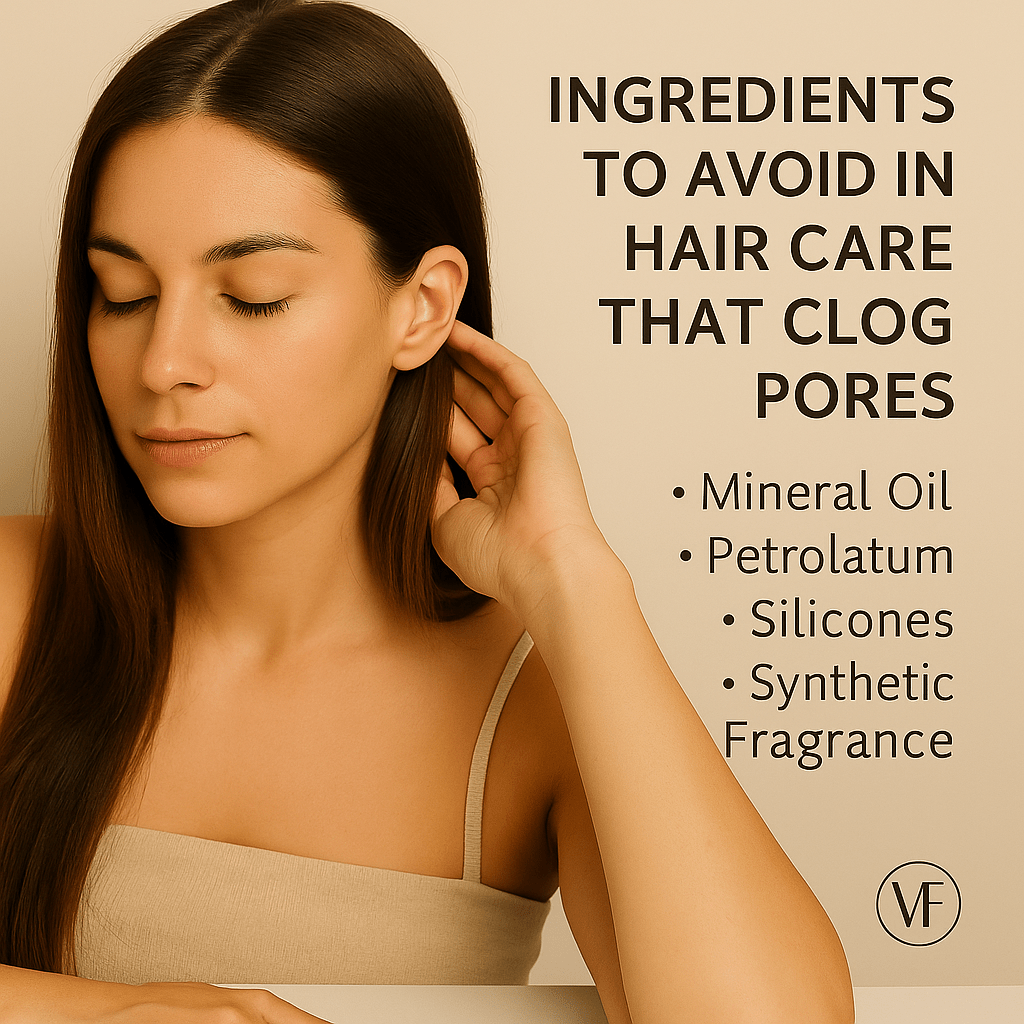
When it comes to hair care, we often focus on our strands—shampooing, conditioning, and styling to achieve that smooth, glossy finish. But here’s the truth: your scalp is skin—and just like the skin on your face, it can become clogged, congested, and irritated if it’s not treated with care.
If your scalp feels greasy a day after washing, or if you notice flakes, itchiness, or slow hair growth, buildup may be to blame. Let’s take a closer look at the ingredients that clog your scalp pores and hinder healthy hair growth, and how to choose better alternatives that let your scalp—and your hair—breathe.
Why Scalp Congestion Matters
Your scalp contains thousands of tiny follicles. Each one houses a hair strand and a sebaceous (oil) gland that keeps the hair soft and nourished. When pores and follicles are clogged by heavy oils, silicones, or styling residues, it disrupts the scalp’s natural balance. The result? Weakened hair follicles, reduced oxygen flow, and slower hair growth.
Think of it like skincare: you wouldn’t apply a thick, pore-clogging product to your face and expect glowing skin. The same goes for your scalp.
1. Heavy Silicones
Silicones are often used to make hair look smooth and shiny. While they can give instant softness, they’re synthetic polymers that coat the hair and scalp with an invisible film. Over time, this film traps dirt, sweat, and sebum—creating buildup that’s hard to remove.
Common silicones to avoid:
- Dimethicone
- Cyclopentasiloxane
- Amodimethicone
- Trimethylsilylamodimethicone
These ingredients are not toxic, but they don’t allow the scalp to breathe, leading to dullness, dryness, and even flakiness. Instead, look for water-soluble silicones (like Dimethicone Copolyol) or natural alternatives like argan oil and jojoba oil, which hydrate without suffocating the scalp.
2. Mineral Oil & Petrolatum
Derived from petroleum, mineral oil and petrolatum are occlusive agents that seal in moisture—but they also seal out everything else. They can trap sweat, bacteria, and dead skin cells around the follicles, increasing the risk of scalp irritation and follicle blockage.
These ingredients are especially common in hair greases and certain “shine” serums. If you’re aiming for healthy growth, skip the heavy petroleum-based products and reach for light botanical oils like grapeseed, sweet almond, or squalane.
3. Sulfates (Harsh Detergents)
Sulfates such as Sodium Lauryl Sulfate (SLS) and Sodium Laureth Sulfate (SLES) are strong surfactants used for that “foamy” clean feeling. While effective at removing dirt, they can strip away natural oils and disrupt your scalp’s microbiome.
A stripped scalp often overcompensates by producing even more oil—creating a vicious cycle of buildup, dryness, and greasiness. Instead, choose gentle, sulfate-free cleansers formulated with mild surfactants like Cocamidopropyl Betaineor Sodium Lauroyl Methyl Isethionate.
4. Waxes & Butters
While natural butters like shea or cocoa can nourish hair, they’re too heavy for the scalp—especially in leave-on products. These thick ingredients can clog follicles, making it harder for hair to grow freely.
If your scalp tends to get oily or flaky, avoid formulations with:
- Beeswax
- Candelilla wax
- Shea butter (in scalp treatments)
Instead, reserve these for your hair ends where moisture is needed most, not directly on the scalp.
5. Artificial Fragrance & Drying Alcohols
Synthetic fragrances and certain alcohols (like isopropyl alcohol or SD alcohol 40) can irritate the scalp and compromise the skin barrier. Over time, irritation may trigger inflammation—a hidden enemy of healthy hair growth.
Opt for fragrance-free or naturally scented formulas with essential oils like peppermint, rosemary, or tea tree, known for stimulating and purifying properties. And when it comes to alcohols, remember: not all are bad. Fatty alcohols (like cetyl or stearyl alcohol) are actually moisturizing.
6. Heavy Styling Products
Dry shampoo, gels, sprays, and leave-ins can accumulate on the scalp if not properly washed out. Many of these contain polyquaterniums, synthetic resins, and film formers that block follicles over time.
If you use styling products daily:
- Clarify once a week with a gentle detox shampoo.
- Rinse thoroughly after workouts or swimming.
- Avoid applying products directly to the roots unless they’re meant for scalp care.
How to Keep Your Scalp Clear and Balanced
1. Exfoliate Weekly
Just like your face, your scalp needs exfoliation. Use a scalp scrub or exfoliating serum to lift away dead skin and product residue. Look for ingredients like salicylic acid (BHA) or fruit enzymes for gentle cleansing.
2. Balance with Lightweight Oils
Light oils such as jojoba, argan, or rosemary-infused oils can mimic your scalp’s natural sebum, hydrating without clogging pores.
3. Maintain a Healthy Wash Routine
Don’t overwash (it can trigger excess oil production), but don’t let buildup linger either. A balanced schedule—2–3 washes a week—works best for most scalp types.
4. Use pH-Balanced Products
Healthy scalp pH should hover around 4.5–5.5. Look for products that mention “pH balanced” or include niacinamide, which helps soothe and strengthen the scalp barrier.
Vivafollica’s Philosophy: Clean, Breathable Scalp Care
At Vivafollica, we believe that healthy hair begins at the root. Our formulations are designed to nourish without suffocating, using active botanicals like Redensyl, Capixyl, Fo-Ti, caffeine, and niacinamide—all backed by science to improve scalp vitality and encourage natural hair growth.
Every ingredient is chosen intentionally, avoiding heavy silicones, sulfates, and pore-clogging agents. The result? A clean, balanced scalp that allows your hair to thrive—naturally.
Your scalp deserves the same thoughtful care as your skin. By choosing clean, lightweight, and non-comedogenic hair products, you’re not just preventing buildup—you’re creating the foundation for stronger, shinier, more resilient hair.
Remember: when your scalp can breathe, your hair can flourish.
 VivaFollica