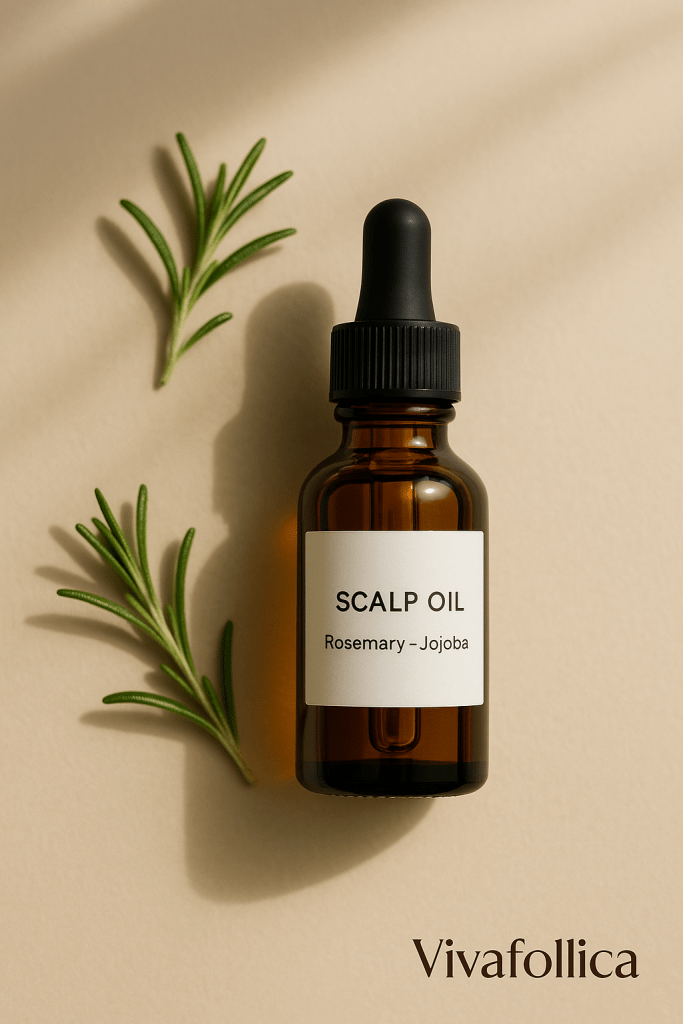
If you’ve ever hesitated to oil your scalp because you fear greasy hair or clogged pores, you’re not alone. It sounds counterintuitive: adding oil to a scalp that naturally produces sebum. But when done correctly, scalp oiling is one of the most effective rituals for stronger, healthier hair—and it does not lead to clogged pores or an oily mess.
Here’s why.
1. Understanding the Scalp’s Natural Balance
Your scalp is skin. Like the skin on your face, it has sebaceous (oil) glands that secrete sebum—the natural oil that keeps hair soft and your scalp protected. Problems like itchiness, flakiness, or even excessive oiliness often stem from an imbalance: either too little sebum (leading to dryness) or overproduction triggered by irritation and product buildup.
When applied properly, natural plant oils such as rosemary, jojoba, or argan actually help to balance this system. Instead of adding “more grease,” they:
- Mimic the structure of natural sebum (especially jojoba oil) so the scalp recognizes it as familiar and stops overproducing oil.
- Dissolve hardened sebum plugs and styling residue that can otherwise block follicles.
- Reinforce the skin barrier, preventing dehydration and the irritation that can trigger excess oil production.
The result? A healthier scalp that self-regulates, rather than one forced into overdrive.
2. Why Scalp Oils Don’t Clog Pores
Clogged pores—or folliculitis—occur when heavy, non-breathable ingredients sit on the scalp for long periods, trapping dead skin cells and bacteria. The key difference lies in which oils you use and how you apply them.
- Choose non-comedogenic, lightweight oils. Jojoba, rosemary-infused carrier oils, argan, or grapeseed have molecular weights and fatty-acid profiles that sink into the skin instead of forming a waxy layer.
- Apply sparingly. A few drops massaged into the scalp are enough to cover the entire area; drenching the scalp is unnecessary.
- Massage and rinse. Gentle massage increases circulation and helps the oil penetrate, and washing with a mild shampoo ensures no residue lingers.
In fact, the right oil blend cleanses follicles by loosening dead cells and hardened sebum, reducing the chance of blocked pores.
3. Why It Doesn’t Make Hair “Too Oily”
A well-formulated scalp oil doesn’t leave hair looking greasy for two main reasons:
- Absorption and bonding: Oils like rosemary-infused jojoba or squalane absorb into the skin and upper hair shaft. They don’t simply sit on top of strands the way a heavy butter or mineral oil might.
- Sebum feedback loop: When your scalp senses it’s properly moisturized, it scales back its own sebum production. Over time, this often means less natural oiliness, not more.
Many people notice that after several weeks of consistent scalp oiling—especially if they previously struggled with oily roots—their wash frequency actually decreases because the scalp is finally balanced.
4. How to Use Scalp Oil Correctly
Step 1: Choose the right oil blend.
Look for clean, cold-pressed oils with proven scalp benefits such as rosemary, tea tree, or peppermint in a light carrier like jojoba or grapeseed. Vivafollica’s blends, for example, pair rosemary with Redensyl and Capixyl for added follicle support.
Step 2: Part hair and apply a few drops.
Work in sections, applying drops directly to the scalp—not on the hair length.
Step 3: Massage for 5–10 minutes.
Use fingertips (not nails) to boost circulation and help the oil absorb.
Step 4: Leave on 30 minutes to overnight.
Cover with a silk scarf or shower cap if leaving overnight.
Step 5: Cleanse gently.
Shampoo as usual with a sulfate-free cleanser. If you used more oil, a double cleanse might be needed.
5. The Bonus: Treating the Ends of Your Hair
While the focus is on scalp health, the leftover oil on your hands after a massage is liquid gold for your hair ends. Here’s why applying it lightly to your lengths—especially the last 2–3 inches—makes a difference:
- Prevents split ends: Oils fill microscopic gaps in the hair cuticle, reducing breakage.
- Boosts shine and softness: They smooth the hair surface, reflecting light and reducing frizz.
- Adds a protective layer: Particularly helpful before heat styling or exposure to dry indoor air.
How to do it: After massaging your scalp, rub any excess oil between your palms and gently glide it over the lower half of your hair, focusing on the driest ends. There’s no need for extra oil; a whisper-thin layer is ideal.
6. Common Myths Debunked
Myth 1: Oil makes fine hair limp and greasy.
Reality: Lightweight oils like jojoba are almost identical to natural scalp oils and absorb quickly. The key is using drops—not spoonfuls.
Myth 2: You can skip shampoo after oiling.
Reality: Cleansing is essential. The magic happens when the oil nourishes and then is washed away, leaving behind balanced hydration.
Myth 3: Scalp oiling causes acne along the hairline.
Reality: Acne near the scalp is more often linked to occlusive styling products, unwashed hats, or hormonal fluctuations. Non-comedogenic scalp oils, properly cleansed, are unlikely culprits.
7. The Bigger Picture: Long-Term Benefits
Regular scalp oiling delivers benefits that go beyond aesthetics:
- Stronger hair from the root up
- Balanced sebum production—meaning fewer “greasy hair days”
- Healthier scalp microbiome with less itch or flake
- Enhanced hair density and shine over time
It’s an ancient practice validated by modern dermatology: nourishing the scalp is one of the simplest ways to transform the overall health of your hair.
Key Takeaways
- Scalp oiling doesn’t clog pores when you use lightweight, non-comedogenic oils and rinse properly.
- It won’t make your hair oily—in fact, it helps regulate sebum production.
- It doubles as a hair treatment when lightly smoothed over dry ends to prevent breakage and frizz.
A few drops, a short massage, and a gentle cleanse are all it takes to reap these long-term rewards.

 VivaFollica