Tag: scalp care

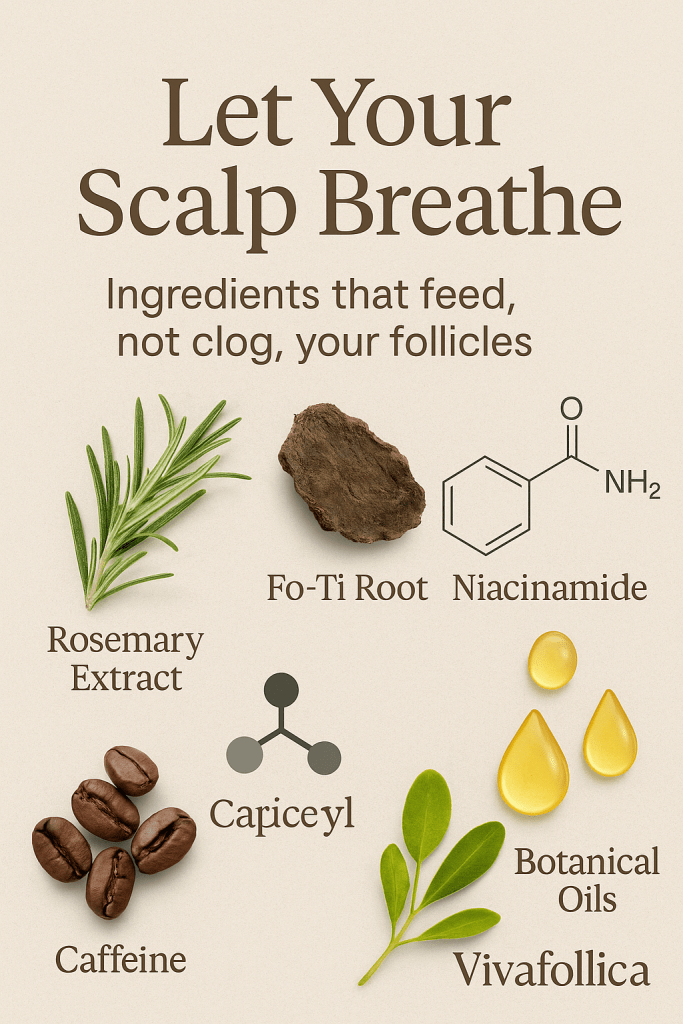
  • Let Your Scalp Breathe: Ingredients That Feed, Not Clog, Your Follicles

    When we think about healthy hair, our focus often lands on products that promise shine, volume, or strength. But what if the secret to truly beautiful hair starts deeper — at the scalp?

    Your scalp is skin, just like the skin on your face. It breathes, sweats, sheds, and renews itself. And just like facial pores, scalp pores can get clogged by heavy oils, residue, and harsh ingredients. The result? Sluggish follicles, buildup, flakes, and dull, lifeless strands.

    At Vivafollica, we believe that a clean, balanced scalp is the foundation for healthy hair growth. That’s why we formulate with ingredients that feed your follicles instead of suffocating them. Let’s dive into the natural, science-backed ingredients that nurture your scalp — and what makes them so effective.

    🌿 Rosemary Extract: The Circulation Booster

    Rosemary has been used for centuries as a natural remedy for hair thinning and scalp imbalance. Modern studies have shown that rosemary oil can be just as effective as some clinical treatments for stimulating new hair growth — without the irritation.

    How it works:

    Rosemary improves blood circulation to the scalp, delivering oxygen and nutrients directly to the follicles. This increased flow nourishes the roots and helps extend the hair’s growth phase (the anagen phase).

    It also has antioxidant and antimicrobial properties, keeping your scalp clear of buildup and bacteria that can lead to inflammation or dandruff.

    💜 In Vivafollica formulations, rosemary extract is one of the key botanical actives that awaken dormant follicles and restore balance naturally.

    🌱 Fo-Ti Root: Ancient Herbal Rejuvenation

    Known as He Shou Wu in Traditional Chinese Medicine, Fo-Ti Root is celebrated as a longevity tonic — especially for hair vitality.

    Why it matters:

    Fo-Ti helps boost scalp microcirculation and supports the hair’s natural pigment production, often associated with reducing premature graying and thinning.

    It’s rich in antioxidants and bioactive compounds that strengthen the follicles and improve scalp elasticity, making it an essential ingredient for maintaining youthful, resilient hair.

    💜 Vivafollica incorporates Fo-Ti Root as part of our nature-meets-science philosophy — bridging traditional herbal wisdom with modern scalp care.

    💧 Niacinamide (Vitamin B3): The Barrier Protector

    Niacinamide isn’t just for glowing skin — it’s a superstar for your scalp too. This multitasking vitamin helps restore balance, strengthen the skin barrier, and reduce irritation.

    What it does:

    • Regulates sebum production to prevent an oily or congested scalp
    • Reduces inflammation and flakiness
    • Supports hydration and resilience

    When your scalp’s barrier is healthy, follicles can thrive in a calm, balanced environment.

    💜 Vivafollica uses Niacinamide to ensure your scalp stays soothed, hydrated, and protected from environmental stress.

    ☕ Caffeine: The Follicle Energizer

    If caffeine can wake you up in the morning, imagine what it can do for your hair follicles!

    Science behind it:

    Caffeine penetrates the scalp barrier and stimulates hair roots at the cellular level, extending the growth phase and delaying shedding. It also helps block the effects of DHT, a hormone linked to hair loss.

    By increasing circulation and energy supply to each follicle, caffeine energizes the scalp environment, helping new strands grow stronger from the root.

    💜 That’s why caffeine is a star ingredient in Vivafollica’s formulations — it energizes follicles naturally, without irritation.

    🔬 Redensyl & Capixyl: Where Nature Meets Science

    While botanical extracts form the heart of our philosophy, Vivafollica also integrates clinically tested actives like Redensyl and Capixyl — two advanced complexes that support visible hair growth.

    Redensyl

    Redensyl targets the hair follicle stem cells, encouraging new hair growth from the source. It helps reawaken dormant follicles, improving density and strength over time.

    Capixyl

    Capixyl is a blend of biomimetic peptides and red clover extract, which help reduce follicle inflammation and strengthen the anchoring of each hair strand. The result: less shedding and a thicker, fuller appearance.

    💜 By combining Redensyl and Capixyl with botanical extracts, Vivafollica creates a synergistic effect — where science enhances nature, not replaces it.

    🌸 Botanical Oils: Nourishment Without Buildup

    Not all oils clog pores. In fact, lightweight, non-comedogenic oils can help maintain scalp hydration without suffocating the follicles.

    Our favorites:

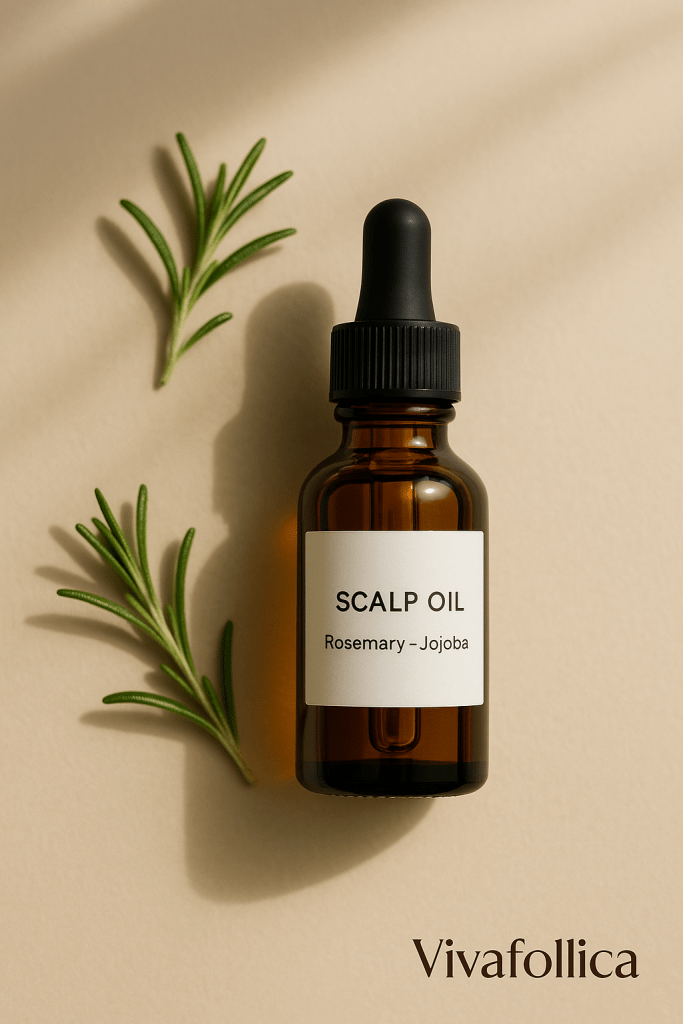
    • Jojoba Oil: Mimics your scalp’s natural sebum to balance moisture.
    • Squalane: Lightweight, fast-absorbing hydration that protects from dryness.
    • Grapeseed Oil: Rich in linoleic acid and antioxidants, perfect for sensitive scalps.

    These oils hydrate and nourish without residue, supporting a breathable, flexible scalp barrier that encourages stronger roots.

    💜 At Vivafollica, we believe hydration should feel clean — never greasy.

    ✨ The Vivafollica Difference

    Each ingredient in Vivafollica’s line has a purpose — not just to make hair look good, but to help it grow from a healthy foundation.
    We avoid the ingredients that clog and weigh down your scalp: no silicones, no mineral oils, no sulfates, and no harsh fragrances.

    Instead, we blend botanical extracts with modern science to achieve true scalp harmony — clean, breathable, and balanced.

    Because when your scalp can breathe, your hair can thrive. 🌿

    💆‍♀️ How to Support a Breathable Scalp at Home

    1. Choose scalp-safe products — avoid heavy, waxy formulas.
    2. Exfoliate gently once a week to remove buildup.
    3. Use lightweight oils to hydrate your scalp and ends.
    4. Massage regularly — stimulate circulation and relax tension.
    5. Stay consistent — real scalp health builds over time.

    💜 Your scalp is the soil where your hair grows — nourish it with care.

    Healthy hair starts with a clean foundation. The ingredients you choose matter — they can either clog your follicles or fuel your growth. By using natural, science-backed botanicals like rosemary, niacinamide, caffeine, Fo-Ti root, Redensyl, and Capixyl, you’re giving your scalp exactly what it needs: balance, vitality, and breathability.

    Vivafollica — Where Nature Meets Science.
    Nourish your roots. Let your scalp breathe.
  • Feed Your Scalp: The Best Foods for Healthy Hair Growth

    When we think about hair care, we often focus on what we put on our hair—shampoos, conditioners, masks, and scalp oils. But the truth is, healthy hair starts from within. Your scalp is living skin, and each hair follicle depends on nutrients delivered through your bloodstream to grow strong, thick, and resilient strands.

    This means what you eat is just as important—if not more so—than the products you apply. By fueling your body with hair-loving foods, you give your scalp and follicles the essential building blocks they need for growth, shine, and strength.

    At Vivafollica, we believe in a holistic approach to scalp wellness: nourishing the scalp inside and out. Let’s dive into the top foods that should be on your plate if you want healthier, fuller hair.

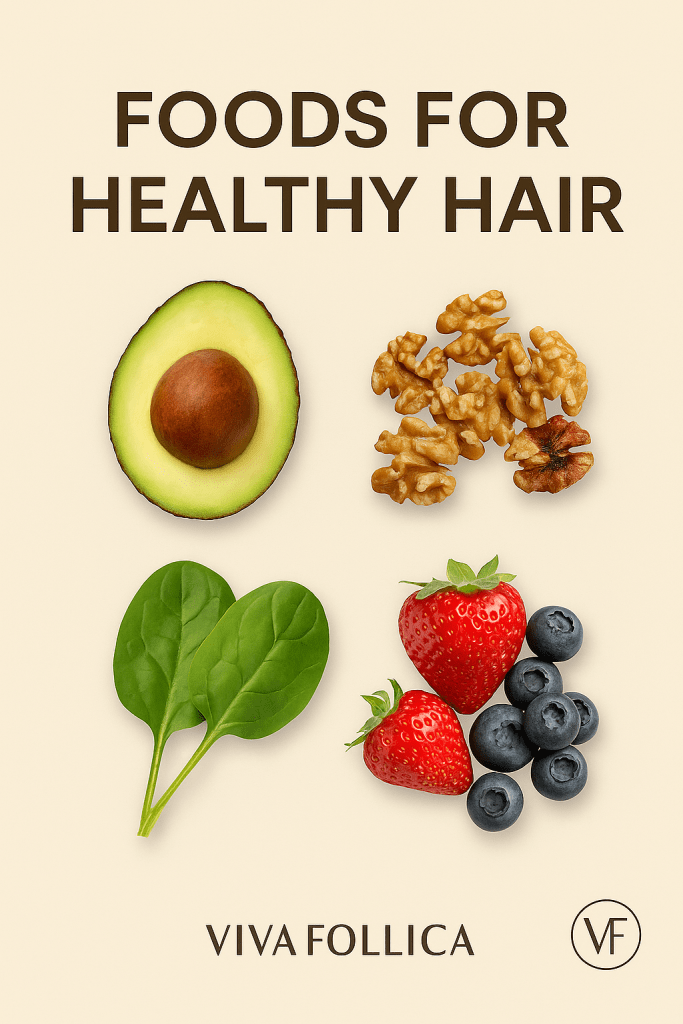
    1. Avocados: The Scalp Superfood

    Avocados are creamy, chic, and full of nutrients that your scalp craves. They’re packed with healthy fats, vitamins, and minerals that deeply support follicle health.

    • Vitamin E acts as an antioxidant, protecting follicles from oxidative stress while improving blood circulation to the scalp.
    • Biotin and folate, part of the B-vitamin family, are crucial for keratin production, the protein that makes up your hair strands.
    • Monounsaturated fats hydrate the scalp from within, reducing dryness and flakiness.

    Try adding avocado to salads, smoothies, or on top of whole-grain toast for a scalp-boosting meal.

    2. Spinach & Leafy Greens: Nature’s Multivitamin

    Spinach and other leafy greens like kale and arugula are nutritional powerhouses. They’re loaded with iron, vitamin A, vitamin C, and folate—all key for scalp health.

    • Iron supports red blood cells, which carry oxygen to hair follicles. Low iron is one of the most common causes of hair shedding.
    • Vitamin A helps the scalp produce sebum, your natural oil that keeps hair hydrated and shiny.
    • Vitamin C improves iron absorption and boosts collagen, strengthening hair structure.

    Incorporating leafy greens daily is one of the simplest ways to ensure your scalp stays nourished.

    3. Walnuts & Other Nuts: Omega-3 Hair Boosters

    Nuts, especially walnuts, are rich in omega-3 fatty acids, which help fight scalp dryness and inflammation. They also contain protein, vitamin E, zinc, and selenium, all important for follicle health.

    • Omega-3s nourish hair follicles and add natural shine.
    • Zinc and selenium protect the scalp and help regulate oil production.
    • Protein ensures your hair strands remain strong and resistant to breakage.

    Keep a small handful of nuts as a daily snack or sprinkle them over yogurt or salads.

    4. Berries: Antioxidant Powerhouses

    Berries like blueberries, strawberries, and raspberries are loaded with antioxidants and vitamin C, which protect hair follicles against free radical damage.

    • Vitamin C also helps your body absorb iron, a mineral that keeps follicles strong and oxygenated.
    • Antioxidants fight oxidative stress, which can weaken hair growth cycles.

    A bowl of fresh berries makes a perfect scalp-friendly breakfast or snack.

    5. Eggs: Protein & Biotin for Strong Strands

    Eggs are often called a “perfect protein,” and for good reason. Hair is made almost entirely of protein, and eggs provide it in abundance. They’re also one of the best natural sources of biotin, a B-vitamin essential for healthy hair.

    • Protein strengthens strands and prevents breakage.
    • Biotin helps produce keratin, boosting hair structure and resilience.
    • Vitamin D in eggs supports follicle activity and growth.

    Including eggs in your breakfast rotation is one of the easiest ways to feed your scalp.

    6. Sweet Potatoes: Beta-Carotene Brilliance

    Sweet potatoes are rich in beta-carotene, a compound that your body converts into vitamin A.

    • Vitamin A plays a key role in scalp health by regulating sebum production. Too little vitamin A can cause dry, brittle hair, while the right amount ensures your scalp stays moisturized.
    • Beta-carotene also supports cell growth, helping follicles function optimally.

    Roasted, mashed, or baked, sweet potatoes make a delicious and hair-friendly addition to your diet.

    7. Salmon & Fatty Fish: Growth-Boosting Omega-3s

    Fatty fish like salmon, mackerel, and sardines are excellent sources of omega-3 fatty acids, high-quality protein, and vitamin D.

    • Omega-3s improve scalp circulation, reduce inflammation, and help follicles produce healthier hair.
    • Vitamin D plays a role in creating new follicles and supporting growth cycles.

    For plant-based alternatives, chia seeds and flaxseeds also offer omega-3s, though in a slightly different form.

    8. Greek Yogurt: Protein + Probiotics

    Greek yogurt provides both protein and probiotics, which support overall health and indirectly benefit your scalp.

    • Protein builds strong strands.
    • Probiotics improve gut health, which can enhance nutrient absorption—ensuring your follicles get the vitamins and minerals they need.

    Top your yogurt with berries and walnuts for a nutrient-packed, scalp-friendly snack.

    Pairing Nutrition with Scalp Oiling

    While food fuels your scalp from the inside, topical treatments nourish it directly. That’s why Vivafollica encourages pairing scalp-friendly foods with regular scalp oiling.

    • Nutrient-rich oils like rosemary and jojoba deliver hydration and bioactive compounds directly to the scalp.
    • Massage improves circulation, enhancing nutrient delivery both internally and externally.

    This inside-out + outside-in approach ensures your scalp gets everything it needs for optimal hair health.

    How to Build Your “Feed Your Scalp” Routine

    1. Add scalp-friendly foods daily. Choose at least one from the list—avocado, spinach, eggs, or berries—and rotate them.
    2. Snack smart. Keep walnuts or almonds on hand for quick nourishment.
    3. Stay hydrated. Water helps transport nutrients to your scalp.
    4. Practice scalp oiling weekly. Massage Vivafollica’s concentrate into your scalp to boost blood flow and deliver active botanicals.
    5. Be consistent. Like skincare, results show up with regular care.

    Beautiful hair doesn’t just happen on the surface—it begins deep in the follicle. By combining scalp oiling rituals with a diet rich in avocados, spinach, walnuts, berries, eggs, sweet potatoes, and more, you’re giving your scalp exactly what it needs to thrive.

    At Vivafollica, we believe your scalp is skin, and it deserves the same thoughtful attention you give to your face. Feed it well from the inside, care for it from the outside, and watch your hair transform into its healthiest, most radiant state.

  • Why Scalp Oiling Doesn’t Clog Pores or Make Hair Oily—And How to Treat Your Ends, Too

    If you’ve ever hesitated to oil your scalp because you fear greasy hair or clogged pores, you’re not alone. It sounds counterintuitive: adding oil to a scalp that naturally produces sebum. But when done correctly, scalp oiling is one of the most effective rituals for stronger, healthier hair—and it does not lead to clogged pores or an oily mess.

    Here’s why.

    1. Understanding the Scalp’s Natural Balance

    Your scalp is skin. Like the skin on your face, it has sebaceous (oil) glands that secrete sebum—the natural oil that keeps hair soft and your scalp protected. Problems like itchiness, flakiness, or even excessive oiliness often stem from an imbalance: either too little sebum (leading to dryness) or overproduction triggered by irritation and product buildup.

    When applied properly, natural plant oils such as rosemary, jojoba, or argan actually help to balance this system. Instead of adding “more grease,” they:

    • Mimic the structure of natural sebum (especially jojoba oil) so the scalp recognizes it as familiar and stops overproducing oil.
    • Dissolve hardened sebum plugs and styling residue that can otherwise block follicles.
    • Reinforce the skin barrier, preventing dehydration and the irritation that can trigger excess oil production.

    The result? A healthier scalp that self-regulates, rather than one forced into overdrive.

    2. Why Scalp Oils Don’t Clog Pores

    Clogged pores—or folliculitis—occur when heavy, non-breathable ingredients sit on the scalp for long periods, trapping dead skin cells and bacteria. The key difference lies in which oils you use and how you apply them.

    • Choose non-comedogenic, lightweight oils. Jojoba, rosemary-infused carrier oils, argan, or grapeseed have molecular weights and fatty-acid profiles that sink into the skin instead of forming a waxy layer.
    • Apply sparingly. A few drops massaged into the scalp are enough to cover the entire area; drenching the scalp is unnecessary.
    • Massage and rinse. Gentle massage increases circulation and helps the oil penetrate, and washing with a mild shampoo ensures no residue lingers.

    In fact, the right oil blend cleanses follicles by loosening dead cells and hardened sebum, reducing the chance of blocked pores.

    3. Why It Doesn’t Make Hair “Too Oily”

    A well-formulated scalp oil doesn’t leave hair looking greasy for two main reasons:

    • Absorption and bonding: Oils like rosemary-infused jojoba or squalane absorb into the skin and upper hair shaft. They don’t simply sit on top of strands the way a heavy butter or mineral oil might.
    • Sebum feedback loop: When your scalp senses it’s properly moisturized, it scales back its own sebum production. Over time, this often means less natural oiliness, not more.

    Many people notice that after several weeks of consistent scalp oiling—especially if they previously struggled with oily roots—their wash frequency actually decreases because the scalp is finally balanced.

    4. How to Use Scalp Oil Correctly

    Step 1: Choose the right oil blend.
    Look for clean, cold-pressed oils with proven scalp benefits such as rosemary, tea tree, or peppermint in a light carrier like jojoba or grapeseed. Vivafollica’s blends, for example, pair rosemary with Redensyl and Capixyl for added follicle support.

    Step 2: Part hair and apply a few drops.
    Work in sections, applying drops directly to the scalp—not on the hair length.

    Step 3: Massage for 5–10 minutes.
    Use fingertips (not nails) to boost circulation and help the oil absorb.

    Step 4: Leave on 30 minutes to overnight.
    Cover with a silk scarf or shower cap if leaving overnight.

    Step 5: Cleanse gently.
    Shampoo as usual with a sulfate-free cleanser. If you used more oil, a double cleanse might be needed.

    5. The Bonus: Treating the Ends of Your Hair

    While the focus is on scalp health, the leftover oil on your hands after a massage is liquid gold for your hair ends. Here’s why applying it lightly to your lengths—especially the last 2–3 inches—makes a difference:

    • Prevents split ends: Oils fill microscopic gaps in the hair cuticle, reducing breakage.
    • Boosts shine and softness: They smooth the hair surface, reflecting light and reducing frizz.
    • Adds a protective layer: Particularly helpful before heat styling or exposure to dry indoor air.

    How to do it: After massaging your scalp, rub any excess oil between your palms and gently glide it over the lower half of your hair, focusing on the driest ends. There’s no need for extra oil; a whisper-thin layer is ideal.

    6. Common Myths Debunked

    Myth 1: Oil makes fine hair limp and greasy.
    Reality: Lightweight oils like jojoba are almost identical to natural scalp oils and absorb quickly. The key is using drops—not spoonfuls.

    Myth 2: You can skip shampoo after oiling.
    Reality: Cleansing is essential. The magic happens when the oil nourishes and then is washed away, leaving behind balanced hydration.

    Myth 3: Scalp oiling causes acne along the hairline.
    Reality: Acne near the scalp is more often linked to occlusive styling products, unwashed hats, or hormonal fluctuations. Non-comedogenic scalp oils, properly cleansed, are unlikely culprits.

    7. The Bigger Picture: Long-Term Benefits

    Regular scalp oiling delivers benefits that go beyond aesthetics:

    • Stronger hair from the root up
    • Balanced sebum production—meaning fewer “greasy hair days”
    • Healthier scalp microbiome with less itch or flake
    • Enhanced hair density and shine over time

    It’s an ancient practice validated by modern dermatology: nourishing the scalp is one of the simplest ways to transform the overall health of your hair.

    Key Takeaways

    • Scalp oiling doesn’t clog pores when you use lightweight, non-comedogenic oils and rinse properly.
    • It won’t make your hair oily—in fact, it helps regulate sebum production.
    • It doubles as a hair treatment when lightly smoothed over dry ends to prevent breakage and frizz.

    A few drops, a short massage, and a gentle cleanse are all it takes to reap these long-term rewards.

  • Your Scalp Is Skin: Why It Deserves the Same Care as Your Face and Body

    When most of us think about skincare, we picture cleansers, serums, and moisturizers for the face and body. But there’s one very important part of our skin that often gets ignored: the scalp. Just like the skin on our cheeks or arms, the scalp is living tissue with pores, oil glands, and a delicate barrier that protects and nourishes what grows from it—our hair.

    Treating the scalp as an afterthought can lead to dryness, itching, flaking, excess oil, and even hair thinning. If you want strong, glossy hair, scalp care should be step one, not an occasional add-on.

    Your Scalp = Skin

    Under a microscope, the scalp is virtually identical to the skin elsewhere on the body. It has:

    • Epidermis and dermis layers that renew every 28–30 days.
    • Sebaceous (oil) glands that lubricate and protect.
    • Sweat glands and a microbiome that maintain healthy pH.

    What makes the scalp unique is density: it has more oil glands and hair follicles per square inch than anywhere else on the body. Those follicles are living mini-organs that depend on healthy skin to grow strong hair.

    Just like facial skin, the scalp’s barrier can become dehydrated, inflamed, or clogged, leading to irritation, excess shedding, or slow growth.

    Why Scalp Neglect Shows Up in Your Hair

    If facial skin is neglected, it looks dull and ages faster. The scalp behaves the same way:

    • Build-up of product and oil suffocates follicles and can slow growth.
    • Dryness and micro-inflammation weaken hair roots and cause breakage.
    • Poor circulation limits delivery of oxygen and nutrients, leading to thinner strands.

    Healthy hair begins well below the surface. Without scalp care, styling products and even genetics can only go so far.

    Skincare Principles that Apply to the Scalp

    Think of scalp care as facial care, translated upward:

    Face Care StepScalp EquivalentWhy It Matters
    Gentle cleansingScalp shampoo or exfoliating treatmentRemoves product, sebum, dead cells
    Hydrating serumLeave-in scalp serumBalances oil, hydrates, soothes
    Antioxidant serumBotanical extracts (e.g., Fo-Ti root)Protects against free radicals & aging
    SPFUV protection spraysPrevents sun damage and dryness

    Your scalp thrives on the same routines—cleanse, treat, protect—that keep facial skin vibrant.

    Science-Backed Ingredients for a Healthy Scalp

    Here are four hero ingredients that Vivafollica champions, each chosen for its ability to create the optimal scalp environment for healthy, thick hair:

    1. Redensyl®

    A plant-based complex that targets hair follicle stem cells, helping to restart the growth cycle. Redensyl nourishes the papilla (the follicle’s growth engine) and improves density over time.

    2. Capixyl™

    A peptide + red clover blend that helps reduce inflammation around follicles, anchoring hair more securely and discouraging miniaturization (a common cause of thinning). It’s like a calm, nutrient-rich cushion for each strand.

    3. Fo-Ti Root (He Shou Wu)

    An antioxidant powerhouse long used in Chinese herbal traditions to protect natural pigment and slow premature graying. Modern research shows Fo-Ti can help improve circulation and protect follicle cells from oxidative stress.

    4. Niacinamide (Vitamin B3)

    Famous in facial serums, Niacinamide boosts microcirculation, strengthens the scalp’s barrier, and supports keratin production for stronger, thicker hair. It also helps calm irritation and regulate oil—vital for balanced scalp health.

    How to Incorporate Scalp Care Daily

    1. Cleanse Thoughtfully
    Choose a gentle, sulfate-free shampoo and massage it in with your fingertips (not nails) for 60 seconds. This lifts debris and stimulates blood flow.

    2. Exfoliate Weekly
    A mild scalp scrub or an exfoliating tonic removes dead cells and styling build-up, keeping follicles clear.

    3. Feed the Skin
    Apply a lightweight scalp serum—ideally one rich in Redensyl, Capixyl, Fo-Ti root, and Niacinamide—to supply antioxidants, peptides, and hydration directly where hair begins.

    4. Protect and Balance
    If you spend time outdoors, a scalp-friendly UV spray prevents sun damage and dryness.

    Lifestyle Habits That Support Scalp Skin

    • Stay hydrated and eat nutrient-rich foods (leafy greens, protein, omega-3s) to support cell renewal.
    • Avoid tight hairstyles that restrict blood flow.
    • Limit harsh chemical treatments and excessive heat.
    • Manage stress, which can increase shedding and affect oil production.

    Why Vivafollica Focuses on the Scalp

    Vivafollica was founded on the principle that hair wellness starts at the root. Our Natural Follicle Revival Concentrate blends Redensyl, Capixyl, Fo-Ti root, and Niacinamide to nourish the scalp as carefully as you nourish your face. This synergy helps:

    • Improve follicle strength and density
    • Maintain natural pigment and delay graying
    • Reduce irritation and dryness
    • Create the ideal foundation for stronger, more resilient hair

    It’s the same philosophy that guides great skincare—clean, treat, protect—brought to the scalp.

    Healthy, beautiful hair begins with a healthy scalp. Care for it with the same attention you give to your face, and you’ll see the results from root to tip.