Category: Uncategorized

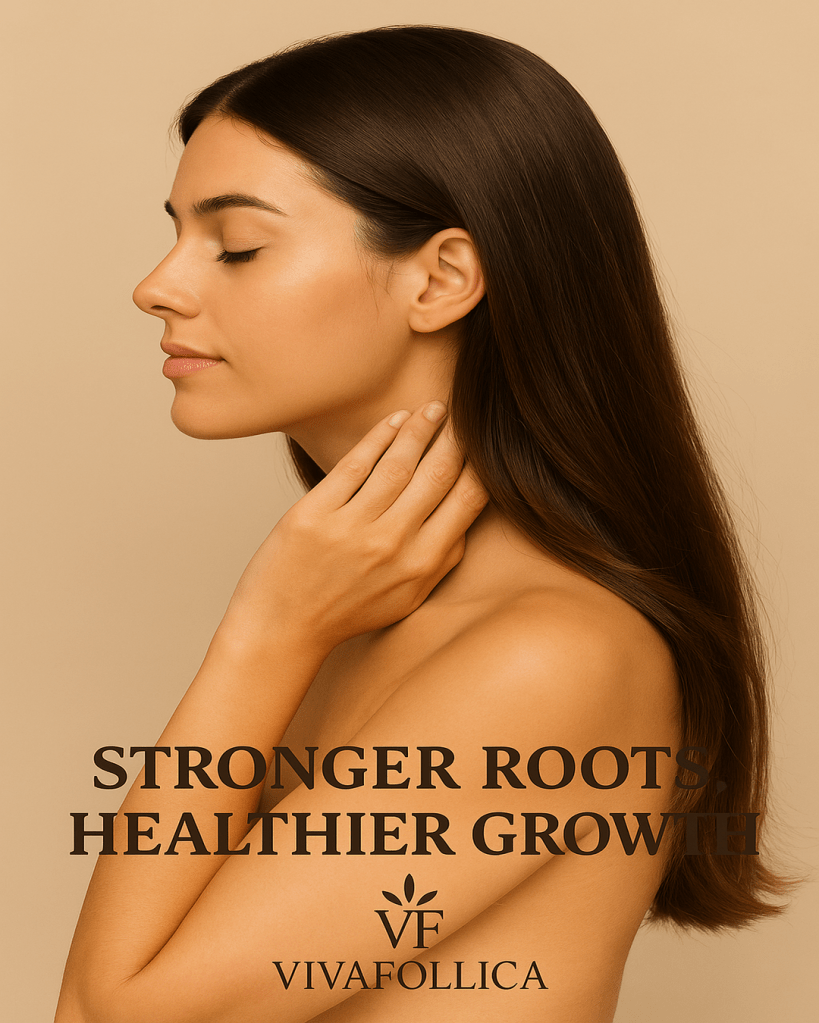
  • Stronger Roots, Healthier Growth: Why Scalp Care Is the Secret to Beautiful Hair

    Beautiful hair doesn’t start with the strand — it starts with the root.
    At Vivafollica, we believe that the foundation of every healthy, shiny, resilient strand begins below the surface, where the hair follicle lives and grows. When the scalp is balanced, nourished, and supported, the hair that emerges naturally becomes stronger, smoother, and more vibrant.

    Let’s explore why focusing on your scalp is one of the most transformative steps you can take for long-term hair health and growth.

    The Scalp: Your Hair’s Ecosystem

    Your scalp is a living environment — a delicate ecosystem of follicles, oils, nutrients, and microbiome activity. When this environment is in balance, follicles stay active and healthy. But when it’s stressed by inflammation, buildup, hormones, dryness, or environmental triggers, hair growth can slow or weaken.

    Supporting the scalp means supporting the root — and everything that grows from it.

    Hydration = Supple, Resilient Strands

    Dry scalp leads to dry strands.
    Hydrated scalp leads to soft, flexible hair that resists breakage.

    Vivafollica’s formula uses nutrient-rich botanicals and MUFA-packed oils (like jojoba, argan, and avocado) to help reinforce the scalp barrier, reduce moisture loss, and replenish essential lipids. This creates the perfect environment for new, healthy growth.

    Follicle Activation Through Nutrients

    Healthy follicles need fuel — and the right nutrients can help “wake up” sluggish or stressed follicles. Ingredients like:

    • Redensyl
    • Capixyl
    • Fo-Ti root extract
    • Niacinamide
    • Rosemary oil
    • Monounsaturated fatty acids (MUFAs)

    work synergistically to energize follicles, support micro-circulation, and strengthen the root before the hair ever reaches the surface. This is how true, long-lasting growth begins.

    Why Scalp Care Is the New Hair Care

    For years, hair care focused entirely on what happens after the hair leaves the scalp — glosses, masks, oils, smoothing treatments. But results are temporary if the root is struggling.

    When you nourish the root:
    ✨ growth improves
    ✨ shedding decreases
    ✨ shine increases
    ✨ strands grow in stronger
    ✨ hair becomes naturally smoother and fuller

    This is growth from the inside out — the Vivafollica way.

    Vivafollica: Strengthening the Foundation

    Our serum is designed to do more than coat the hair.
    It feeds the scalp.
    It energizes the follicle.
    It strengthens the root.
    It balances the ecosystem.
    And as a result — your growth becomes healthier, stronger, and more radiant.

    Stronger roots truly do lead to healthier growth.

    Hair transformation begins where most routines overlook — at the scalp. When you nourish the root and support the foundation, your hair begins to thrive naturally. Consistency, science-driven ingredients, and holistic scalp care are the keys to achieving the hair you deserve.

    Vivafollica is here to help you start that journey — one root at a time.

  • How Monounsaturated Fatty Acids Activate Hair Follicles & Support Healthy Growth

    The Science Behind MUFAs — and Why Vivafollica Uses Them

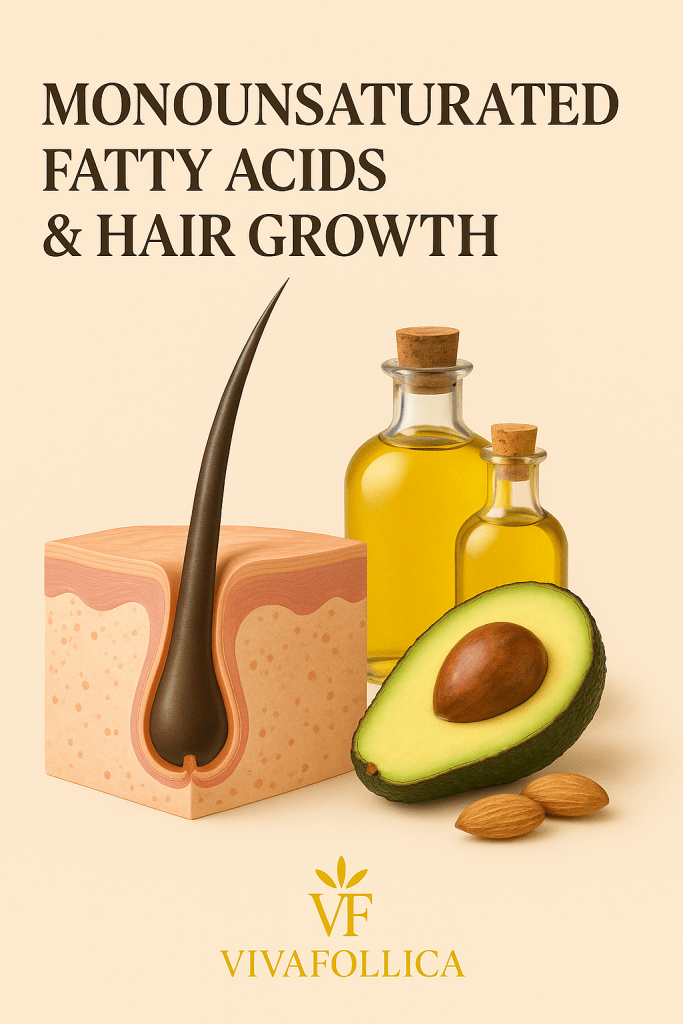
    In recent years, monounsaturated fatty acids (MUFAs) have emerged as powerful allies in the world of scalp health and hair restoration. While most people associate MUFAs with heart-healthy foods like olive oil and avocados, research shows that these fatty acids also play a critical role in activating hair follicles, restoring barrier function, and supporting thicker, healthier hair growth.

    Vivafollica’s serum was intentionally crafted with a high concentration of MUFA-rich botanicals — part of our commitment to using science-driven, nutrient-dense formulations. With ~60% active and nutritional ingredients and 15–20% restorative carrier oils, our formula delivers MUFAs directly to the follicles where they make the biggest impact.

    Let’s break down the science behind why MUFAs matter.

    What Are Monounsaturated Fatty Acids?

    MUFAs are healthy fats found in plant oils like olive, avocado, jojoba, and argan oil. Unlike saturated fats, MUFAs remain fluid at body temperature, which allows them to penetrate the scalp more easily and nourish follicles directly.

    Some of the most hair-beneficial MUFAs include:

    • Oleic Acid
    • Palmitoleic Acid
    • Gadoleic Acid
    • Eicosenoic Acid

    These fats are not just moisturizing — they are biologically active nutrients that help revive dormant follicles.

    How MUFAs Activate Hair Follicles

    The hair follicle is a highly active mini-organ that relies on lipids (fats) for structure, energy, and signaling. MUFAs support follicle activation through several key mechanisms:

    1. They Strengthen the Scalp’s Lipid Barrier

    A healthy scalp barrier keeps moisture in, irritants out, and creates the ideal environment for hair growth. MUFAs repair and replenish the scalp barrier, which calms inflammation and reduces follicular stress.

    A healthier environment = higher follicle activity.

    2. They Improve Micro-Circulation Around the Follicle

    MUFAs help support better blood flow, bringing oxygen and nutrients directly to the root. Improved circulation allows follicles to stay in the anagen (growth) phase longer.

    3. They Activate Stem Cells in the Bulge Region

    The bulge region of the follicle contains stem cells responsible for producing new hair.
    Research suggests that MUFAs enhance the lipid environment that these stem cells rely on, encouraging new growth and regeneration.

    4. They Reduce Inflammation That Blocks Growth

    Chronic inflammation is one of the biggest causes of thinning and shedding. MUFAs have natural anti-inflammatory properties that help soothe the scalp and reduce the inflammatory load around follicles.

    5. They Keep the Hair Shaft Smooth & Flexible

    Healthy sebum naturally contains MUFAs — when this balance is restored through topical application, hair becomes smoother, shinier, and less prone to breakage.

    MUFAs in Vivafollica: Thoughtfully Selected & Clinically Aligned

    Because MUFAs are critical to follicle health, Vivafollica’s serum includes several MUFA-rich botanical oils as part of its 15–20% carrier oil system — each chosen to deliver maximum nourishment without greasiness.

    Examples of MUFA-rich oils in our formula include:

    • Jojoba Oil (rich in eicosenoic & oleic acids, biomimics natural sebum)
    • Argan Oil (high in oleic & linoleic acids — strengthens follicles)
    • Olive-derived Squalane (ultra-light MUFA support for barrier repair)
    • Avocado Oil (oleic acid for deep nourishment & softness)

    These oils do more than moisturize — they deliver targeted lipid nutrition to the follicles.

    Why Vivafollica’s MUFA System Works So Well

    Unlike traditional hair serums that rely on heavy silicones or coated shine, Vivafollica uses nutrient-dense oils that are biologically active, meaning they interact with the follicle instead of sitting on top of the hair.

    Combined with our 60% blend of clinical actives — including Redensyl, Capixyl, Niacinamide, Fo-Ti Root, and Rosemary Extract — MUFAs amplify:

    • Scalp healing
    • Follicle responsiveness
    • Hair strength
    • Shine
    • Smoothness
    • Elasticity

    In other words, MUFAs don’t just make hair look healthier — they support the biology that makes hair grow healthier.

    The Bottom Line: MUFAs Are a Game-Changer for Hair Growth

    A scalp rich in monounsaturated fatty acids is a scalp that can support stronger, denser, shinier hair. By nurturing the follicle environment, calming inflammation, and restoring lipid balance, MUFAs help awaken your follicles and keep them active.

    With Vivafollica’s uniquely concentrated formulation, you’re giving your scalp the nutrients it needs to thrive — naturally.

    Vivafollica: Where Science Meets Clean Beauty

    Healthy shine. Stronger strands. A balanced, nourished scalp.
    It all begins with what you feed your follicles.

  • How to Maintain Shiny, Healthy Hair

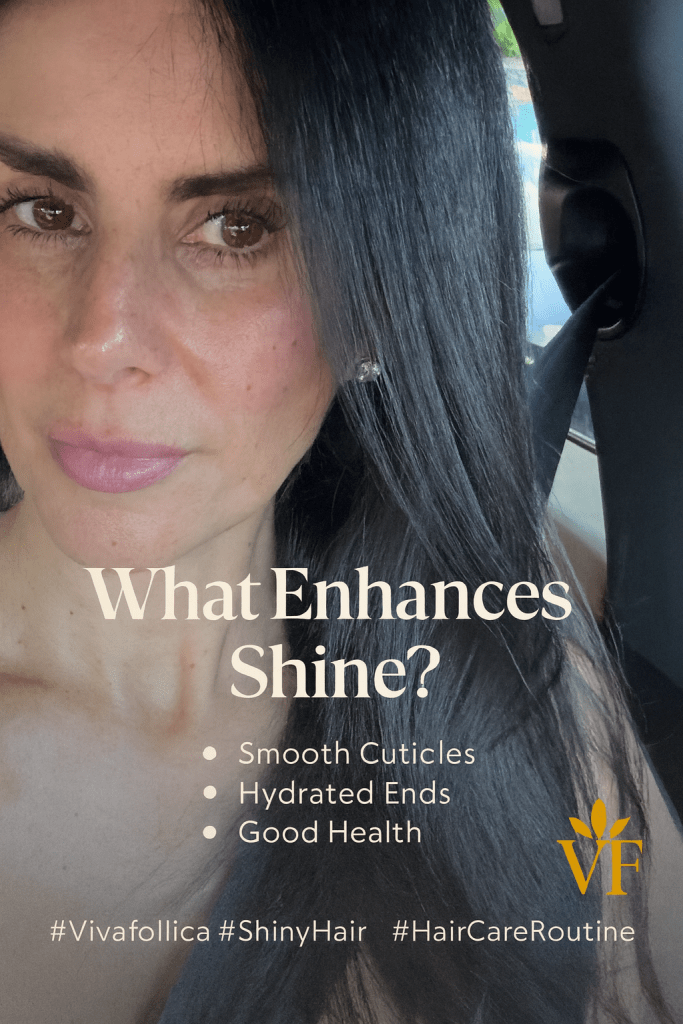
    There’s something about shiny hair that instantly signals health, confidence, and vitality. But true shine doesn’t come from a single product — it’s the result of consistent care, balanced nourishment, and a healthy scalp. Whether your hair is straight, wavy, or curly, these simple yet science-backed habits will help you achieve a natural, luminous glow.

    1. Start with Scalp Health

    Healthy shine begins where your hair does — at the scalp. When your scalp is clean, balanced, and free of buildup, it allows your follicles to function at their best.

    Vivafollica Tip: Use a gentle scalp serum or exfoliant once or twice a week to clear impurities and encourage micro-circulation. Ingredients like Niacinamide, Redensyl, and Fo-Ti root help energize the follicles and promote a healthy environment for growth.

    2. Hydrate From Root to End

    Dryness is the enemy of shine. Hair that’s dehydrated looks dull because the cuticle layer lifts, preventing light from reflecting smoothly off the strand.

    Keep your hair hydrated by:

    • Using a moisture-rich conditioner after every wash.
    • Applying a lightweight, non-greasy serum or leave-in treatment to seal in moisture.
    • Drinking enough water — internal hydration reflects externally.

    Vivafollica Insight: Look for ingredients like Panthenol (B5), Hyaluronic Acid, and Capixyl that attract and lock in moisture without weighing hair down.

    3. Protect Your Cuticle Layer

    Your hair’s outer cuticle is like the surface of a mirror — the smoother it is, the shinier your hair appears. Heat, UV exposure, and harsh brushing can roughen the cuticle, scattering light and creating dullness.

    Shine-Saving Tips:

    • Always use a heat protectant before styling tools.
    • Limit hot tools to 1–2 times per week.
    • Rinse hair with cool water after conditioning to help seal the cuticle.
    • Sleep on a silk or satin pillowcase to reduce friction and frizz.

    4. Feed Your Hair Nutrients

    Shine starts from within. Nutrient-dense foods rich in omega-3 fatty acids, zinc, iron, and biotin support glossy, resilient strands.

    Shine-Boosting Foods:

    • Salmon, chia seeds, or walnuts (for healthy fats)
    • Spinach, lentils, and beans (for iron and protein)
    • Berries and citrus fruits (for vitamin C to support collagen)

    A balanced diet supports scalp circulation and strengthens new growth — the foundation for long-term shine.

    5. Avoid Product Buildup

    Even the best products can dull your shine if they accumulate on the scalp or hair shaft. Over time, buildup blocks light reflection and weighs strands down.

    Use a gentle clarifying shampoo once every 1–2 weeks to reset your scalp and hair. If you use oils or dry shampoo often, this step is key to keeping your shine radiant and natural.

    6. Choose “Clean Shine” — Not Coated Shine

    Many conventional serums rely on heavy silicones that create temporary gloss but suffocate the hair shaft over time. Instead, choose clean-beauty formulas that nourish the hair without coating it.

    Vivafollica formulas use science-driven botanicals — like Redensyl, Fo-Ti Root, Niacinamide, and Rosemary Oil — to support healthy growth and hydration so your shine comes naturally, not artificially.

    The Vivafollica Way to Shine

    Shiny hair isn’t just about how it looks — it’s a reflection of how healthy and balanced your scalp and lifestyle are. With consistency, gentle care, and the right products, your hair can regain its natural luminosity and strength.

    Because real shine starts from within — and Vivafollica helps bring it to the surface.

  • Men vs. Women: How Our Scalps Differ — and Why It Matters for Hair Health

    Yes, there are some key biological differences between men’s and women’s scalps, even though they share the same basic structure. These differences explain why men and women often experience different hair thinning patterns, oil production, and scalp needs.

    Here’s a simple breakdown 👇

    1. Hormonal Differences (The Biggest Factor)

    The biggest difference between men’s and women’s scalps comes from hormones â€” especially androgens like testosterone and its more potent form, DHT (dihydrotestosterone).

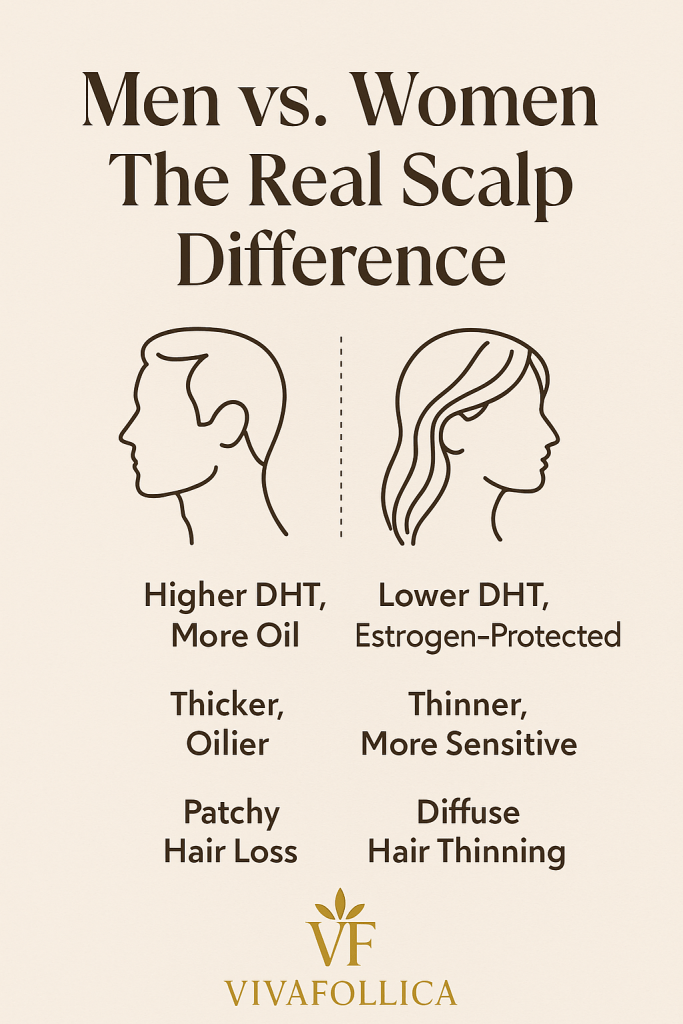
    • Men: Have higher levels of DHT, which binds to hair follicles (especially around the crown and hairline) and gradually shrinks them — a process called miniaturization. This is why men typically experience receding hairlines and bald spots.
    • Women: Also have DHT, but in much lower amounts. Estrogen helps balance it out, protecting follicles longer. When estrogen drops (after pregnancy or during menopause), women may see diffuse thinning instead of patchy baldness.

    💬 So, men’s hair loss tends to be concentrated in specific areas, while women’s is usually more spread out.

    2. Oil (Sebum) Production

    Men’s scalps generally produce more sebum (oil) than women’s — up to 50% more in some studies.

    • Men’s scalps: Tend to be oilier, which can lead to clogged pores, buildup, or scalp acne if not washed regularly.
    • Women’s scalps: Usually stay more balanced but can fluctuate due to hormonal changes, stress, or overuse of styling products.

    💡 This is why men often prefer lightweight, purifying scalp care, while women may need more balancing and hydrating formulas.

    3. Skin Thickness and Sensitivity

    • Men’s scalps are typically thicker and have larger pores, which helps with oil flow but can also hold onto buildup.
    • Women’s scalps tend to be thinner and more sensitive, meaning harsh ingredients (like sulfates or alcohols) can cause irritation more easily.

    That’s why women’s scalp care often focuses on gentle nourishment and barrier repair — especially with serums that contain soothing ingredients like Niacinamide, Panthenol, or botanical extracts.

    4. Hair Follicle Density and Growth Cycle

    • Both men and women are born with roughly 100,000 hair follicles, but follicle density (how close together they are) and growth cycles differ slightly.
    • Men’s follicles can have shorter growth (anagen) phases due to DHT influence, meaning hair cycles faster and sheds sooner.
    • Women’s follicles usually stay in the growth phase longer, which is why women’s hair often grows longer before shedding.

    5. Hair Loss Patterns

    FeatureMenWomen
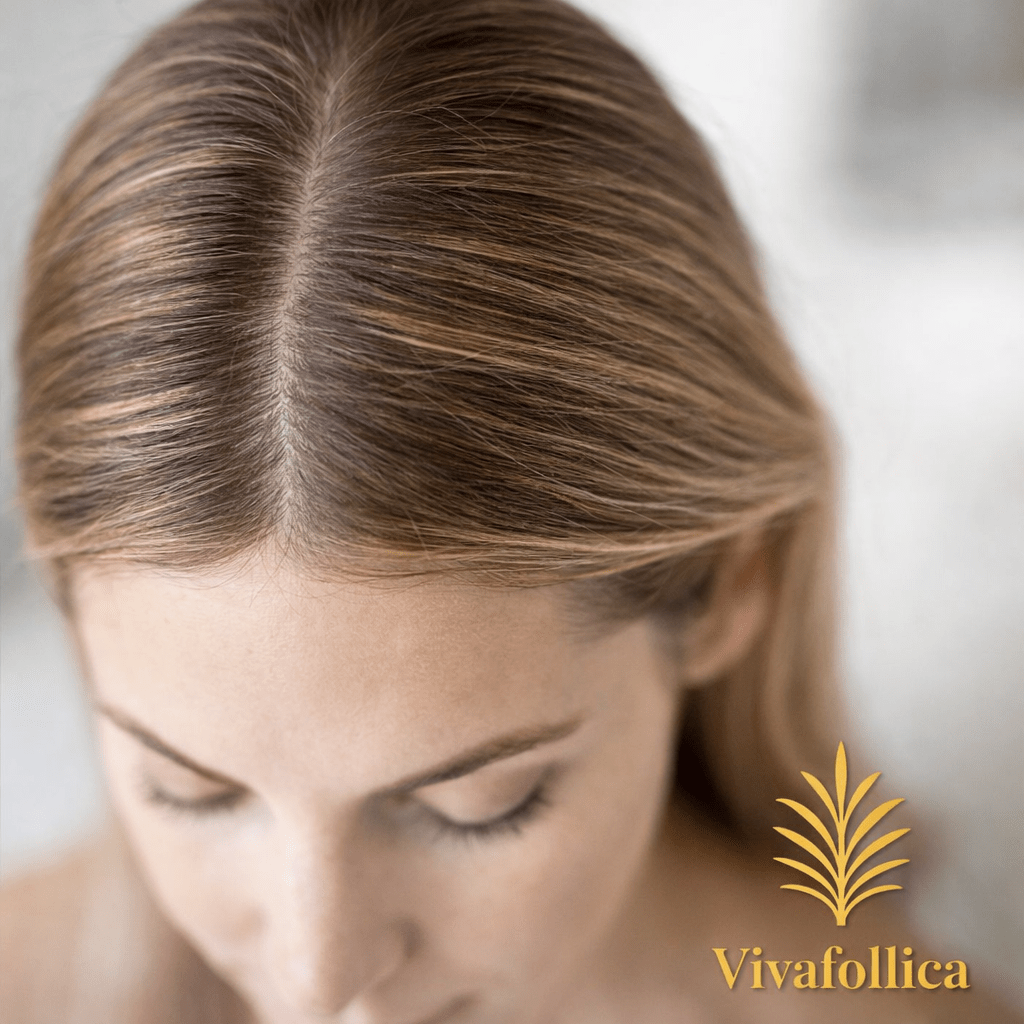
    Common patternReceding hairline, thinning crownWidening part, diffuse thinning
    Hormone involvedHigh DHTDHT + Low estrogen
    When it beginsOften in 20s–30sUsually after 40s or post-pregnancy
    Reversible?PartiallyOften treatable if follicles stay active

    6. Scalp Care Needs

    Because of these differences, ideal scalp care routines aren’t always the same.

    For Men:

    • Use clarifying or balancing shampoos to manage excess oil and buildup.
    • Add DHT-blocking ingredients like Capixyl, Redensyl, or saw palmetto.
    • Exfoliate weekly to keep follicles clear.

    For Women:

    • Use hydrating, gentle cleansers that preserve scalp moisture.
    • Support hormonal balance and follicle strength with ingredients like Fo-Ti Root, Niacinamide, and caffeine.
    • Avoid harsh chemicals or tight hairstyles that stress the follicles.

    7. Shared Truth: Healthy Hair Starts with the Scalp

    Even though there are differences, one thing is true for both men and women:

    The scalp is skin — and healthy hair begins with healthy skin.

    Whether it’s controlling oil, soothing irritation, or boosting circulation, both men and women benefit from consistent scalp care that includes:

    • Regular cleansing (to remove buildup)
    • Gentle exfoliation
    • Daily nourishment (like a growth serum)
    • Stress management and balanced nutrition

    💜 In Summary

    AspectMen’s ScalpWomen’s Scalp
    HormonesHigher DHT, more oilLower DHT, estrogen-protected
    Skin typeThicker, oilierThinner, more sensitive
    Hair lossPatchy (crown/hairline)Diffuse (crown/part line)
    Care needsClarifying, anti-DHTHydrating, hormone-supportive

    Vivafollica’s Approach

    At Vivafollica, we design formulas that respect both biology and balance. Our growth serum, powered by Redensyl, Capixyl, Fo-Ti Root, and Niacinamide, targets the root cause of thinning while maintaining scalp health for both men and women.

    Our mission: Where science meets nature — for every scalp. đŸ’œ

  • How to Best Remove Product Buildup from Your Scalp

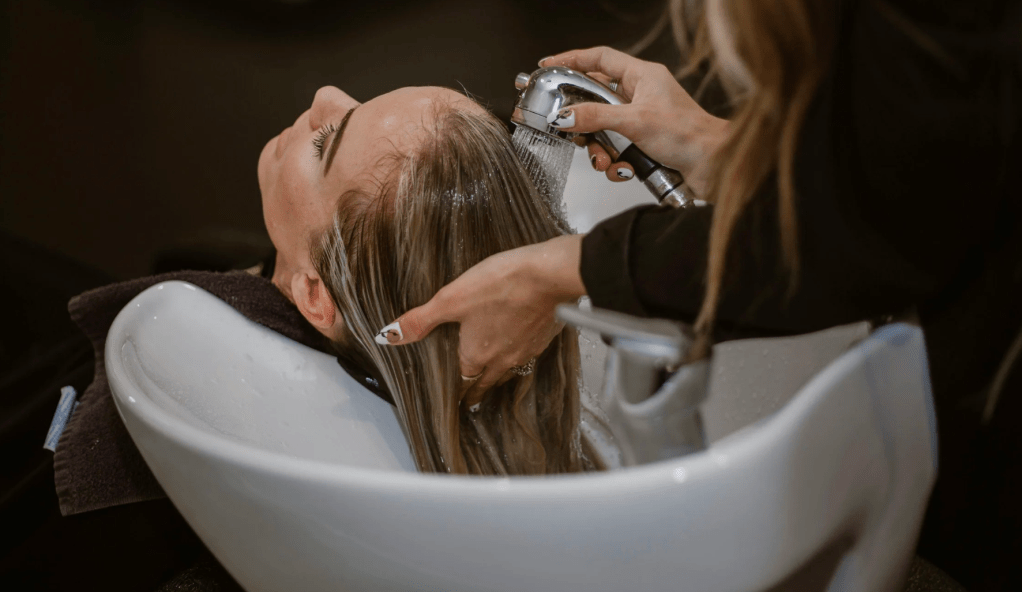
    We focus so much on skincare for our face — but how often do we think about the skin on our scalp? Over time, products like dry shampoo, oils, conditioners, and even natural sebum can build up on the scalp, clogging hair follicles and making it harder for your hair to grow healthy and strong.

    Just like our pores need cleansing, our scalp needs regular detoxing too. If you’ve ever noticed dull roots, flakes, or an itchy, heavy feeling at the crown, you’re likely experiencing scalp buildup â€” and the good news is, it’s completely treatable.

    Here’s how to recognize scalp buildup, why it happens, and how to safely remove it for a balanced, refreshed, and healthy scalp.

    What Is Scalp Buildup?

    Scalp buildup is a mix of dead skin cells, oil (sebum), sweat, and leftover product residue that accumulates on your scalp over time.

    Every time you apply shampoo, conditioner, leave-in treatments, hairspray, or dry shampoo, a little residue can remain — especially if you don’t wash frequently. Add to that natural oil and pollution, and your scalp becomes coated in a layer that blocks follicles and limits oxygen flow.

    Over time, this buildup can cause:

    • Clogged follicles (leading to hair thinning or slower growth)
    • Flakes and itching (similar to dandruff but not always the same)
    • Oily roots and dry ends
    • Lack of volume or dull appearance
    • Poor serum absorption — meaning your growth treatments can’t fully penetrate the scalp

    Common Causes of Scalp Buildup

    1. Overusing styling products
      Gels, creams, sprays, and serums can all leave behind residue. Silicone-based products are especially known for coating the scalp.
    2. Not washing often enough
      If you wash every 3–5 days (or longer), oils and product layers can combine to form a film over your scalp.
    3. Hard water
      Minerals in hard water bind with shampoo residue, making it difficult to rinse cleanly.
    4. Improper shampooing technique
      Applying shampoo only to hair strands — instead of focusing on the scalp — can leave the skin underneath unclean.
    5. Heavy oils or butters
      While nourishing, natural oils like coconut or castor oil can be hard to wash out fully and may clog pores if overused.

    How to Tell if You Have Scalp Buildup

    You might have buildup if you notice:

    • A waxy or sticky feeling near the roots
    • Flakes or dryness even after washing
    • Itchiness or irritation
    • Hair that feels flat or lifeless
    • A white residue when you scratch your scalp gently with your nail

    If that sounds familiar, your scalp likely needs a reset.

    How to Remove Scalp Buildup — Safely and Effectively

    The goal isn’t to strip your scalp completely — it’s to deep clean while maintaining balance. Here’s how to do it properly:

    1️⃣ Start with a Clarifying Shampoo

    A clarifying shampoo is specially formulated to dissolve residue from oils, silicones, and styling products.

    Look for:

    • Sulfate-free or gentle surfactants
    • Ingredients like salicylic acid, apple cider vinegar, or activated charcoal

    🪶 How to use:

    • Apply to wet hair and massage directly into your scalp for 1–2 minutes.
    • Rinse thoroughly and follow with a lightweight conditioner, focusing only on the ends.
    • Use once every 1–2 weeks — not daily, as overuse can dry the scalp.

    💜 Pro tip: If you use growth serums like Vivafollica’s Follicle Revival Serum, always clarify your scalp first so your treatment can absorb better.

    2️⃣ Exfoliate with a Scalp Scrub

    Just like facial exfoliation, your scalp benefits from gentle physical or chemical exfoliation.

    Options include:

    • Sugar or salt scrubs with botanical oils (like jojoba or tea tree)
    • Chemical exfoliants with glycolic acid or lactic acid, which dissolve dead skin

    🪶 How to use:

    • Apply scrub to a damp scalp before shampooing.
    • Massage gently in circular motions — don’t scratch with your nails.
    • Rinse thoroughly and follow with shampoo and conditioner.

    This helps lift buildup, boost circulation, and leave your scalp feeling refreshed.

    3️⃣ Try a Scalp Detox Treatment

    Scalp detoxes are lightweight liquids or masks that help rebalance pH and break down oil.

    DIY options:

    • Apple cider vinegar rinse: Mix 1 part ACV with 3 parts water and pour over your scalp after shampooing. Leave for 2–3 minutes, then rinse.
    • Aloe vera gel: Calms irritation and moisturizes while cleansing residue.

    Professional options:

    • Scalp detox sprays or serums with witch hazel, tea tree, or salicylic acid.

    4️⃣ Massage the Scalp Regularly

    Massage encourages lymphatic drainage and circulation, which helps move waste products away from follicles.

    🪶 How to do it:

    • Use fingertips or a silicone scalp brush.
    • Massage in small circular motions for 2–3 minutes daily.
    • Can be done before bed, especially when applying a serum like Vivafollica.

    A healthy scalp = stronger roots and faster growth.

    5️⃣ Avoid Heavy Product Layering

    Once your scalp is clean, keep it that way by simplifying your routine.

    Try this clean, effective order:

    1. Clarify or exfoliate (1x weekly)
    2. Hydrate with a gentle, balanced shampoo and conditioner
    3. Apply serum or treatment directly to scalp (daily or nightly)
    4. Use styling products lightly, focusing on ends instead of roots

    Look for non-comedogenic, lightweight formulas that won’t clog follicles or weigh hair down — especially if you don’t wash every day.

    The Vivafollica Approach: Clean Scalp, Healthy Hair

    At Vivafollica, we believe scalp health is skin health.
    Our hair growth philosophy combines clean beauty + clinical science, ensuring ingredients like Redensyl, Capixyl, Fo-Ti Root, Niacinamide, and caffeine can do their best work — free from buildup and blockage.

    That’s why we recommend pairing your serum routine with a gentle detox ritual once a week to keep your follicles clear and receptive.

    When your scalp can breathe, your hair can thrive. 🌿

    Removing scalp buildup isn’t about harsh stripping — it’s about restoring balance. By cleansing gently, exfoliating regularly, and nourishing afterward, you’ll help your follicles perform their best and support thicker, shinier, more resilient hair.

    Remember: a clean scalp is the foundation of beautiful hair.
    Start small, stay consistent, and your scalp (and strands) will thank you. 💜

  • Where Women Experience the Most Hair Thinning — and Why It Happens

    Hair thinning is one of the most common concerns among women, yet it’s also one of the least openly discussed. Whether it’s noticing more hair in the shower drain, a widening part line, or reduced volume around the crown, female hair thinning can affect confidence and self-image.

    But here’s the good news: understanding where and why hair thinning happens is the first step to treating it effectively. By identifying the cause and pattern, women can choose the right products, lifestyle changes, and treatments to restore stronger, healthier hair.

    Let’s explore the most common areas where women experience hair thinning — and the real science behind why it happens.

    1. The Crown and Part Line

    The most common area where women notice thinning first is along the crown (top of the head) and the center part line.
    You might start to see more scalp showing through your hair or feel like your ponytail is thinner than it used to be.

    Why it happens:

    This type of thinning is often caused by female pattern hair loss (FPHL), a genetic and hormonal condition. Unlike men, who typically experience receding hairlines or bald spots, women tend to lose hair in a diffuse pattern â€” meaning gradual thinning across the top rather than complete bald patches.

    The main trigger here is dihydrotestosterone (DHT), a hormone derived from testosterone. Over time, DHT causes hair follicles at the crown to shrink — a process called miniaturization. The follicles still produce hair, but each strand becomes thinner, weaker, and shorter until it eventually stops growing.

    Stress, hormonal shifts (like menopause or postpartum changes), and genetics can accelerate this process.

    2. The Temples and Hairline

    Another common area where women see thinning is around the temples or front hairline.
    You may notice this especially when pulling your hair back — the edges appear less full or the hairline seems to recede slightly.

    Why it happens:

    This can be caused by a few key factors:

    • Traction alopecia: Constant pulling from tight hairstyles (like ponytails, braids, or buns) stresses the hair follicles and can lead to gradual hair loss around the temples.
    • Postpartum shedding: After pregnancy, estrogen levels drop sharply, triggering a temporary shedding phase known as telogen effluvium — often visible around the front hairline.
    • Hormonal changes: Perimenopause and menopause can reduce estrogen, which helps keep hair in its growth phase longer. As estrogen drops, follicles become more sensitive to androgens (male hormones), leading to thinning along the edges.

    The good news is that this type of hair loss is often reversible if caught early and the follicles are still active. Reducing scalp tension, using growth-stimulating ingredients like Redensyl and Capixyl, and improving scalp circulation can help regrow new, stronger hair.

    3. The Sides of the Scalp

    While less common than crown or temple thinning, some women experience hair loss along the sides of the head â€” especially above the ears.

    Why it happens:

    This is often linked to stress-related shedding (telogen effluvium). When the body experiences stress — emotional, physical, or nutritional — it diverts energy away from non-essential functions like hair growth.

    As a result, a large number of follicles enter the resting phase (telogen) at once. A few months later, hair begins to shed more noticeably, especially on the sides and back where strands are finer.

    Common triggers include:

    • Major life stressors or illness
    • Crash dieting or protein deficiency
    • Iron or vitamin D deficiency
    • Hormonal changes from birth control or thyroid conditions

    Once the stressor is addressed, the hair usually begins to regrow — but recovery can take several months.

    4. The Back of the Scalp or Nape Area

    Thinning at the back of the scalp or nape of the neck is less typical for women, but it does occur.

    Why it happens:

    This kind of loss is often related to mechanical damage â€” such as overuse of heat styling tools, tight ponytails, or hair extensions. It can also be associated with autoimmune conditions like alopecia areata, where the immune system mistakenly attacks hair follicles in patches.

    If you notice patchy loss rather than general thinning, it’s always best to consult a dermatologist or trichologist for a closer look.

    5. Diffuse Thinning (All Over)

    Many women experience diffuse thinning, where hair density decreases evenly across the entire scalp.
    You may not see bald spots, but your ponytail feels thinner, your scalp shows more easily, and your hair lacks volume.

    Why it happens:

    Diffuse thinning can result from several overlapping causes, including:

    • Hormonal fluctuations (menopause, postpartum, thyroid disorders)
    • Nutritional deficiencies (low iron, zinc, or protein)
    • Stress and inflammation
    • Over-processing or chemical damage
    • Chronic illness or certain medications

    This form of thinning often signals an imbalance within the body — whether hormonal, nutritional, or environmental. Supporting your scalp and follicles with both internal nutrients (like iron and biotin) and topical treatments can help restore balance.

    The Common Thread: Follicle Sensitivity

    No matter where hair thinning starts — crown, temples, or all over — the core issue is usually follicle sensitivity.

    When hair follicles are exposed to stressors like hormones (especially DHT), inflammation, or nutrient deficiency, they gradually shrink. Over time, this reduces their ability to produce strong, healthy strands.

    That’s why treatments that strengthen and protect the follicle — like Vivafollica’s Natural Follicle Revival Concentrate, formulated with Redensyl, Capixyl, Fo-Ti root, and Niacinamide — target the root cause of thinning. These ingredients work together to:

    • Reactivate dormant follicles
    • Extend the hair’s growth phase
    • Reduce inflammation at the scalp
    • Improve scalp barrier health

    The Common Thread: Follicle Sensitivity

    No matter where hair thinning starts — crown, temples, or all over — the core issue is usually follicle sensitivity.

    When hair follicles are exposed to stressors like hormones (especially DHT), inflammation, or nutrient deficiency, they gradually shrink. Over time, this reduces their ability to produce strong, healthy strands.

    That’s why treatments that strengthen and protect the follicle — like Vivafollica’s Natural Follicle Revival Concentrate, formulated with Redensyl, Capixyl, Fo-Ti root, and Niacinamide — target the root cause of thinning. These ingredients work together to:

    • Reactivate dormant follicles
    • Extend the hair’s growth phase
    • Reduce inflammation at the scalp
    • Improve scalp barrier health

    How to Support Thinning-Prone Areas

    Here are some science-backed habits that make a visible difference:

    1. Apply a hair growth serum consistently. Use daily on clean scalp to stimulate follicles and support new growth.
    2. Massage your scalp. Improves circulation and encourages nutrient delivery.
    3. Avoid tight hairstyles. Give follicles room to recover.
    4. Eat a protein-rich diet. Hair is made of keratin — a protein — so nourishment starts from within.
    5. Manage stress. Meditation, sleep, and exercise can help reduce hair loss caused by cortisol.
    6. Protect from heat and UV. Overexposure damages hair shafts and weakens roots.

    Hair thinning is common, natural, and treatable. Whether you’re seeing changes along your part line, temples, or crown, remember — hair health starts at the scalp.

    By addressing the why behind your thinning and using targeted, clinically supported products like Vivafollica’s Follicle Revival Concentrate, you can help revive dormant follicles and restore visible thickness and shine.

    Healthy, beautiful hair isn’t about perfection — it’s about giving your scalp the care and consistency it deserves.

  • The Correct Way to Apply Hair Growth Serum: Timing, Frequency & Application Tips

    When it comes to promoting stronger, thicker, and healthier hair, hair growth serums have become a beauty essential. Whether your goal is to repair thinning areas, strengthen your scalp barrier, or boost shine, how you apply your serum matters just as much as what’s inside it.

    Many people invest in high-quality formulas with active ingredients like Redensyl, Capixyl, caffeine, niacinamide, and botanical extracts—but see limited results because of inconsistent or incorrect application. To help you get the best from your hair serum, let’s break down the correct way to apply it, when to use it, and how often for optimal results.

    Step 1: Start With a Clean, Dry (or Slightly Damp) Scalp

    A hair growth serum works best when it can directly reach your scalp, not your hair strands. That’s because it’s designed to nourish the follicles, where new hair grows.

    To prep properly:

    1. Shampoo your hair with a gentle, sulfate-free formula to remove buildup, oils, and styling products.
    2. Pat your hair dry with a towel until it’s slightly damp—your scalp should be clean but not soaking wet.
    3. Avoid using heavy conditioners or oils before applying your serum, as they can create a barrier that blocks absorption.

    💡 Pro tip: If you apply your serum to a dirty or oily scalp, the product may sit on the surface instead of reaching your follicles, limiting results.

    Step 2: Section Your Hair for Even Application

    For even coverage, divide your hair into small sections. This ensures every part of your scalp receives serum.

    1. Use the dropper to apply small drops directly onto your scalp—focusing on thinning or problem areas (like the hairline, temples, or crown).
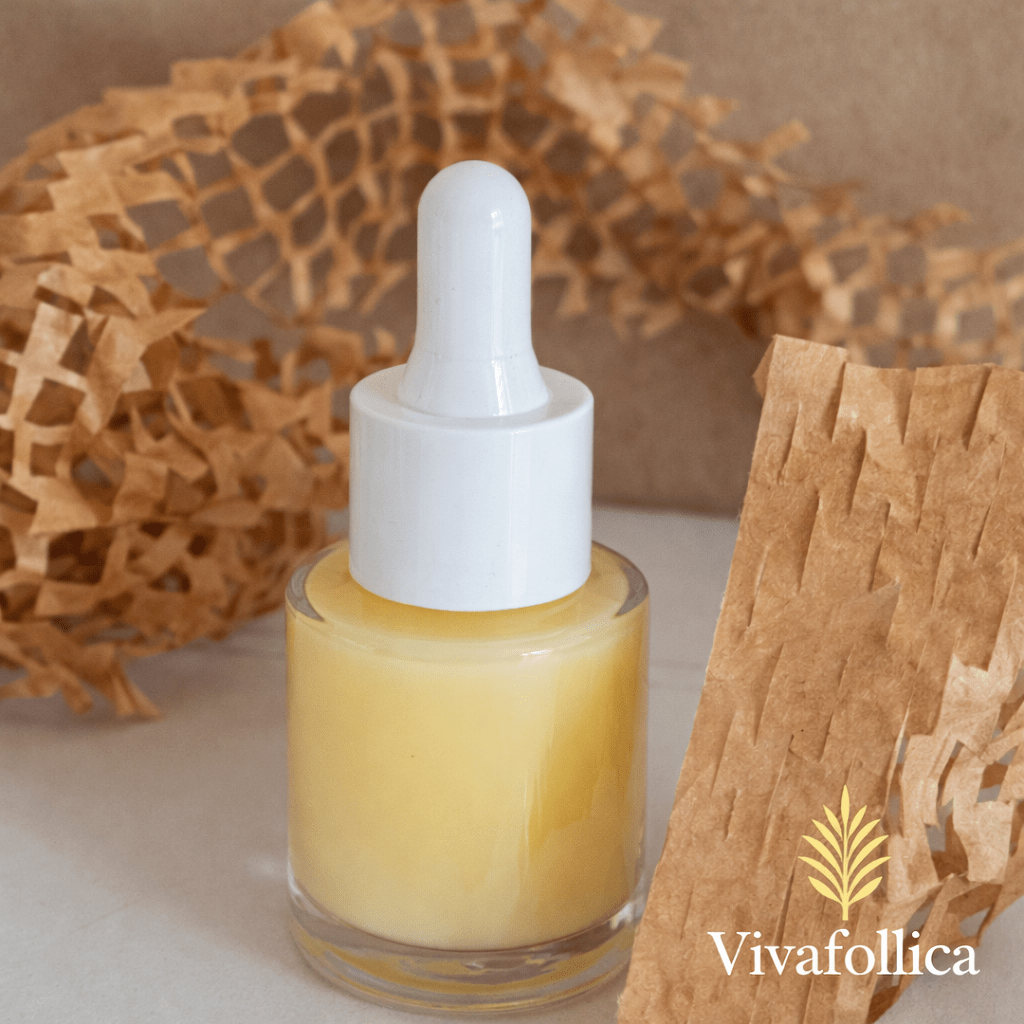
    2. A few drops go a long way. Most serums only need 2–3 dropperfuls total, depending on your hair thickness.
    3. Avoid over-applying; it won’t make your hair grow faster and can make your roots feel greasy.

    💬 Think of this as feeding your scalp in tiny doses, not soaking it.

    Step 3: Massage Gently

    After applying your serum, use your fingertips to gently massage your scalp for 1–2 minutes. This helps boost circulation, encouraging nutrients to reach your hair follicles.

    You can use small circular motions starting at the front hairline and working toward the crown. Avoid scratching or applying too much pressure—gentle is key.

    If you want to elevate your ritual, try using a silicone scalp massager. It can make your application more effective and relaxing while boosting blood flow.

    💡 Bonus tip: Massage not only enhances absorption but can also help relieve tension—a small act of self-care that benefits your scalp health, too.

    Step 4: Let the Serum Absorb

    Once applied, don’t rinse your hair. Most hair growth serums are leave-in treatments designed to stay on your scalp and continue working throughout the day or night.

    • Allow the serum to absorb fully before applying other styling products.
    • If your serum feels sticky or heavy, you may be using too much. Try a smaller amount next time.

    For serums like Vivafollica, which contain advanced actives such as Redensyl, Capixyl, Fo-Ti root extract, and niacinamide, it’s important to let the product stay on the scalp for at least 6–8 hours for maximum benefit.

    When Is the Best Time to Apply Hair Growth Serum?

    Timing matters — and it depends on your daily routine.

    Morning Application:

    • Works well if you wash your hair in the morning.
    • Choose a lightweight, non-greasy serum that won’t affect your styling.
    • The key is consistency: apply before drying or styling, once the scalp is clean.

    Evening Application:

    • Great for overnight absorption.
    • Your scalp’s natural repair process is most active while you sleep, which makes night use ideal for deeper penetration and nourishment.
    • Apply after your evening shower or on a clean scalp before bed.

    💬 Many dermatologists recommend nighttime application, as it allows the actives to work undisturbed for several hours.

    How Often Should You Use Hair Growth Serum?

    Consistency is everything when it comes to visible results.

    • For best results: Apply once daily—either in the morning or evening.
    • If your serum is gentle enough (like Vivafollica’s Redensyl- and Capixyl-based formula), you can use it twice dailyduring the first few months to jumpstart growth.
    • After 3–4 months, once new baby hairs start appearing, you can reduce to once daily or every other day to maintain results.

    💡 It’s not about using a lot—it’s about using it regularly.

    When Will You See Results?

    Hair growth takes time, and patience is key.

    Here’s what to expect:

    • After 4–6 weeks: You may notice less shedding and a healthier-feeling scalp.
    • After 8–12 weeks: New “baby hairs” may begin to sprout near your hairline or crown.
    • After 4–6 months: Fuller, thicker, and stronger strands start to become noticeable.

    Like skincare, haircare results build gradually. Regular use, combined with a healthy diet and reduced stress, gives the best long-term results.

    Step 5: Combine With Healthy Hair Habits

    To maximize your serum’s effectiveness:

    • Avoid overwashing your hair—2–3 times per week is ideal for most people.
    • Use a sulfate-free shampoo and hydrating conditioner to protect your scalp barrier.
    • Avoid tight hairstyles that cause breakage.
    • Protect your scalp from UV rays—yes, even your scalp can get sun damage!
    • Eat foods rich in protein, iron, zinc, and biotin, which all support healthy follicles.

    💚 Remember, your scalp is skin—when it’s healthy, your hair thrives.

    In Summary

    Using your hair growth serum the right way makes all the difference.
    Here’s your quick recap:

    ✅ Apply to a clean scalp (morning or night)
    ✅ Use 2–3 droppers total â€” just enough to cover thinning areas
    ✅ Massage for 1–2 minutes to stimulate circulation
    ✅ Don’t rinse â€” let it absorb
    ✅ Use daily for the best long-term results

    Think of your hair growth serum as a daily ritual of renewal. Each application strengthens your scalp, revives dormant follicles, and supports the growth of beautiful, healthy strands.

    With consistency, patience, and the right technique, you’ll soon see (and feel) the difference — stronger roots, a balanced scalp, and hair that radiates vitality from within.

    💜 Where science meets nature — that’s the Vivafollica promise.

  • Let Your Scalp Breathe: Ingredients That Feed, Not Clog, Your Follicles

    When we think about healthy hair, our focus often lands on products that promise shine, volume, or strength. But what if the secret to truly beautiful hair starts deeper — at the scalp?

    Your scalp is skin, just like the skin on your face. It breathes, sweats, sheds, and renews itself. And just like facial pores, scalp pores can get clogged by heavy oils, residue, and harsh ingredients. The result? Sluggish follicles, buildup, flakes, and dull, lifeless strands.

    At Vivafollica, we believe that a clean, balanced scalp is the foundation for healthy hair growth. That’s why we formulate with ingredients that feed your follicles instead of suffocating them. Let’s dive into the natural, science-backed ingredients that nurture your scalp — and what makes them so effective.

    🌿 Rosemary Extract: The Circulation Booster

    Rosemary has been used for centuries as a natural remedy for hair thinning and scalp imbalance. Modern studies have shown that rosemary oil can be just as effective as some clinical treatments for stimulating new hair growth — without the irritation.

    How it works:

    Rosemary improves blood circulation to the scalp, delivering oxygen and nutrients directly to the follicles. This increased flow nourishes the roots and helps extend the hair’s growth phase (the anagen phase).

    It also has antioxidant and antimicrobial properties, keeping your scalp clear of buildup and bacteria that can lead to inflammation or dandruff.

    💜 In Vivafollica formulations, rosemary extract is one of the key botanical actives that awaken dormant follicles and restore balance naturally.

    🌱 Fo-Ti Root: Ancient Herbal Rejuvenation

    Known as He Shou Wu in Traditional Chinese Medicine, Fo-Ti Root is celebrated as a longevity tonic — especially for hair vitality.

    Why it matters:

    Fo-Ti helps boost scalp microcirculation and supports the hair’s natural pigment production, often associated with reducing premature graying and thinning.

    It’s rich in antioxidants and bioactive compounds that strengthen the follicles and improve scalp elasticity, making it an essential ingredient for maintaining youthful, resilient hair.

    💜 Vivafollica incorporates Fo-Ti Root as part of our nature-meets-science philosophy — bridging traditional herbal wisdom with modern scalp care.

    💧 Niacinamide (Vitamin B3): The Barrier Protector

    Niacinamide isn’t just for glowing skin — it’s a superstar for your scalp too. This multitasking vitamin helps restore balance, strengthen the skin barrier, and reduce irritation.

    What it does:

    • Regulates sebum production to prevent an oily or congested scalp
    • Reduces inflammation and flakiness
    • Supports hydration and resilience

    When your scalp’s barrier is healthy, follicles can thrive in a calm, balanced environment.

    💜 Vivafollica uses Niacinamide to ensure your scalp stays soothed, hydrated, and protected from environmental stress.

    ☕ Caffeine: The Follicle Energizer

    If caffeine can wake you up in the morning, imagine what it can do for your hair follicles!

    Science behind it:

    Caffeine penetrates the scalp barrier and stimulates hair roots at the cellular level, extending the growth phase and delaying shedding. It also helps block the effects of DHT, a hormone linked to hair loss.

    By increasing circulation and energy supply to each follicle, caffeine energizes the scalp environment, helping new strands grow stronger from the root.

    💜 That’s why caffeine is a star ingredient in Vivafollica’s formulations — it energizes follicles naturally, without irritation.

    🔬 Redensyl & Capixyl: Where Nature Meets Science

    While botanical extracts form the heart of our philosophy, Vivafollica also integrates clinically tested actives like Redensyl and Capixyl â€” two advanced complexes that support visible hair growth.

    Redensyl

    Redensyl targets the hair follicle stem cells, encouraging new hair growth from the source. It helps reawaken dormant follicles, improving density and strength over time.

    Capixyl

    Capixyl is a blend of biomimetic peptides and red clover extract, which help reduce follicle inflammation and strengthen the anchoring of each hair strand. The result: less shedding and a thicker, fuller appearance.

    💜 By combining Redensyl and Capixyl with botanical extracts, Vivafollica creates a synergistic effect — where science enhances nature, not replaces it.

    🌸 Botanical Oils: Nourishment Without Buildup

    Not all oils clog pores. In fact, lightweight, non-comedogenic oils can help maintain scalp hydration without suffocating the follicles.

    Our favorites:

    • Jojoba Oil: Mimics your scalp’s natural sebum to balance moisture.
    • Squalane: Lightweight, fast-absorbing hydration that protects from dryness.
    • Grapeseed Oil: Rich in linoleic acid and antioxidants, perfect for sensitive scalps.

    These oils hydrate and nourish without residue, supporting a breathable, flexible scalp barrier that encourages stronger roots.

    💜 At Vivafollica, we believe hydration should feel clean — never greasy.

    ✨ The Vivafollica Difference

    Each ingredient in Vivafollica’s line has a purpose — not just to make hair look good, but to help it grow from a healthy foundation.
    We avoid the ingredients that clog and weigh down your scalp: no silicones, no mineral oils, no sulfates, and no harsh fragrances.

    Instead, we blend botanical extracts with modern science to achieve true scalp harmony â€” clean, breathable, and balanced.

    Because when your scalp can breathe, your hair can thrive. 🌿

    💆‍♀️ How to Support a Breathable Scalp at Home

    1. Choose scalp-safe products — avoid heavy, waxy formulas.
    2. Exfoliate gently once a week to remove buildup.
    3. Use lightweight oils to hydrate your scalp and ends.
    4. Massage regularly — stimulate circulation and relax tension.
    5. Stay consistent — real scalp health builds over time.

    💜 Your scalp is the soil where your hair grows — nourish it with care.

    Healthy hair starts with a clean foundation. The ingredients you choose matter — they can either clog your follicles or fuel your growth. By using natural, science-backed botanicals like rosemary, niacinamide, caffeine, Fo-Ti root, Redensyl, and Capixyl, you’re giving your scalp exactly what it needs: balance, vitality, and breathability.

    Vivafollica — Where Nature Meets Science.
    Nourish your roots. Let your scalp breathe.

  • Is Your Scalp Clogged? Ingredients You Should Avoid for Healthy Hair Growth

    When it comes to hair care, we often focus on our strands—shampooing, conditioning, and styling to achieve that smooth, glossy finish. But here’s the truth: your scalp is skin—and just like the skin on your face, it can become clogged, congested, and irritated if it’s not treated with care.

    If your scalp feels greasy a day after washing, or if you notice flakes, itchiness, or slow hair growth, buildup may be to blame. Let’s take a closer look at the ingredients that clog your scalp pores and hinder healthy hair growth, and how to choose better alternatives that let your scalp—and your hair—breathe.

    Why Scalp Congestion Matters

    Your scalp contains thousands of tiny follicles. Each one houses a hair strand and a sebaceous (oil) gland that keeps the hair soft and nourished. When pores and follicles are clogged by heavy oils, silicones, or styling residues, it disrupts the scalp’s natural balance. The result? Weakened hair follicles, reduced oxygen flow, and slower hair growth.

    Think of it like skincare: you wouldn’t apply a thick, pore-clogging product to your face and expect glowing skin. The same goes for your scalp.

    1. Heavy Silicones

    Silicones are often used to make hair look smooth and shiny. While they can give instant softness, they’re synthetic polymers that coat the hair and scalp with an invisible film. Over time, this film traps dirt, sweat, and sebum—creating buildup that’s hard to remove.

    Common silicones to avoid:

    • Dimethicone
    • Cyclopentasiloxane
    • Amodimethicone
    • Trimethylsilylamodimethicone

    These ingredients are not toxic, but they don’t allow the scalp to breathe, leading to dullness, dryness, and even flakiness. Instead, look for water-soluble silicones (like Dimethicone Copolyol) or natural alternatives like argan oil and jojoba oil, which hydrate without suffocating the scalp.

    2. Mineral Oil & Petrolatum

    Derived from petroleum, mineral oil and petrolatum are occlusive agents that seal in moisture—but they also seal out everything else. They can trap sweat, bacteria, and dead skin cells around the follicles, increasing the risk of scalp irritation and follicle blockage.

    These ingredients are especially common in hair greases and certain “shine” serums. If you’re aiming for healthy growth, skip the heavy petroleum-based products and reach for light botanical oils like grapeseedsweet almond, or squalane.

    3. Sulfates (Harsh Detergents)

    Sulfates such as Sodium Lauryl Sulfate (SLS) and Sodium Laureth Sulfate (SLES) are strong surfactants used for that “foamy” clean feeling. While effective at removing dirt, they can strip away natural oils and disrupt your scalp’s microbiome.

    A stripped scalp often overcompensates by producing even more oil—creating a vicious cycle of buildup, dryness, and greasiness. Instead, choose gentle, sulfate-free cleansers formulated with mild surfactants like Cocamidopropyl Betaineor Sodium Lauroyl Methyl Isethionate.

    4. Waxes & Butters

    While natural butters like shea or cocoa can nourish hair, they’re too heavy for the scalp—especially in leave-on products. These thick ingredients can clog follicles, making it harder for hair to grow freely.

    If your scalp tends to get oily or flaky, avoid formulations with:

    • Beeswax
    • Candelilla wax
    • Shea butter (in scalp treatments)

    Instead, reserve these for your hair ends where moisture is needed most, not directly on the scalp.

    5. Artificial Fragrance & Drying Alcohols

    Synthetic fragrances and certain alcohols (like isopropyl alcohol or SD alcohol 40) can irritate the scalp and compromise the skin barrier. Over time, irritation may trigger inflammation—a hidden enemy of healthy hair growth.

    Opt for fragrance-free or naturally scented formulas with essential oils like peppermintrosemary, or tea tree, known for stimulating and purifying properties. And when it comes to alcohols, remember: not all are bad. Fatty alcohols (like cetyl or stearyl alcohol) are actually moisturizing.

    6. Heavy Styling Products

    Dry shampoo, gels, sprays, and leave-ins can accumulate on the scalp if not properly washed out. Many of these contain polyquaterniumssynthetic resins, and film formers that block follicles over time.

    If you use styling products daily:

    • Clarify once a week with a gentle detox shampoo.
    • Rinse thoroughly after workouts or swimming.
    • Avoid applying products directly to the roots unless they’re meant for scalp care.

    How to Keep Your Scalp Clear and Balanced

    1. Exfoliate Weekly

    Just like your face, your scalp needs exfoliation. Use a scalp scrub or exfoliating serum to lift away dead skin and product residue. Look for ingredients like salicylic acid (BHA) or fruit enzymes for gentle cleansing.

    2. Balance with Lightweight Oils

    Light oils such as jojobaargan, or rosemary-infused oils can mimic your scalp’s natural sebum, hydrating without clogging pores.

    3. Maintain a Healthy Wash Routine

    Don’t overwash (it can trigger excess oil production), but don’t let buildup linger either. A balanced schedule—2–3 washes a week—works best for most scalp types.

    4. Use pH-Balanced Products

    Healthy scalp pH should hover around 4.5–5.5. Look for products that mention “pH balanced” or include niacinamide, which helps soothe and strengthen the scalp barrier.

    Vivafollica’s Philosophy: Clean, Breathable Scalp Care

    At Vivafollica, we believe that healthy hair begins at the root. Our formulations are designed to nourish without suffocating, using active botanicals like Redensyl, Capixyl, Fo-Ti, caffeine, and niacinamide—all backed by science to improve scalp vitality and encourage natural hair growth.

    Every ingredient is chosen intentionally, avoiding heavy silicones, sulfates, and pore-clogging agents. The result? A clean, balanced scalp that allows your hair to thrive—naturally.

    Your scalp deserves the same thoughtful care as your skin. By choosing clean, lightweight, and non-comedogenic hair products, you’re not just preventing buildup—you’re creating the foundation for stronger, shinier, more resilient hair.

    Remember: when your scalp can breathe, your hair can flourish.

  • Feed Your Scalp: The Best Foods for Healthy Hair Growth

    When we think about hair care, we often focus on what we put on our hair—shampoos, conditioners, masks, and scalp oils. But the truth is, healthy hair starts from within. Your scalp is living skin, and each hair follicle depends on nutrients delivered through your bloodstream to grow strong, thick, and resilient strands.

    This means what you eat is just as important—if not more so—than the products you apply. By fueling your body with hair-loving foods, you give your scalp and follicles the essential building blocks they need for growth, shine, and strength.

    At Vivafollica, we believe in a holistic approach to scalp wellness: nourishing the scalp inside and out. Let’s dive into the top foods that should be on your plate if you want healthier, fuller hair.

    1. Avocados: The Scalp Superfood

    Avocados are creamy, chic, and full of nutrients that your scalp craves. They’re packed with healthy fats, vitamins, and minerals that deeply support follicle health.

    • Vitamin E acts as an antioxidant, protecting follicles from oxidative stress while improving blood circulation to the scalp.
    • Biotin and folate, part of the B-vitamin family, are crucial for keratin production, the protein that makes up your hair strands.
    • Monounsaturated fats hydrate the scalp from within, reducing dryness and flakiness.

    Try adding avocado to salads, smoothies, or on top of whole-grain toast for a scalp-boosting meal.

    2. Spinach & Leafy Greens: Nature’s Multivitamin

    Spinach and other leafy greens like kale and arugula are nutritional powerhouses. They’re loaded with iron, vitamin A, vitamin C, and folate—all key for scalp health.

    • Iron supports red blood cells, which carry oxygen to hair follicles. Low iron is one of the most common causes of hair shedding.
    • Vitamin A helps the scalp produce sebum, your natural oil that keeps hair hydrated and shiny.
    • Vitamin C improves iron absorption and boosts collagen, strengthening hair structure.

    Incorporating leafy greens daily is one of the simplest ways to ensure your scalp stays nourished.

    3. Walnuts & Other Nuts: Omega-3 Hair Boosters

    Nuts, especially walnuts, are rich in omega-3 fatty acids, which help fight scalp dryness and inflammation. They also contain protein, vitamin E, zinc, and selenium, all important for follicle health.

    • Omega-3s nourish hair follicles and add natural shine.
    • Zinc and selenium protect the scalp and help regulate oil production.
    • Protein ensures your hair strands remain strong and resistant to breakage.

    Keep a small handful of nuts as a daily snack or sprinkle them over yogurt or salads.

    4. Berries: Antioxidant Powerhouses

    Berries like blueberries, strawberries, and raspberries are loaded with antioxidants and vitamin C, which protect hair follicles against free radical damage.

    • Vitamin C also helps your body absorb iron, a mineral that keeps follicles strong and oxygenated.
    • Antioxidants fight oxidative stress, which can weaken hair growth cycles.

    A bowl of fresh berries makes a perfect scalp-friendly breakfast or snack.

    5. Eggs: Protein & Biotin for Strong Strands

    Eggs are often called a “perfect protein,” and for good reason. Hair is made almost entirely of protein, and eggs provide it in abundance. They’re also one of the best natural sources of biotin, a B-vitamin essential for healthy hair.

    • Protein strengthens strands and prevents breakage.
    • Biotin helps produce keratin, boosting hair structure and resilience.
    • Vitamin D in eggs supports follicle activity and growth.

    Including eggs in your breakfast rotation is one of the easiest ways to feed your scalp.

    6. Sweet Potatoes: Beta-Carotene Brilliance

    Sweet potatoes are rich in beta-carotene, a compound that your body converts into vitamin A.

    • Vitamin A plays a key role in scalp health by regulating sebum production. Too little vitamin A can cause dry, brittle hair, while the right amount ensures your scalp stays moisturized.
    • Beta-carotene also supports cell growth, helping follicles function optimally.

    Roasted, mashed, or baked, sweet potatoes make a delicious and hair-friendly addition to your diet.

    7. Salmon & Fatty Fish: Growth-Boosting Omega-3s

    Fatty fish like salmon, mackerel, and sardines are excellent sources of omega-3 fatty acids, high-quality protein, and vitamin D.

    • Omega-3s improve scalp circulation, reduce inflammation, and help follicles produce healthier hair.
    • Vitamin D plays a role in creating new follicles and supporting growth cycles.

    For plant-based alternatives, chia seeds and flaxseeds also offer omega-3s, though in a slightly different form.

    8. Greek Yogurt: Protein + Probiotics

    Greek yogurt provides both protein and probiotics, which support overall health and indirectly benefit your scalp.

    • Protein builds strong strands.
    • Probiotics improve gut health, which can enhance nutrient absorption—ensuring your follicles get the vitamins and minerals they need.

    Top your yogurt with berries and walnuts for a nutrient-packed, scalp-friendly snack.

    Pairing Nutrition with Scalp Oiling

    While food fuels your scalp from the inside, topical treatments nourish it directly. That’s why Vivafollica encourages pairing scalp-friendly foods with regular scalp oiling.

    • Nutrient-rich oils like rosemary and jojoba deliver hydration and bioactive compounds directly to the scalp.
    • Massage improves circulation, enhancing nutrient delivery both internally and externally.

    This inside-out + outside-in approach ensures your scalp gets everything it needs for optimal hair health.

    How to Build Your “Feed Your Scalp” Routine

    1. Add scalp-friendly foods daily. Choose at least one from the list—avocado, spinach, eggs, or berries—and rotate them.
    2. Snack smart. Keep walnuts or almonds on hand for quick nourishment.
    3. Stay hydrated. Water helps transport nutrients to your scalp.
    4. Practice scalp oiling weekly. Massage Vivafollica’s concentrate into your scalp to boost blood flow and deliver active botanicals.
    5. Be consistent. Like skincare, results show up with regular care.

    Beautiful hair doesn’t just happen on the surface—it begins deep in the follicle. By combining scalp oiling rituals with a diet rich in avocados, spinach, walnuts, berries, eggs, sweet potatoes, and more, you’re giving your scalp exactly what it needs to thrive.

    At Vivafollica, we believe your scalp is skin, and it deserves the same thoughtful attention you give to your face. Feed it well from the inside, care for it from the outside, and watch your hair transform into its healthiest, most radiant state.